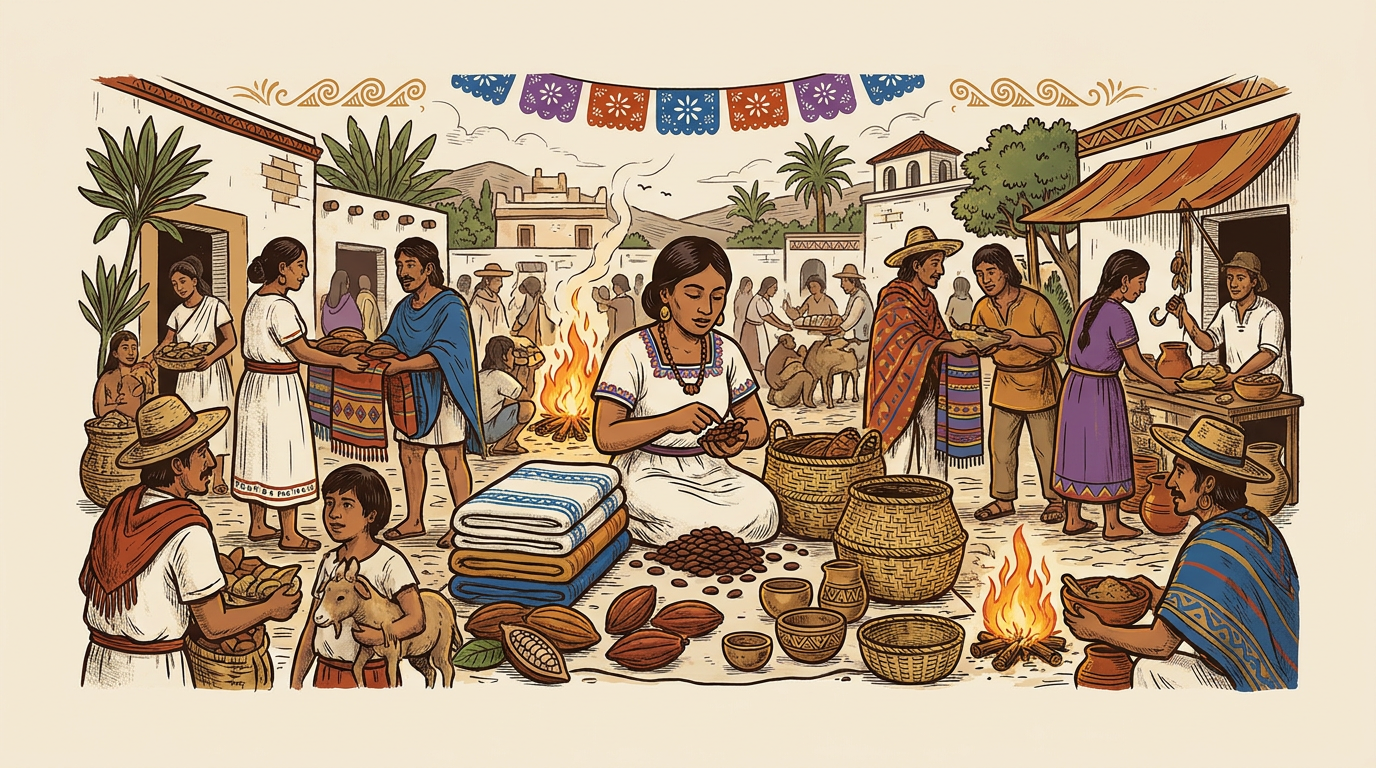
There was a time when carrying cacao in your pocket did not mean bringing along a treat, but money for the market. In different regions of Mesoamerica, its seeds were used to buy food, pay for services, and calculate prices. But simply calling them “coins” leaves out half the story: cacao was also a prestigious drink, tribute, and ritual material. Its value grew from a very human blend of scarcity, desire, trust, and respect for the sacred.
A Seed with a Good Reputation
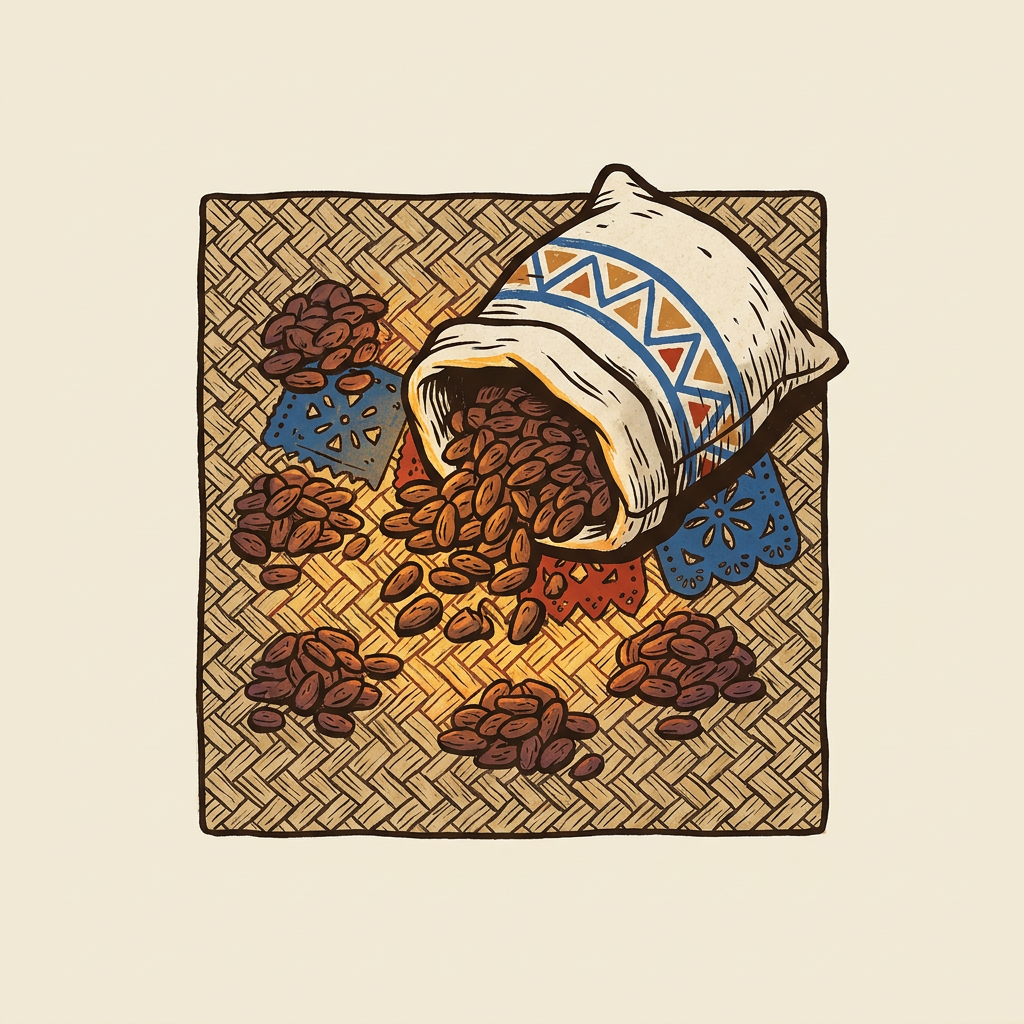
Cacao thrives in warm, humid lands, not in just any Mesoamerican backyard. For cities of the central Altiplano, obtaining it required long-distance trade networks or tribute from producing regions, such as Soconusco and areas along the Gulf Coast. That difficulty made it valuable, portable, and relatively easy to count. Dried cacao beans could also be stored longer than many foods: they did not last forever, but they were far more practical than paying for a purchase with a restless turkey.
Beginning in the Classic period, Maya peoples consumed cacao drinks in elite and ritual contexts; vessels bearing inscriptions and images attest to this. Centuries later, among the Mexica, cacao circulated as a luxury good and as part of imperial tribute. There was no single “cacao economy” across all of Mesoamerica or throughout its history. Its uses varied depending on the era, the region, and who had access to trade routes.
Money You Could Drink
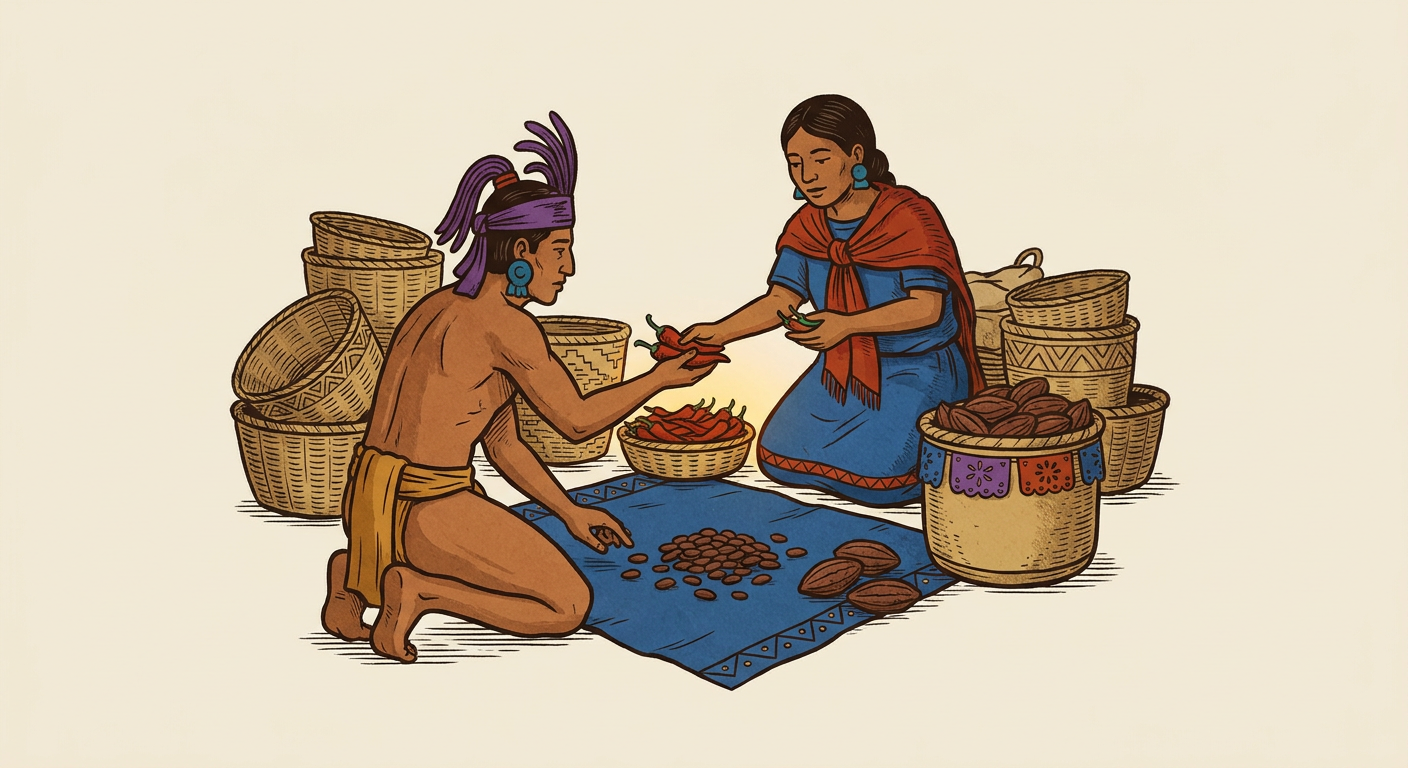
Cacao beans functioned as a medium of exchange because merchants and buyers accepted their value. Sources from the 16th century record equivalencies between quantities of cacao and everyday goods, although prices changed depending on the place and time, just as they still do when the market wakes up in a bad mood. Cotton mantas and other units of value were also used for larger transactions. Cacao was therefore part of a diverse system: it served for small transactions, accumulating wealth, and fulfilling obligations.
- 1It was valuable: its cultivation was limited to regions with a suitable climate.
- 2It was divisible: the beans could be counted in small quantities or gathered into loads.
- 3It was portable: it was more convenient than exchanging animals or large quantities of food.
- 4It was recognizable: its quality could be assessed by the seed’s size, appearance, and condition.
- 5It was desirable: besides circulating, it could be prepared and drunk.
Prestige Served in a Jícara
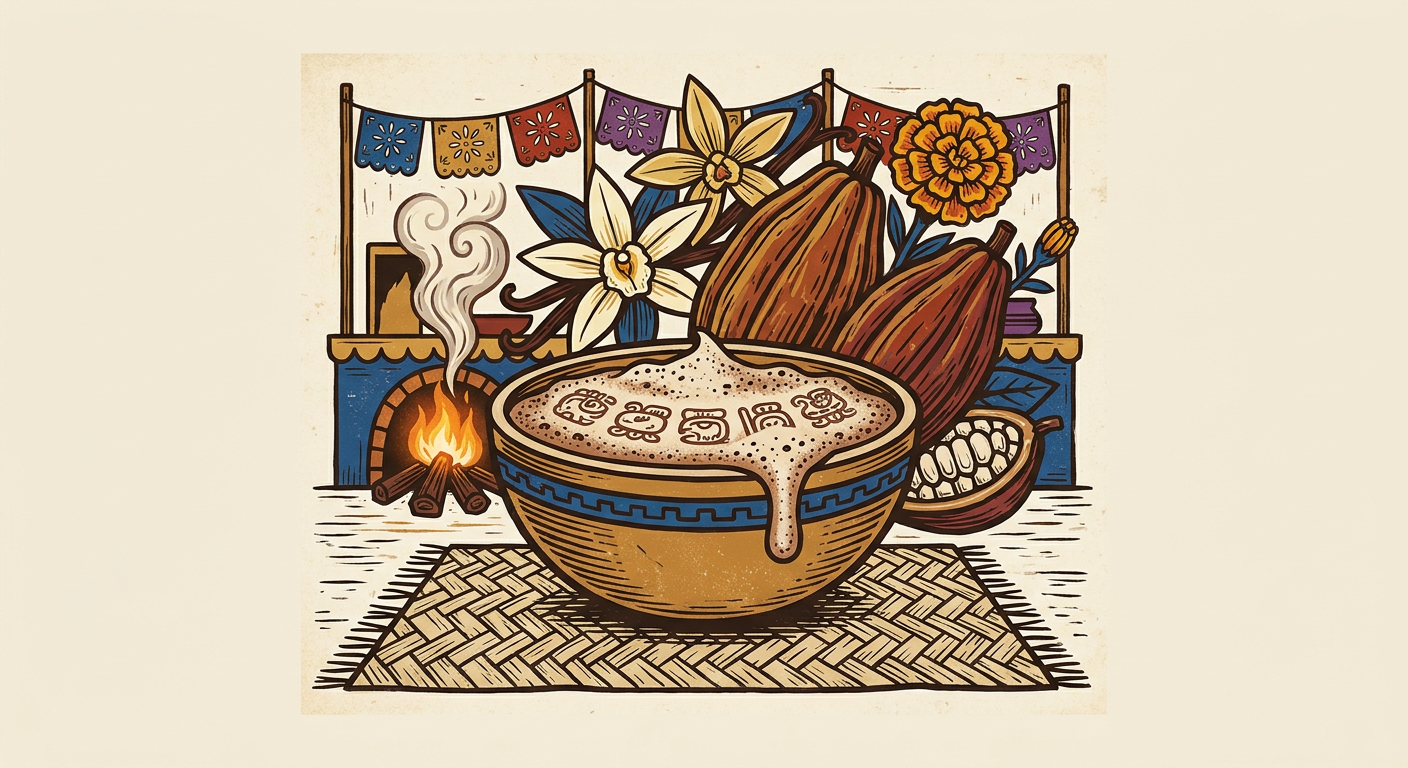
Cacao was valuable not only because it bought things; it bought things because it already held social and ritual value. Cacao drinks—prepared in various ways, sometimes with corn, flowers, vanilla, achiote, or chile—appeared at banquets, ceremonies, alliances, and offerings. Among the Maya, depictions of vessels and courtly scenes link it to rank and hospitality. Among the Mexica, its consumption was associated especially with nobles, prominent merchants, and warriors, although practices were not identical everywhere.
Cacao could be spent, drunk, or offered: few forms of wealth brought together the market, the table, and the gods with such elegance.
Its sacred dimension cannot be contained in a single legend either. In different Mesoamerican traditions, cacao was linked to fertility, blood, abundance, ancestors, and the forces of the agricultural world. The Popol Vuh mentions cacao among the foods of the bountiful land of Paxil, within the K’iche’ account of the origin of human sustenance. This does not mean that all peoples worshiped cacao in the same way; it means that a precious plant could take part in stories, rites, and communal obligations.
After the conquest, the calculations changed
The Spanish invasion did not immediately erase these uses. For much of the early colonial period, the beans continued to circulate in markets and documents in New Spain and Central America, alongside metal coins and other means of payment. At the same time, chocolate was transformed: it incorporated European ingredients, utensils, and consumption habits, and entered transatlantic trade networks. The drink found new audiences, while producing communities faced tribute payments, labor exploitation, and profound changes in property and commerce.
Remembering cacao as currency is neither a quaint curiosity nor proof of a “primitive” economy. It is the story of societies capable of turning a useful, scarce, and meaningful seed into a shared measure of value. Its strength depended on collective agreements, routes, authorities, and trust, just like any form of money, though this one smelled better. Perhaps that is why cacao still retains something that coins tend to lose: it reminds us that value never resides solely in the object, but in the relationships we build around it.
- Sophie D. Coe and Michael D. Coe, The True History of Chocolate, Thames & Hudson.
- Cameron L. McNeil (ed.), Chocolate in Mesoamerica: A Cultural History of Cacao, University Press of Florida.
- Bernardino de Sahagún, General History of the Things of New Spain, World Digital Library / INAH Media Library.
- Fray Diego Durán, History of the Indies of New Spain and the Islands of the Mainland.
- Allen J. Christenson (trans. and ed.), Popol Vuh: Sacred Book of the Quiché Maya People, Mesoweb.