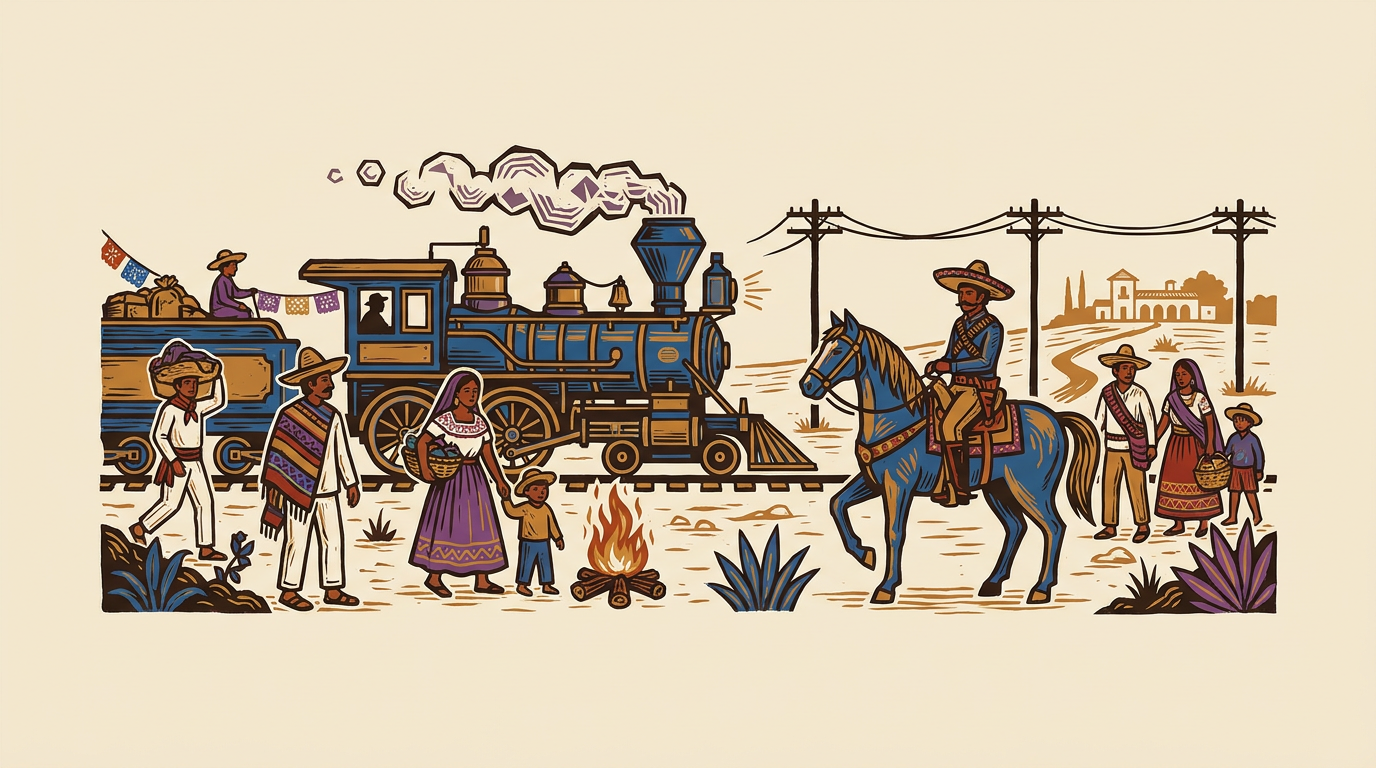
The Mexican Revolution did not begin all at once with the toss of a hat, nor did it end when someone put a period at the end of a textbook. It was a long social and political upheaval, made up of regional rebellions, peasant armies, presidential ambitions, strikes, trains, hunger, and visions for the country that often clashed with one another. Its conventional starting date is November 20, 1910, but its causes stretched back decades, and its consequences continued long after the big guns fell silent. To understand what happened, we must move beyond the schoolbook image of heroes lined up in a row and look at the movement itself: who owned the land, who could vote, who worked, and who ruled.
The Porfirian Order and Its Cracks
Porfirio Díaz governed Mexico directly or through allies between 1876 and 1911, except during Manuel González’s presidential term. During the Porfiriato, railroads expanded, mining and exports grew, public finances were put in order, and foreign capital flowed in, especially from the United States, Britain, and France. That modernization was real, but it did not reach everyone in the same way: it favored large landowners, businesspeople, and groups close to those in power, while political participation narrowed. The slogan “order and progress” came with quite a lot of fine print.
In the countryside, colonization and land-survey laws promoted since the 19th century facilitated the concentration of vast tracts in the hands of companies and hacienda owners, often at the expense of towns and Indigenous communities. Not all communal property disappeared, nor did all haciendas operate the same way, but in many regions dispossession, debt peonage, and workers’ dependence increased. In places like Morelos, the expansion of sugar haciendas onto communal lands and water sources caused especially deep grievances. The demand for land did not emerge as an ideological flourish: it grew out of concrete disputes, deeds, irrigation ditches, and milpas.
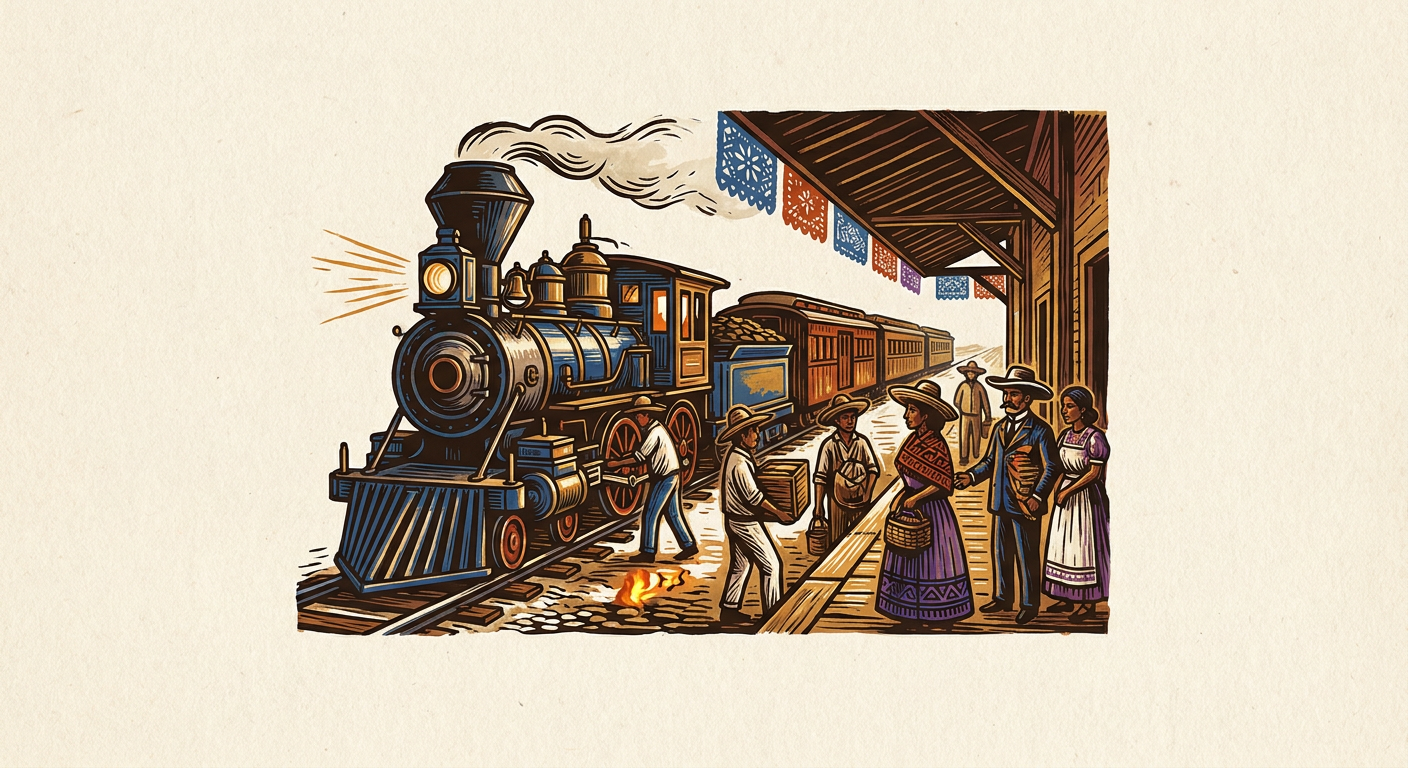
Discontent also grew among workers, journalists, professionals, and middle sectors excluded from public life. The strikes in Cananea, Sonora, in 1906, and Río Blanco, Veracruz, in 1907, which were put down by force, exposed labor conflicts and the regime’s limits. The Mexican Liberal Party, led in part by Ricardo Flores Magón, spread a radical critique of dictatorship, exploitation, and the power of the Church, though its vision was not identical to the one Francisco I. Madero would later lead. Mexico looked stable from the balcony; down in the courtyard, plates could already be heard breaking.
Madero Opens the Door
In 1908, Díaz told American journalist James Creelman that Mexico was ready for democracy and that he would welcome an organized opposition. The interview raised expectations about the succession, though Díaz ran again. Francisco I. Madero, a businessman from Coahuila and an advocate of effective suffrage, published “The Presidential Succession in 1910,” organized the National Anti-Reelectionist Party, and launched a campaign that was unusual for the time. His initial platform was mainly political: genuine elections, an end to reelection, and democratic openness.
Madero was imprisoned during the 1910 election, in which Díaz once again declared himself the winner. After escaping to the United States, he issued the Plan of San Luis, dated October 5, rejected the election, and called for an armed uprising on November 20. The call did not produce a simultaneous insurrection across the country, but it caught on in different places, especially in Chihuahua, where Pascual Orozco and Francisco Villa stood out, and in Morelos, where Emiliano Zapata took up arms. In May 1911, the capture of Ciudad Juárez made Díaz’s presidency untenable, and he resigned and went into exile.
“Effective suffrage. No reelection”: the Maderista formula summed up a democratic demand, but it was not enough to contain all the social demands the revolution had set in motion.
Madero won the elections and assumed the presidency in November 1911, but he inherited the Porfirian state apparatus, including much of the army, and sought to transform the system without completely dismantling it. He soon found himself caught between conservatives who considered him dangerous and revolutionaries who thought him too slow. Zapata broke with him and proclaimed the Plan of Ayala, which demanded the restitution of lands, forests, and waters, as well as expropriations to redistribute land. In February 1913, during the Ten Tragic Days, a military coup culminated in Victoriano Huerta’s betrayal and the murders of Madero and Vice President José María Pino Suárez.
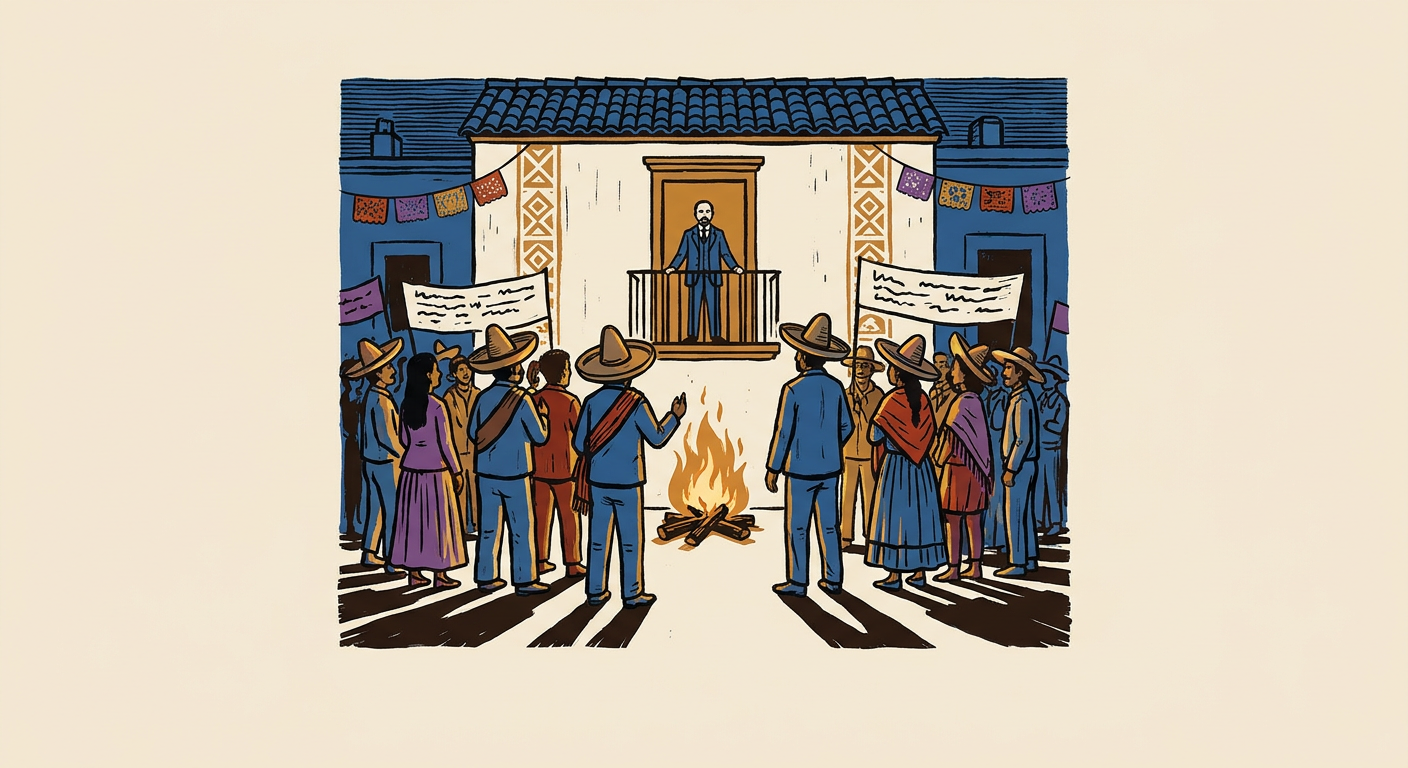
One Revolution, Several Visions
Madero’s assassination did not restore the old order: it opened an even more violent phase. Venustiano Carranza, governor of Coahuila, rejected Huerta through the Plan of Guadalupe and organized the Constitutionalist Army. Fighting alongside him were leaders with different bases and objectives, such as Álvaro Obregón in the northwest and Villa at the head of the powerful Division of the North; in Morelos, Zapata maintained his own Liberation Army of the South. The United States occupied Veracruz in 1914, weakening Huerta, who resigned in July of that year in the face of the revolutionary advance.
Once the common enemy was defeated, the victors split apart. The Convention of Aguascalientes tried to bring the revolutionary forces together and agree on a government, but it ended up pitting Villistas and Zapatistas against Carranza’s Constitutionalists. Villa championed a heterogeneous northern movement tied to ranchers, cowboys, miners, and workers; Zapata demanded local autonomy and agrarian restitution; Carranza sought to rebuild a strong national state. These were not simply differences of personality—though there was no shortage of strong personalities—but disputes over property, authority, and the country’s economic direction.
- 1Maderistas: sought to end reelection and open up political competition.
- 2Zapatistas: demanded the restitution of land and autonomy for communities under the Plan of Ayala.
- 3Villistas: they brought together a broad-based popular force in the north and experimented with expropriation measures and regional administration.
- 4Constitutionalists: they sought to defeat Huerta, rebuild the State and channel reforms through a new legal order.
- 5Magonistas: since before 1910, they had championed a radical, anti-authoritarian and social program distinct from the other movements.
The war was decided militarily in 1915, when Obregón defeated Villa in the battles of the Bajío, including Celaya, using trenches, barbed wire, machine guns and a strategy adapted to industrial warfare. Carranza secured recognition from the United States and consolidated his dominance, although Villa continued operating in the north and Zapata resisted in Morelos. The civilian population paid the highest price: crops and roads were destroyed, and epidemics, displacement, inflation and shortages followed. Demographic estimates vary, but between 1910 and 1921 Mexico lost around one million inhabitants relative to its expected population growth due to deaths, disease, falling birth rates and emigration; not all of them died in combat.
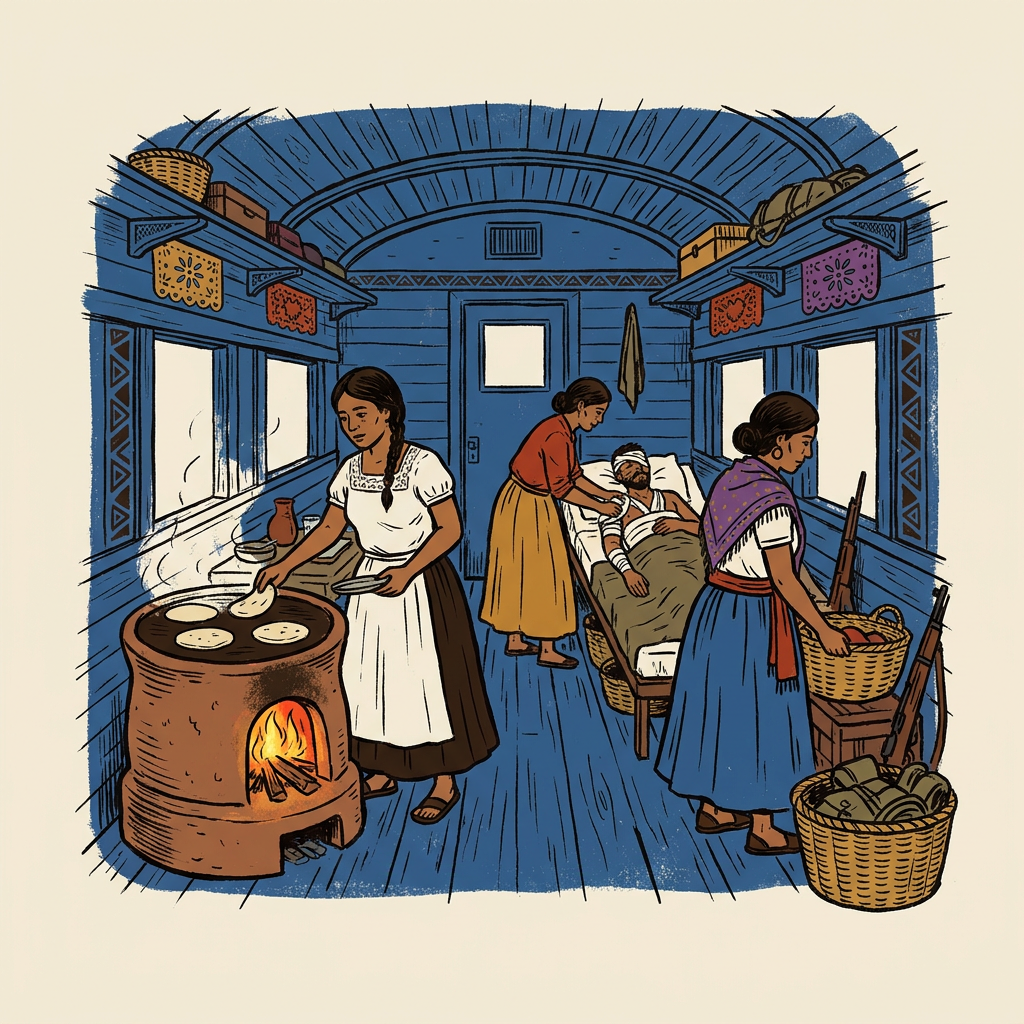
Women participated as cooks, nurses, messengers, spies, propagandists, workers and combatants, although popular memory lumped them together under the name “adelitas.” Some attained military ranks or led groups, but many others sustained the armies’ daily life without receiving recognition. Corridos turned campaigns and caudillos into sung news, mixing facts, exaggerations and propaganda. They serve as sources of popular sentiment, as long as they are not expected to function like notarized records with a guitar.
The Constitution and the difficult aftermath
Carranza convened a Constituent Congress in Querétaro, which produced the Constitution promulgated on February 5, 1917. The text incorporated far-reaching social demands: Article 27 affirmed the nation’s original ownership of land and water and opened the way for agrarian land distribution; Article 123 established labor rights, such as the eight-hour workday and labor regulations; Article 3 strengthened secular education. Not all these provisions were implemented immediately, but they established a new language of legitimacy. From then on, the government had to present itself not only as an authority, but also as an agent of social justice.
The promulgation of the Constitution did not automatically put an end to the violence, either. Zapata was assassinated in Chinameca in 1919 in an ambush; Carranza fell in 1920 after trying to impose his successor; Villa was assassinated in Parral in 1923. Obregón assumed the presidency after the Agua Prieta rebellion and began a period of reconstruction, regional negotiation and concentration of power. New rebellions broke out during the 1920s, so the end date of the Revolution depends on what is being measured: the war between the major factions, military pacification or the formation of the postrevolutionary regime.
In the decades that followed, the victors built institutions to prevent every presidential succession from ending in gunfire. In 1929, the Partido Nacional Revolucionario, the predecessor of the PRI, was founded, bringing numerous political groups together under a common structure; its corporatist transformation and a highly powerful presidential system would come later. The new regime promoted public education, agrarian reform, labor organizing and a nationalist culture that filled walls, schools and ceremonies with revolutionary imagery. It also limited political competition and turned defeated caudillos into convenient statues, no longer able to argue with the script.
So, why did the Revolution happen? Because the dictatorship closed off avenues for political change; because economic growth distributed its benefits unequally; because communities, workers and middle-class groups accumulated different grievances; and because Díaz’s succession crisis allowed those conflicts to converge. What happened? The porfiriato fell, the victorious movement fractured, a civil war redefined power and a State emerged that adopted some popular demands without resolving them all. The Revolution was not an inevitable march toward the Constitution, but an open door that no one managed to close without changing the house.
Its legacy remains in the ejido, in labor rights, in public schools, in street names and in Mexican suspicion of presidential reelection. Its debts also persist: inequality, political violence, dispossession and agrarian promises fulfilled only halfway or far too late. Looking at it without the reverential gloss does not diminish those who fought; on the contrary, it restores their decisions and contradictions to history. The Mexican Revolution did not leave a single answer about the country that should exist, but it did leave a question that still unsettles: what good is modernizing a nation if the majority cannot decide its course or have a seat at the table?
- Alan Knight, The Mexican Revolution. From the Porfiriato to the New Constitutional Regime, Fondo de Cultura Económica.
- Friedrich Katz, The Secret War in Mexico, Ediciones Era.
- John Womack Jr., Zapata and the Mexican Revolution, Siglo XXI Editores.
- Instituto Nacional de Estudios Históricos de las Revoluciones de México (INEHRM), resources on the Mexican Revolution and the 1917 Constitution.
- El Colegio de México, General History of Mexico, 2000 edition.