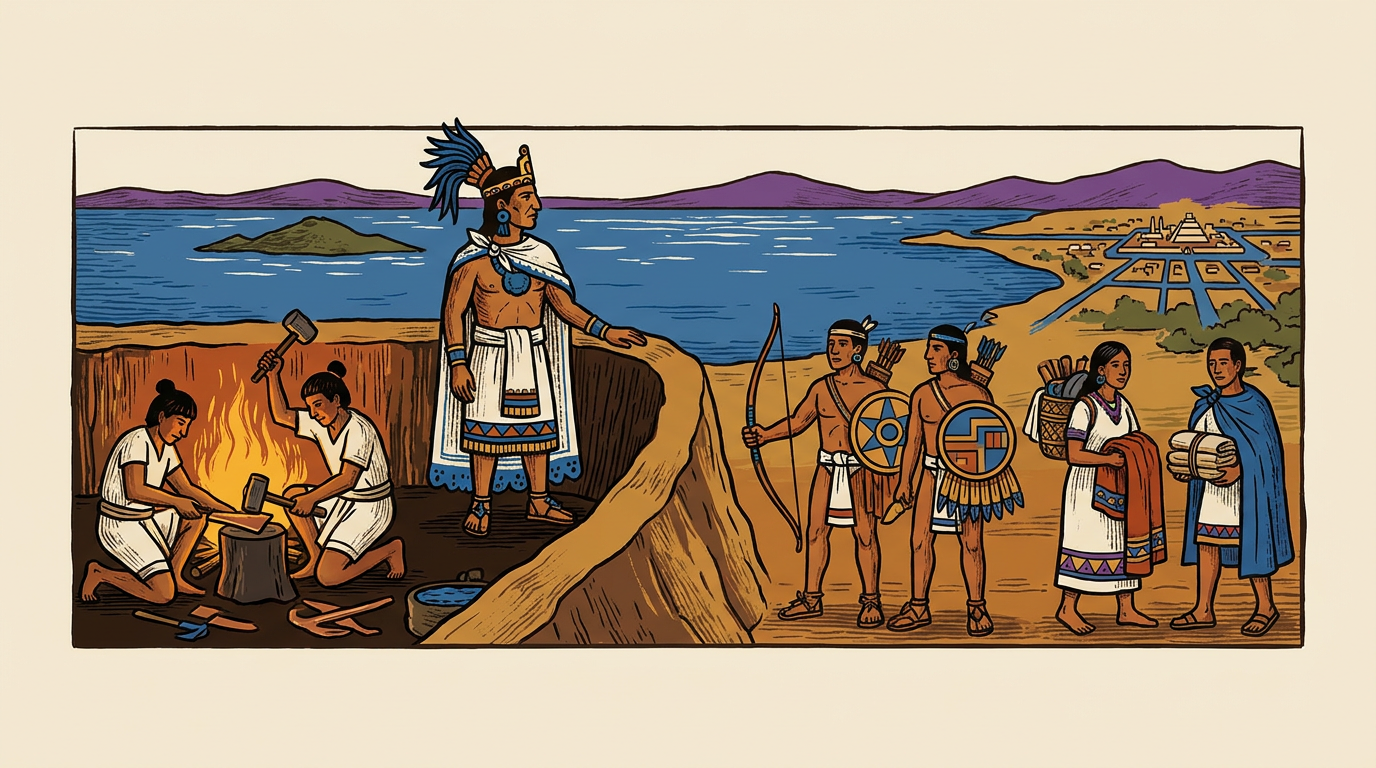
Imagine that no Castilian sails appear off the coast of Veracruz in 1519. Hernán Cortés does not land, smallpox does not race ahead of the armies, and Tenochtitlan does not fall in 1521. Would the Triple Alliance continue to rule for centuries? Hardly: Mesoamerica was not a still photograph, but a chessboard of cities, city-states, trade routes, and very much alive rivalries. If any power had a serious chance of challenging Mexica hegemony, it lay to the west: the Purépecha State.
A World Without Horses or Carts
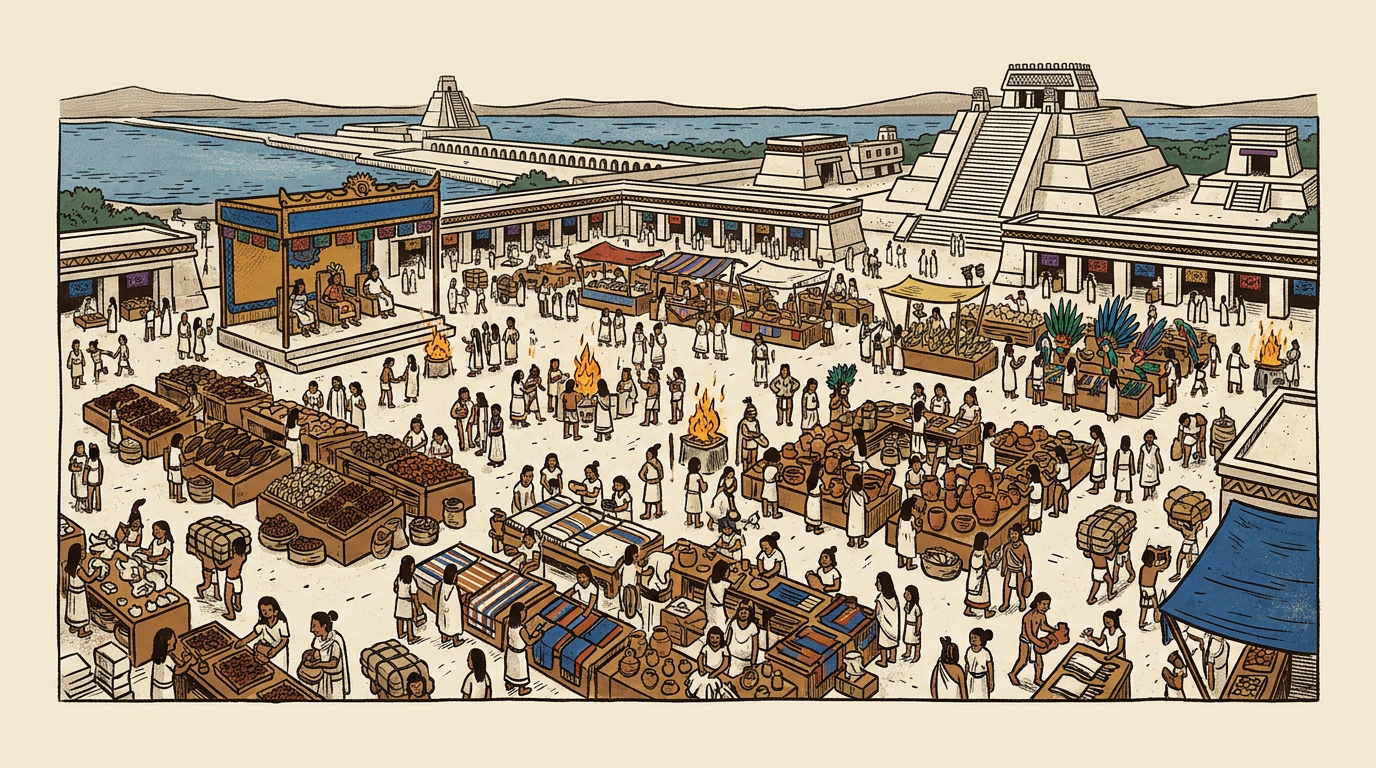
The territory we now call Mexico had no cows, oxen, horses, or other large domestic animals capable of pulling a plow or carrying goods. There were turkeys, dogs, and stingless bees, but overland transport depended mainly on human porters. This does not mean the region was backward: chinampas, agricultural terraces, irrigation systems, and urban markets supported enormous populations. Rather, it means that energy, warfare, and trade followed rules different from those of Eurasia.
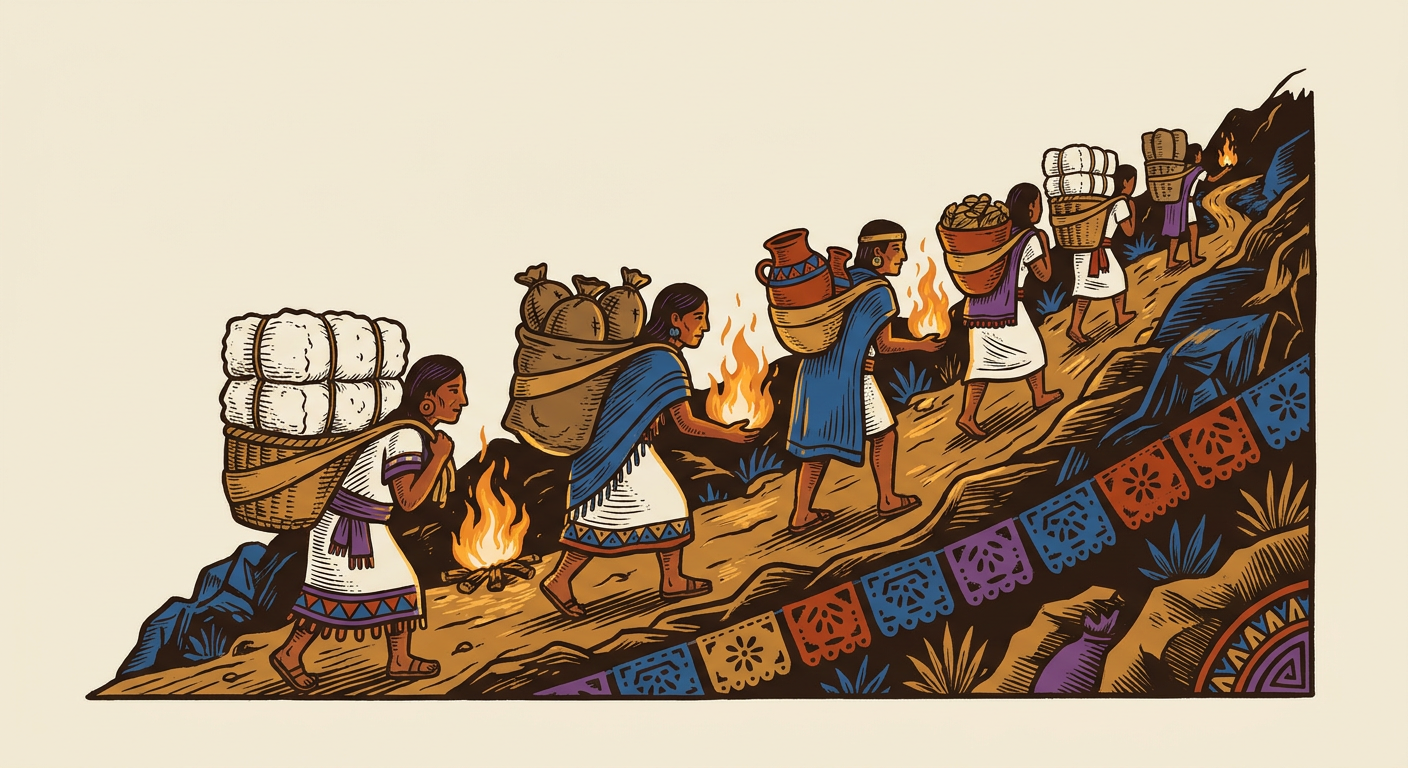
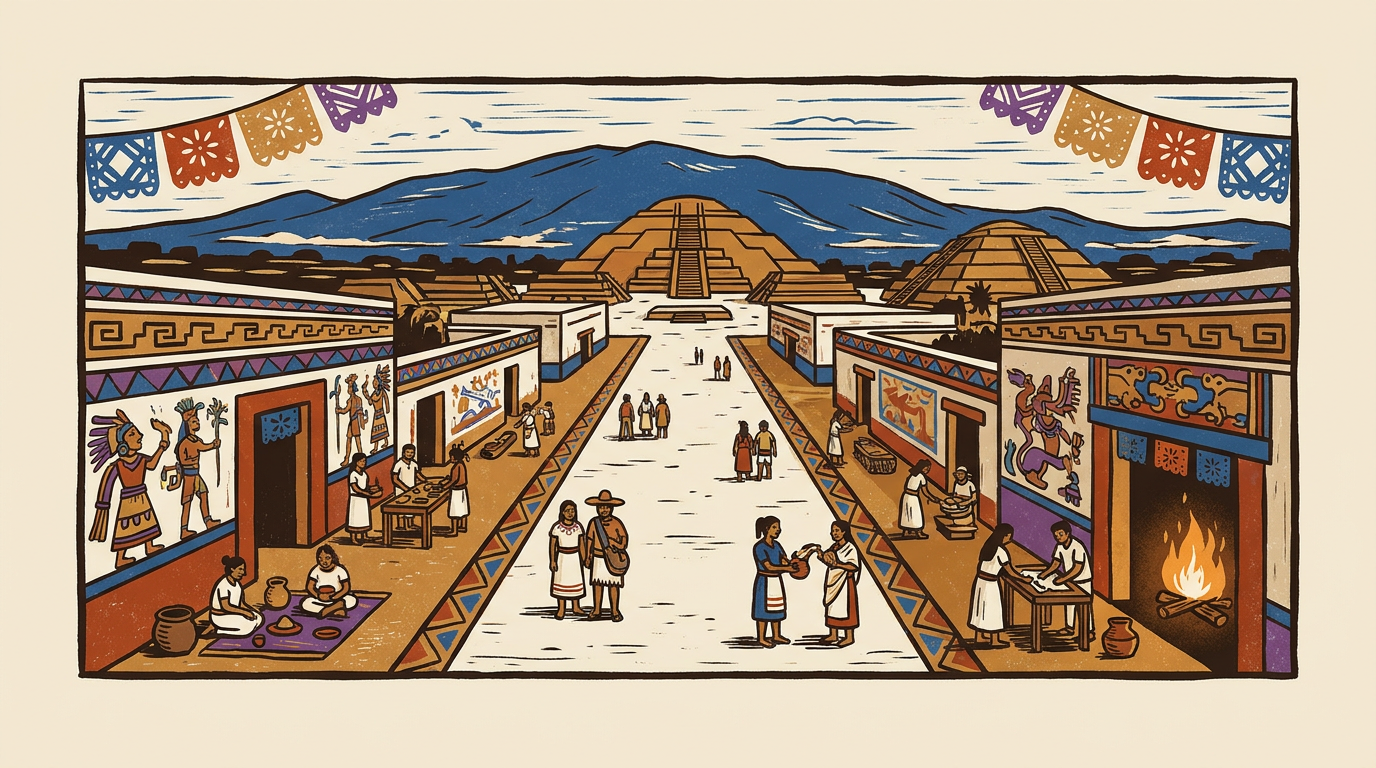
The Sierra Madre Oriental and Sierra Madre Occidental, the northern deserts, and the southeastern rainforests made travel slow and costly, but they did not completely enclose Mesoamerican societies. Networks carried turquoise and other goods from northern regions, cacao from the tropical lowlands, obsidian from specialized deposits, and fine feathers across hundreds of miles. Coasts, rivers, trails, and mountain passes connected very different territories. Geography imposed natural tolls, not a sentence of isolation.
Counterfactual history is useful when it does not try to predict the future, but instead reveals the forces that were already shaping the present.
Tenochtitlan Had Enemies
In 1519, the Triple Alliance of Mexico-Tenochtitlan, Texcoco, and Tlacopan dominated much of central Mesoamerica through conquest, tribute, and alliances. Its power was formidable, though it was not equivalent to a nation-state with continuous borders. Many city-states retained their own rulers in exchange for providing cloth, food, raw materials, and other goods. Tlaxcala remained independent; Mixtec, Zapotec, Maya, and western regions continued to pursue their own policies. The map was more an archipelago of obligations than a uniform mass.
Without the Spanish, Tenochtitlan might have continued to expand for some time, but it also faced limits. Every new province required military campaigns, indirect garrisons, and negotiations with local elites; moreover, tribute could fuel rebellions. The succession of a huey tlatoani was not an automatic process either and could realign alliances. An empire as powerful as it was contested always leaves doors ajar, and its neighbors usually notice which ones creak.
Purépecha: Copper, Bows, and the Frontier
The Triple Alliance’s main territorial rival was the Purépecha State, based in Michoacán and organized around centers such as Tzintzuntzan, Pátzcuaro, and Ihuatzio. Under the authority of the cazonci, it controlled a tribute-based administration, a large population, and a fortified frontier facing the Mexica. Around the 1470s, Axayácatl’s forces suffered a major defeat while attempting to push into Purépecha territory. This was no footnote: Tenochtitlan’s westward advance was contained.
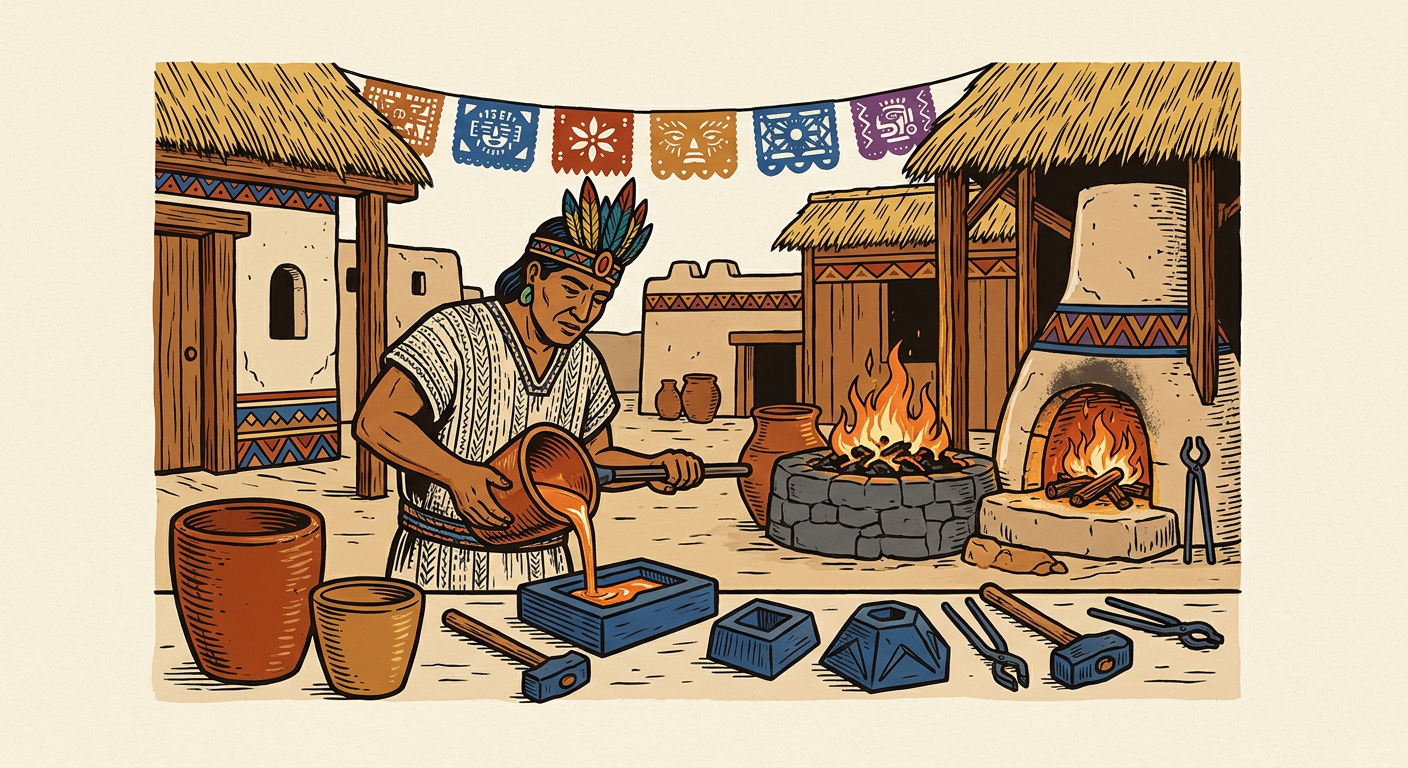
The Purépecha were known for their metallurgy of copper and copper alloys, with sophisticated knowledge developed before the conquest. They made axes, needles, bells, tweezers, and various tools, as well as some weapons and ornaments. But the epic music should be turned down a notch: possessing metal does not by itself produce invincible swords or an industrial revolution. In Mesoamerica, obsidian remained extraordinarily sharp and effective; the Purépecha advantage combined technology, political organization, archery, resources, and frontier experience.
- 1A stable defensive frontier against Mexica expansion.
- 2Access to mines and workshops specializing in copper and alloys.
- 3Centralized government under the cazonci and a network of administrative centers.
- 4Agriculture and fishing around the Lake Pátzcuaro basin.
- 5Trade contacts with western Mexico, the Pacific coast and northern regions.
The possible empire would not be Mexico
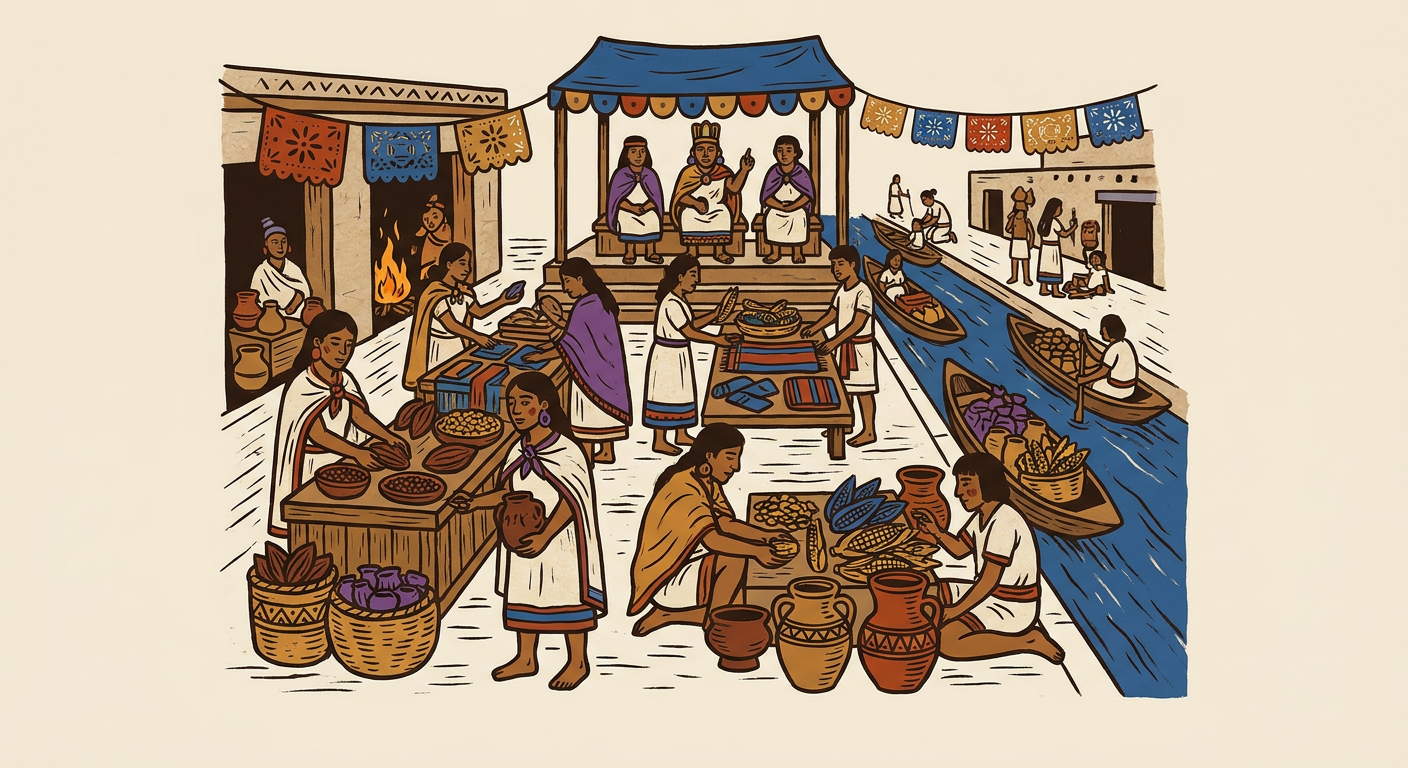
Would the Purépecha have conquered Tenochtitlan? It is possible, but it was not the most likely outcome in the short term. Their known strategy seems to have favored defending the border and controlling western Mexico, not an inevitable march toward the Valley of Mexico. A more plausible scenario would be a long rivalry between two great powers, with Tlaxcala and other polities shifting alliances as circumstances dictated. Something like an uneasy balance: less of a season finale and more centuries of political after-dinner conversation.
Over time, the Purépecha State might have expanded toward northern mining routes and Pacific ports. Later contact with European or Asian navigators would have brought animals, weapons, crops and diseases, though under different circumstances. No ocean guaranteed eternal isolation: Spain was not the only maritime power, and the Pacific was not empty either. The decisive difference would be the timing, the scale of the encounter and the ability of Indigenous States to negotiate or resist.
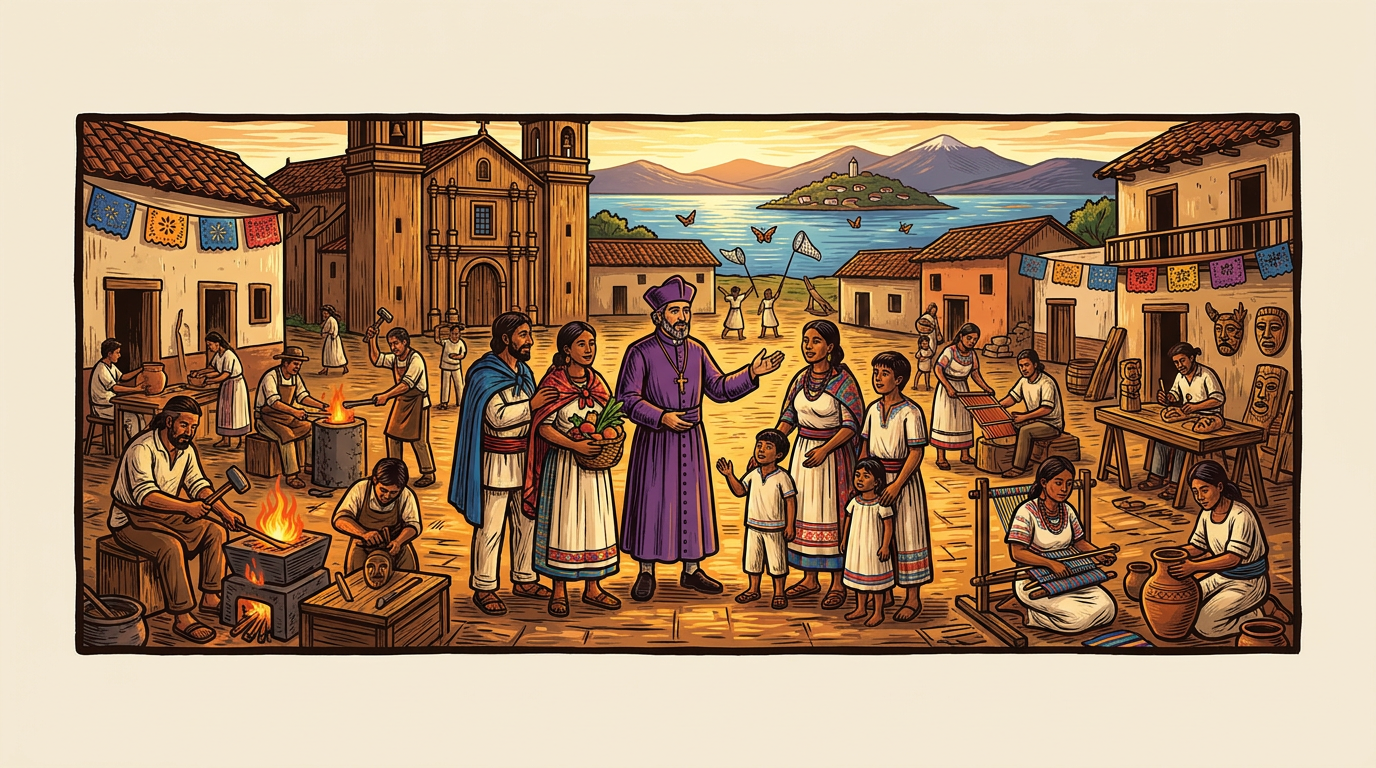
Nor would “Mexico” exist as we understand it today. The country, its borders, its dominant language and many of its institutions emerged from colonial and later processes; they were not waiting their turn beneath the stones of Tenochtitlan. A Nahua confederation, a Purépecha power, several regional States or a shifting combination of all of them might have emerged. Asking who would have dominated Mexico contains a subtle trap: it assumes Mexico was inevitable.
The history that never happened
The absence of the Spanish conquest would not have created an untouched paradise. There would have been wars, succession crises, rebellions against tribute, migrations, droughts and innovations, as well as new forms of exchange and government. Indigenous societies did not need Europeans in order to change, because they were already changing. Freezing them in 1519 is another, subtler but equally unjust way of denying them history.
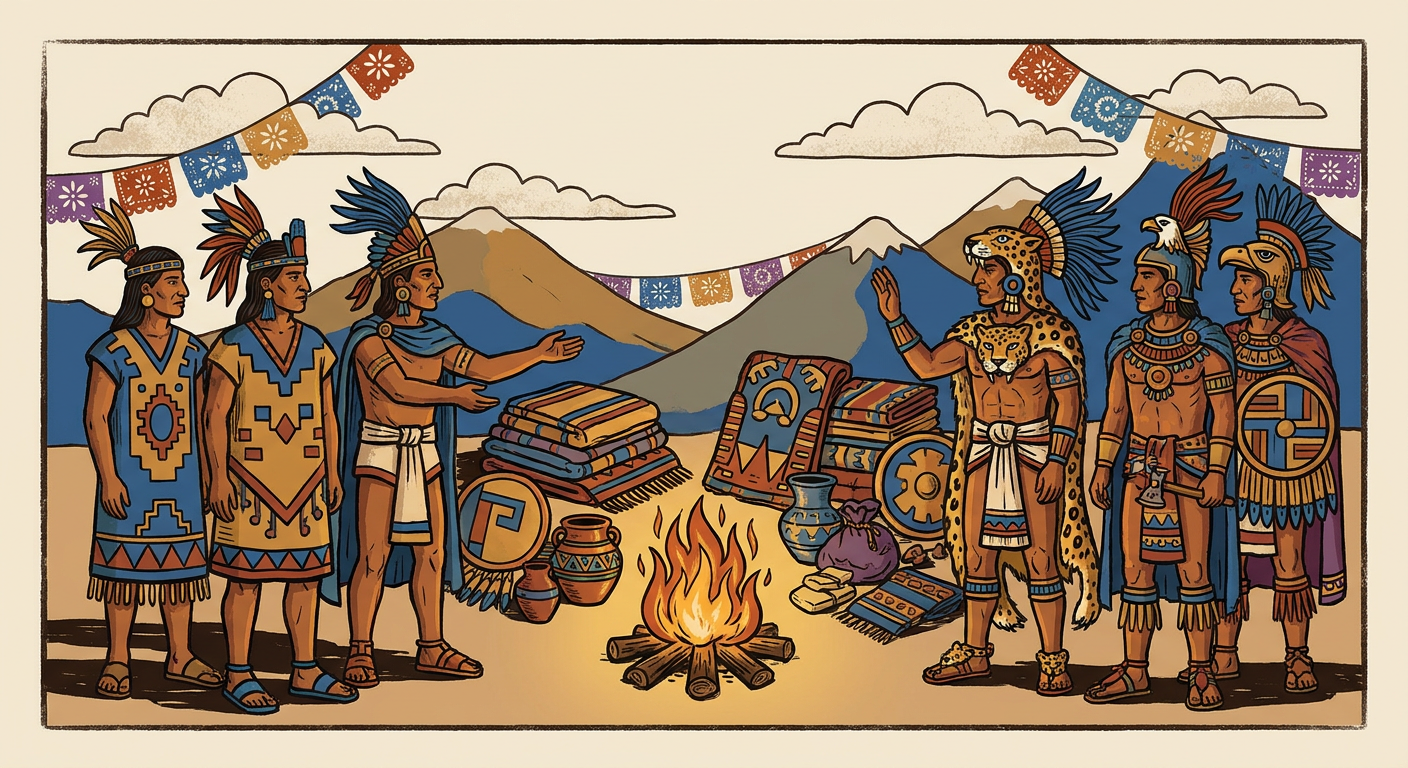
If Spain had not arrived, the Purépecha State would rank among the strongest candidates to become the great power of western Mexico and perhaps challenge Tenochtitlan's supremacy. Not because of any supposed racial or technical superiority, but because of its administration, its strategic position, its metallurgy and its proven ability to stop Mexica armies. Even so, no future was written in copper. The idea that remains is more interesting than crowning an imaginary victor: before Europe, this territory already had many futures in contention.
- Helen Perlstein Pollard, Taríacuri's Legacy: The Prehispanic Tarascan State, University of Oklahoma Press, 1993.
- Relación de Michoacán, edition and studies by El Colegio de Michoacán.
- Michael E. Smith, The Aztecs, Wiley-Blackwell, 2012.
- Dorothy Hosler, The Sounds and Colors of Power: The Sacred Metallurgical Technology of Ancient West Mexico, MIT Press, 1994.
- National Institute of Anthropology and History (INAH), materials on the archaeological sites of Tzintzuntzan and Ihuatzio.