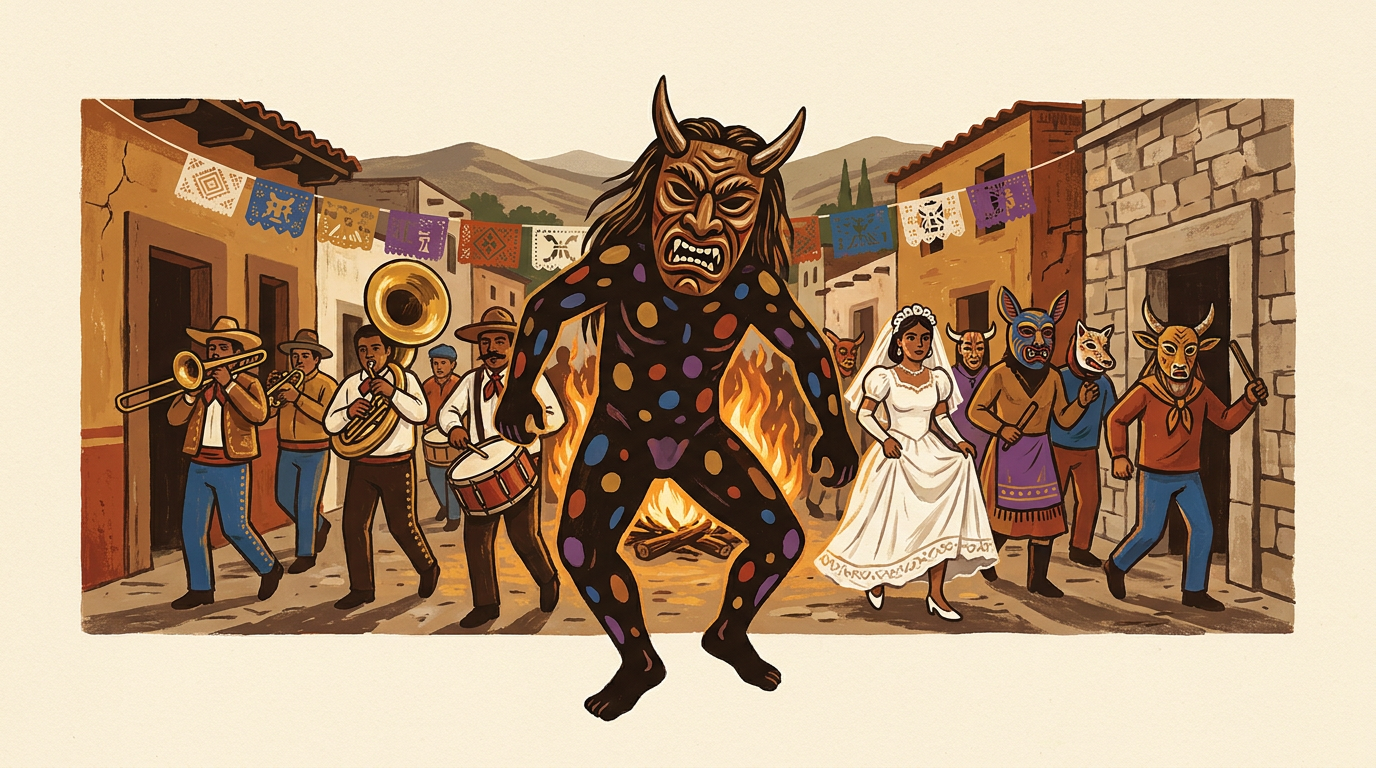
First you hear the band; then a crowd appears that seems to have escaped from a dream fueled by too much mezcal and an excellent sense of rhythm. Devils, old men, brides, animals and characters smeared with paint make their way through the streets of San Martín Tilcajete, while carved masks turn every gesture into theater. The scene is festive, but not decorative: here the body becomes a canvas, the street serves as a stage and laughter has permission to point out what is spoken of in hushed tones the rest of the year. Carnival is not something to watch from a distance; you move through it amid music, dust, color and the occasional authority figure turned upside down.
Before the Silence, the Roar
San Martín Tilcajete lies south of Oaxaca City, in the Ocotlán district of the Central Valleys. It is a Zapotec community known today for its copal wood carvings, though its ritual and artistic life cannot be contained on a shop shelf. Carnival is celebrated in the days before Ash Wednesday, when the Catholic calendar opens one last space for excess before Lent. As in many popular festivals, this religious framework coexists with community memories, local crafts and forms of representation that have changed over the generations.
There is no single, well-documented date that would allow us to say: “this is where the Tilcajete carnival began.” Carnival festivities arrived in New Spain with European traditions and were transformed over centuries through contact with Indigenous and mestizo populations. In Oaxaca, they took on distinct local forms: comparsas, costumes, brass-band music, gender reversals, wedding parodies and demonic figures. It is best to resist the temptation to declare everything colorful pre-Hispanic; history rarely works with such convenient labels.
The Body Becomes a Mask
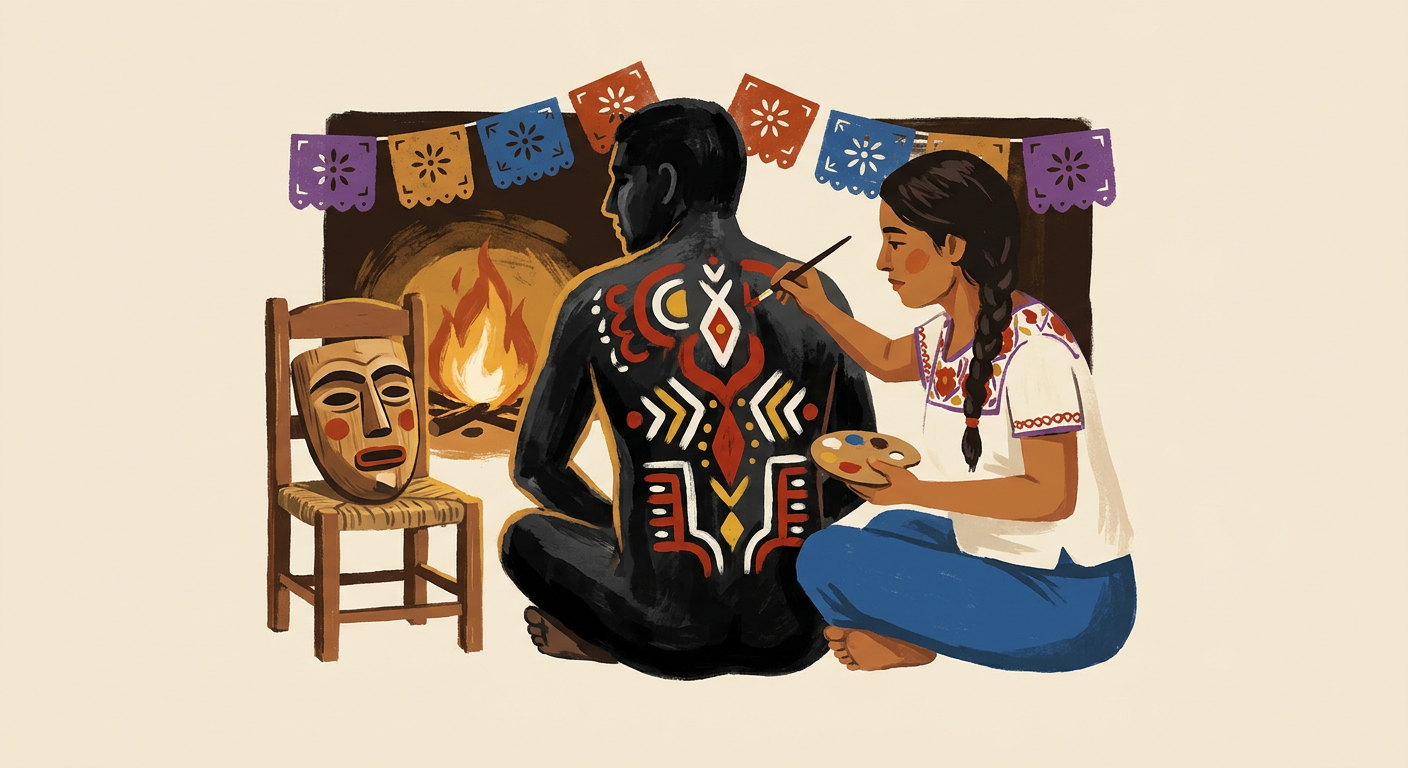
One of the most recognizable images of carnival is that of participants painted black or covered in colorful pigments. According to local accounts and recollections, in the past they used readily available materials such as soot or charcoal; in recent times, commercial paints and increasingly elaborate designs have been introduced. Stripes, dots, skeletons, emblems and creatures appear on the skin, in dialogue with the masks. The transformation begins before they take to the streets: painting someone requires time, trust and the patience of someone who knows that sweat will also play a part in the design.
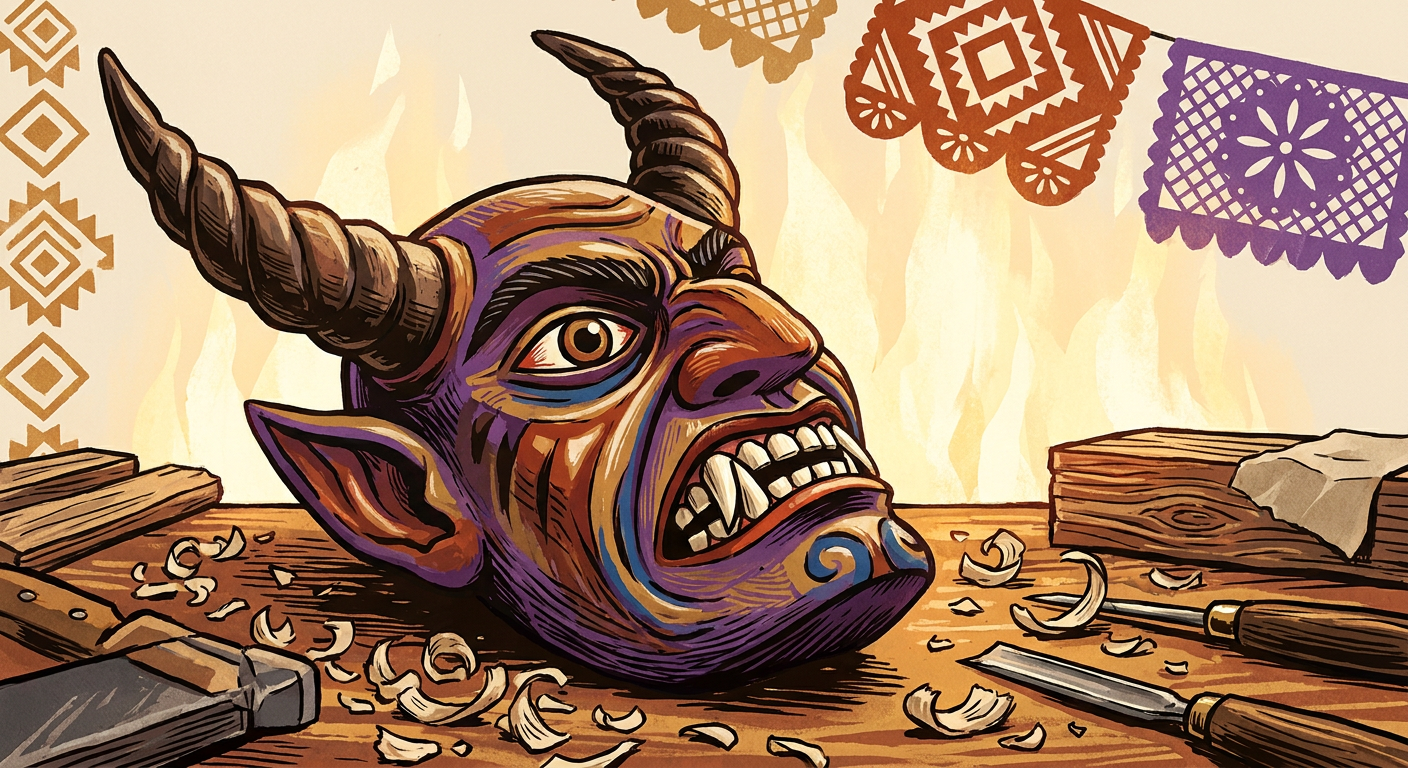
The masks do not merely conceal one identity: they lend another. There are devils with fierce eyebrows, animals with impossible snouts and human faces pushed to the point of caricature, all shaped by hands accustomed to reading the grain of the wood. Tilcajete has an important tradition of copal carving, commercially established during the second half of the 20th century, and carnival reveals a different side of that skill. A piece made for dancing must withstand movement, heat, accidental knocks and several hours of revelry; it is not enough for it to look pretty on a shelf.
At carnival, the mask is not a hiding place: it is permission.
Calling all Oaxacan carvings “alebrijes” is convenient, but it flattens a more interesting history. Pedro Linares created papier-mâché alebrijes in Mexico City during the 1930s: fantastical animals born, by his own account, from a vision he had during an illness. Later, Oaxacan towns such as San Martín Tilcajete and Arrazola developed a thriving production of copal wood figures, often marketed under the same name. Carnival masks are connected to that artisanal universe, but they serve a ritual and performative function: they are made to embody characters within the community.
- 1Body paint: turns the skin into a graphic surface and temporarily erases everyday appearance.
- 2Carved mask: magnifies gestures and connects the festival to the local woodworking craft.
- 3Costume: exaggerates ages, genders, occupations and hierarchies until they become parody.
- 4Band music: structures the procession, summons the town and keeps the characters moving.
- 5Street: it is not simply a backdrop; it is the shared stage where audience and performers mingle.
A Wedding the Judge Does Not Sign
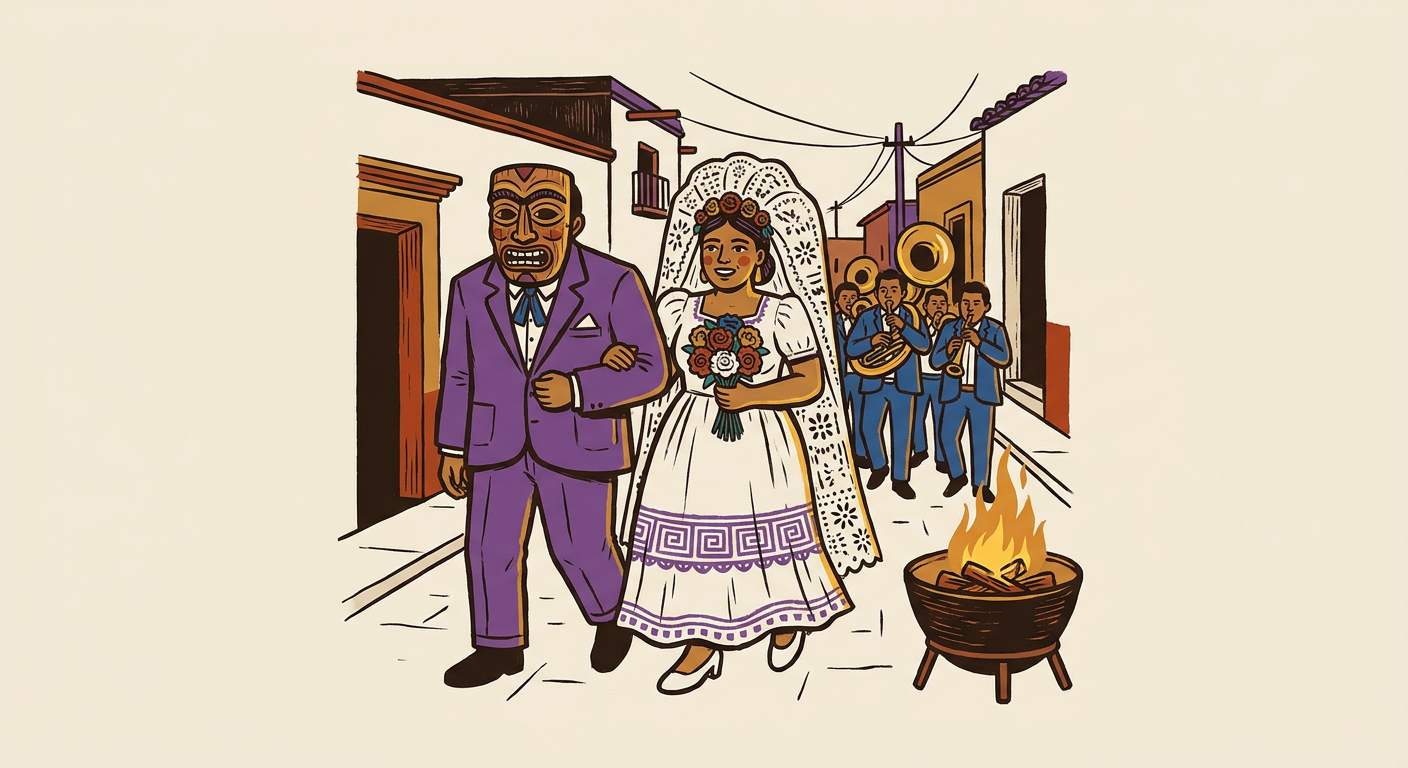
Among the performances associated with carnival are mock weddings, with grooms, brides, godparents and officials acting out deliberately outlandish ceremonies. Female roles are often played by men, while male roles may be exaggerated to the point of absurdity. It is not simply a matter of putting on a dress to get laughs: for a few hours, the reversal upends rules around gender, prestige and decorum. That does not automatically make every joke progressive—the laughter also carries the prejudices of its time—but it does turn the celebration into a space where norms can be performed, distorted and debated.
The comparsa builds its narrative as it moves along. It may parody a wedding, imitate public figures or incorporate recent news, because carnival is not frozen in some supposed ancestral purity. Participants rehearse roles and plan routes, although the audience's response introduces a healthy dose of improvisation. A gesture, a calculated fall or a well-timed phrase can become the center of the scene. If theater usually asks us to turn off our phones, here the whole world enters, notifications included.
This license has limits set by the community itself. The mockery works because there is a social fabric able to recognize the character, understand the allusion and distinguish play from aggression. An outsider may be left with the surface—the makeup, the horns, the spectacular photo—and miss the internal conversation. The real script is made up of family ties, memories, rivalries, the year's events and understandings that do not always need to be announced over a loudspeaker.
Art That Walks and Sweats
Seen through the lens of art, carnival brings together disciplines that museums tend to place in separate galleries. There is sculpture in the mask, painting on the body, design in the clothing, music in the band, dance along the route and theater in the performance. There is also a less visible practice: the collective organization that makes the celebration possible. Without those who carve, paint, sew, perform, cook, gather people and accompany them, there is no work of art; there are only props waiting for their turn.
Its ephemeral nature does not make it lesser. On the contrary, it forces us to think about art beyond the permanent object and the individual signature: a mask can be preserved, but the way a character tilted their head before the band lives on only in memory, photography or storytelling. Each edition repeats a structure while also changing it, as the participants, jokes, paintings and whatever the town needs to put onstage all shift. Tradition is not a sealed display case; it is more like a tool whose handle endures because many hands keep using it.
The fame of Tilcajete's carvings and the circulation of images on social media have brought the carnival increasing visibility. This can support artisan work and attract visitors, but it also encourages quick takes that turn a community celebration into a backdrop for a photo shoot. Attending requires more than pointing a camera: it is best to ask before taking close-up photos, not block the comparsas, avoid touching masks or painted bodies and follow local guidance. Hospitality is not an unlimited press pass.
- 1Check the dates with the municipality or Oaxaca's cultural agencies: they change every year according to the Lenten calendar.
- 2Ask permission before photographing portraits, painting processes or minors.
- 3Buy directly from workshops and ask about the materials, authorship and care of the piece.
- 4Do not reduce participants to “exotic beings”; they are neighbors performing their own tradition.
- 5Pay attention to the music, organization and satire, not only the most striking masks.
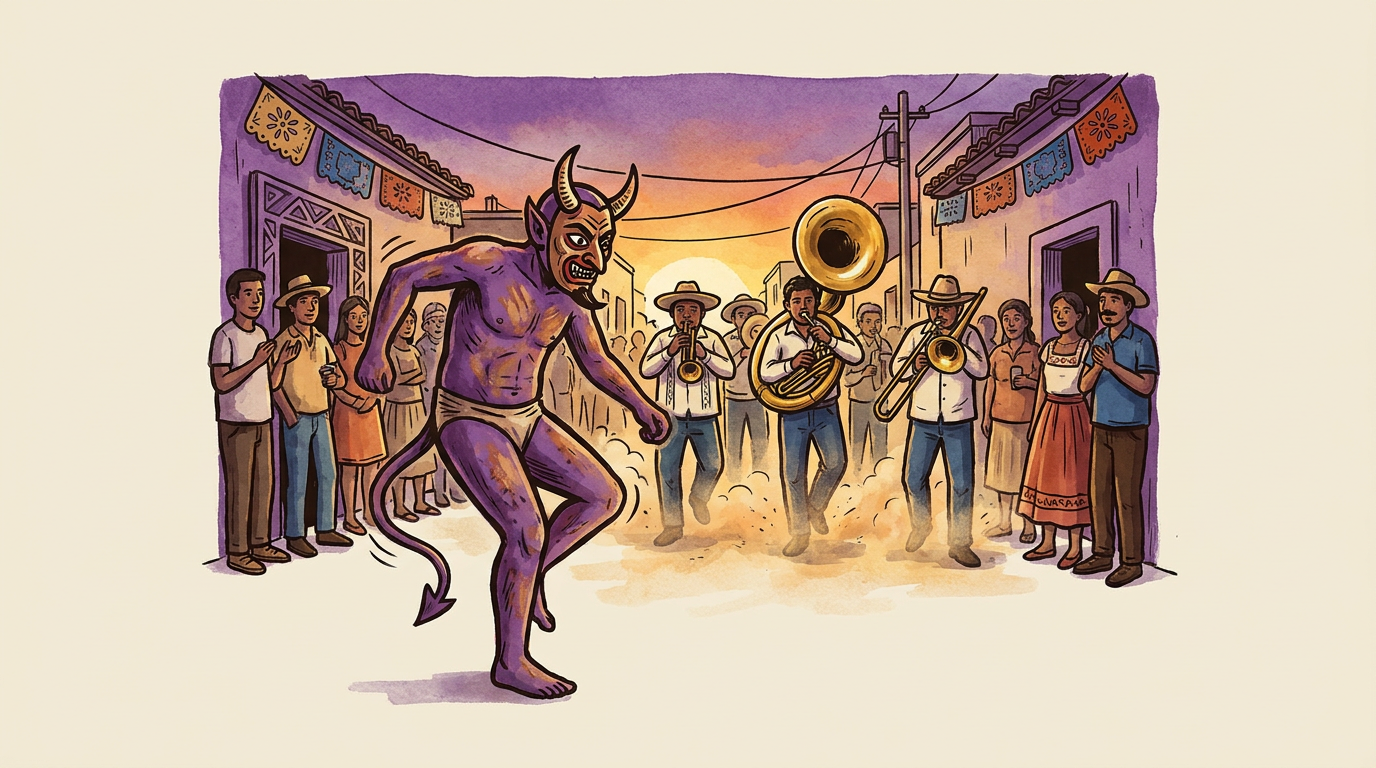
At the end of the day, the paint cracks, the dust dulls some colors and the musicians know the exact weight of every beat. The masks return to the workshop or home, but the town has already seen itself in another light: fiercer, funnier and perhaps more honest. The carnival of San Martín Tilcajete shows that a work of art can also last only as long as it takes a comparsa to turn the corner. What remains afterward is an idea that is hard to wash away: sometimes we need another face to recognize our own.
- Instituto Nacional de Antropología e Historia (INAH), Sistema de Información Cultural: records and reference materials on San Martín Tilcajete and its cultural expressions.
- Secretaría de Cultura, Sistema de Información Cultural (SIC), municipal profile of San Martín Tilcajete, Oaxaca.
- Chibnik, Michael. Crafting Tradition: The Making and Marketing of Oaxacan Wood Carvings. University of Texas Press, 2003.
- López García, Pablo. Los alebrijes de Oaxaca: tallas de madera. Gobierno del Estado de Oaxaca / Instituto Oaxaqueño de las Culturas, 1997.
- Real Academia Española, Diccionario de la lengua española, entry “carnaval” and Diccionario histórico de la lengua española.