Some journeys are measured in miles and others in conversations beside a potter’s wheel, a loom, or a table covered in clay. In Mexico, visiting an artisan town is not about arriving, buying “something typical,” and rushing off with a trunk full of purchases: it means understanding that every object holds a landscape, family memory, skill, and hours of work. This route brings together five places where craftwork remains part of everyday life, even as it faces imitations, exploitative middlemen, and generational change. It is best to go with plenty of time, cash, respectful questions, and room in your suitcase.
Before you set out: looking is also traveling
The selection spans five very different traditions: barro negro from Oaxaca, Purépecha textiles from Michoacán, hammered copper, also from Michoacán, amate paper from Puebla, and ceramics from Jalisco. These are not the country’s only artisan towns—that list would be as long as a Mexican after-dinner conversation—but rather five gateways into techniques deeply tied to their surroundings. The same rule applies in all of them: seek out workshops, markets, and cooperatives; ask who made the piece and how; compare quality, not just prices. Haggling for sport may save you a few pesos, but it devalues entire days of work.
- 1Buy directly from workshops, cooperatives, or stores where the maker is identified.
- 2Ask about materials, production times, and care; a good conversation reveals more than a label.
- 3Do not photograph people, home interiors, or processes without asking permission.
- 4Avoid transporting heritage or antique pieces without documentation; looting does not become décor just because it has a bow on it.
- 5If a piece costs suspiciously little, perhaps someone else has already paid the difference through poorly compensated labor.
1. San Bartolo Coyotepec: the clay that learned to shine
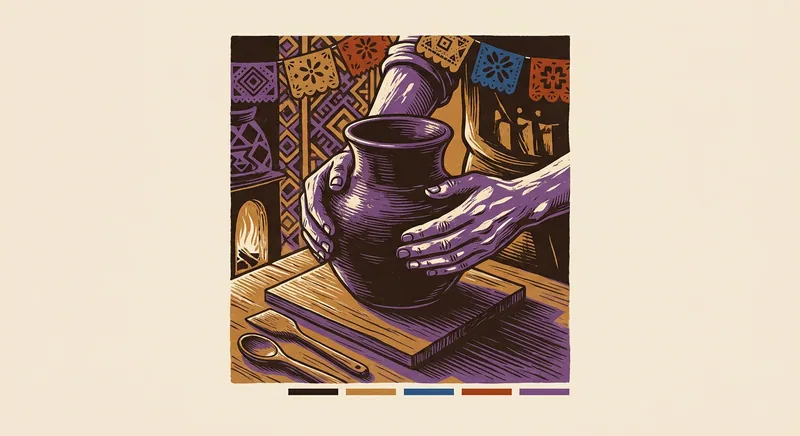
A few miles from Oaxaca City, San Bartolo Coyotepec is renowned for its barro negro pottery. The pieces are shaped mainly through a modeling and rotation technique using simple supports, unlike a foot-powered or electric potter’s wheel. The dark color develops during firing with little oxygen, not because the clay is naturally black or painted afterward. There are pitchers, pots, and vessels for domestic use, as well as sculptures, lamps, and ornamental pieces with ceramic filigree.
The burnished appearance now associated with the town was championed in the 20th century by potter Rosa Real Mateo, known as Doña Rosa. By polishing the surface before firing, she achieved a shiny, metallic finish that transformed the commercial reach of the local pottery. She did not invent barro negro—the tradition predates her—but she did develop and popularize this particular finish; distinguishing between the two keeps history from turning into advertising copy. Her family workshop remains a landmark, although the town is home to many other voices and explorations.
Visit the Oaxaca State Museum of Popular Art, located in San Bartolo, and then walk through family workshops to compare finishes, thicknesses, and signatures. If you want a pot for cooking or holding liquids, ask specifically about its function: many contemporary shiny pieces are decorative, and some are openwork. Transport your purchase patiently and with good packaging; pottery does not appreciate a sprint to the boarding gate. From Oaxaca City, the town can be explored in half a day, but a slower visit reveals that behind the color lies an entire community, not just one family name.
2. Santa Clara del Cobre: a town square shaped by the hammer
In Santa Clara del Cobre, Michoacán, the sound of the hammer is part of the landscape. The town maintains a long tradition of copperwork, enriched during the colonial period with new tools and forms of artisanal organization. Workshops melt, forge, hammer, and polish the metal to create pots, vases, sinks, bells, and sculptural works. Much of the material used today is recycled copper, returned to the fire to take on another life and, with luck, find a kitchen where it will be treated well.
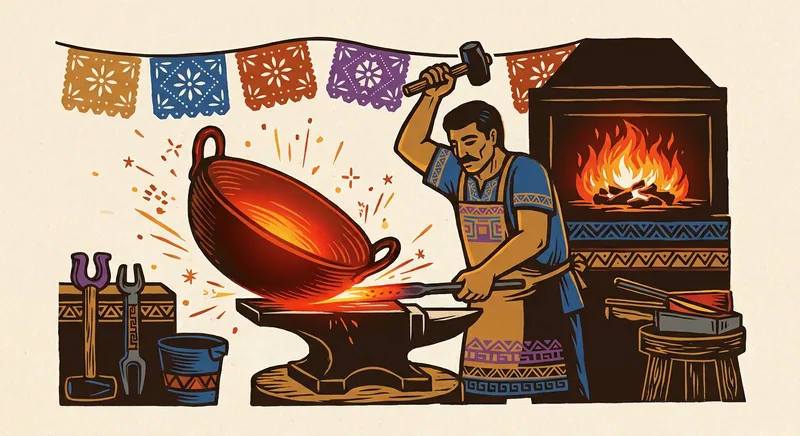
The National Copper Museum helps visitors understand the differences among a functional piece, a competition work, and an object made with more industrial methods. In a workshop, you can see how hammering is not merely decorative: it thins, stretches, and shapes the metal through steady blows. Ask whether the piece is solid copper, whether it has any soldered joints, what finish it received, and how it should be cleaned. For cooking, confirm with the artisan whether the interior is tinned or prepared for food use, and follow their instructions.
Copper holds the memory of every blow: where there seems to be a smooth surface, there were fire, calculation, a practiced ear, and thousands of hammer strikes.
The National Copper Fair is usually held around August, together with the National Hammered Copper Competition, and brings together exceptional pieces; it is wise to verify dates with Michoacán’s cultural authorities before traveling. Outside the fair, you will find a less crowded pace and more opportunities for conversation. Santa Clara can be combined with Pátzcuaro and other towns in the lake region, but it deserves a day of its own. Here, the best keepsake may not be the largest object, but having seen how a seemingly stubborn sheet of metal finally yields to the artisan’s rhythm.
3. Santa María del Río: the rebozo as architecture
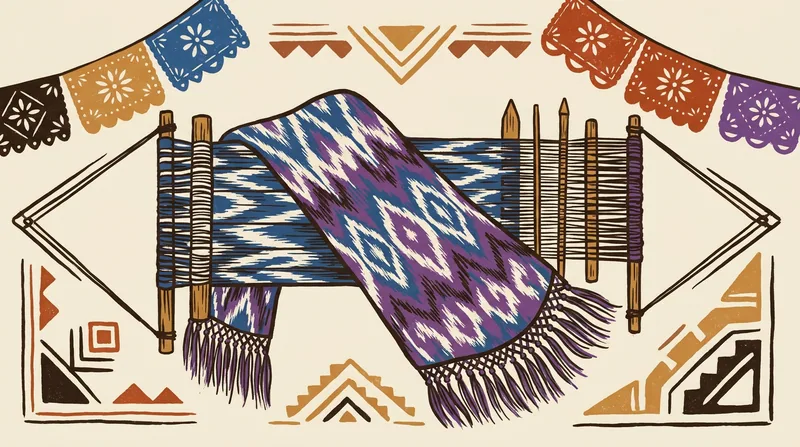
Santa María del Río, in San Luis Potosí, is one of the historic centers of the Mexican rebozo and is especially associated with the so-called rebozo de bolita. Its production may include resist dyeing, or jaspeado: groups of threads are tied to keep the color from penetrating certain areas, dyed, and then arranged on the loom to form patterns. The process requires planning the design before weaving it, like an architecture built from tiny absences. Then comes the empuntado, hand-knotting that finishes the ends and may require a specialist other than the person who wove the cloth.
The name “de bolita” is linked to commercially sold skeins or threads whose wrappers featured small balls, historically used for certain rebozos; it does not describe a fabric covered in polka dots. Cotton, silk, rayon, and other fibers coexist in the town, with different prices and characteristics. Touch with permission, see whether the pattern maintains its continuity, and ask who wove it and who did the empuntado. An authentic rebozo is not judged solely by its lightness: the material, the evenness of the weave, the dyeing, and the complexity of the fringes all matter.
It is worth visiting the Rebozo School and seeking out workshops and shops that identify provenance and materials. Ask them to explain how to store the piece, because silk and other fibers benefit from shade, careful cleaning, and rest without harsh creases. If you are looking for something to wear every day, say so: the artisan can guide you better than any algorithm in a hat. Taking home a rebozo chosen with knowledge means recognizing a chain of labor involving dyers, weavers, empuntadoras, and merchants.
4. San Pablito: a forest turned into paper
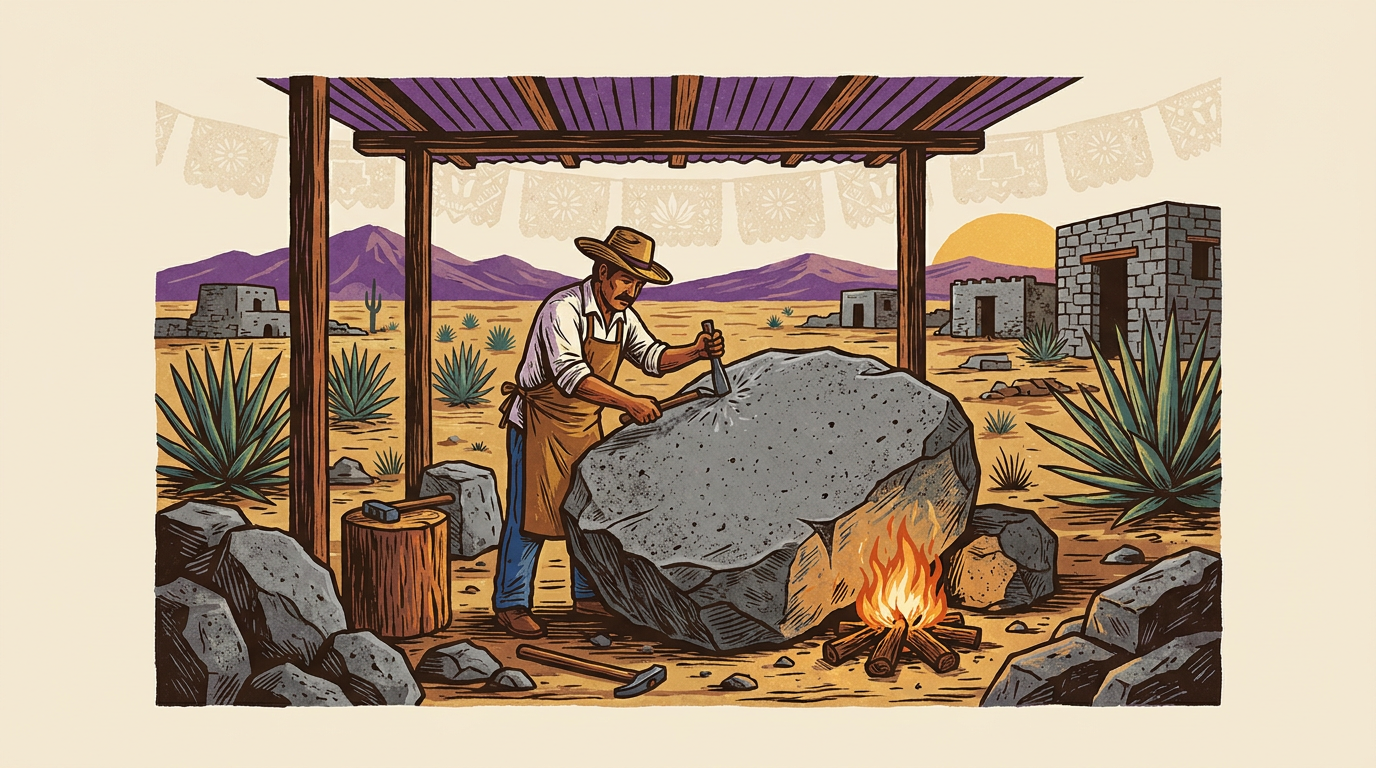
San Pablito, an Otomí, or Hñähñu, community in the municipality of Pahuatlán, Puebla, preserves the craft of making amate paper from plant fibers. Bark from different trees is used; it is boiled to soften it, arranged in a grid on a board, and beaten with a grooved stone until it bonds into a sheet. The result may be light, brown, or mottled, depending on the raw material and treatment. Although it now appears in artworks, notebooks, and decorative objects, its history is also linked to the community’s ritual practices.
Bark paper existed in Mesoamerica before the Spanish arrived and served tributary, ceremonial, and documentary purposes. However, it is best not to draw a perfectly straight line between every sheet made today and the pre-Hispanic world: techniques, uses, and markets change over time. In San Pablito, certain paper cutouts represent entities related to seeds, illnesses, natural forces, or ancestors within specific ritual contexts. They are not merely exotic little dolls or props available for any staged scene.
Getting there requires more planning than visiting a museum shop, which is precisely why the community should not be treated like a display case. Hire local guides when available, ask permission before entering workshops, and do not photograph ceremonies or ritual objects without explicit authorization. Ask about the source of the bark and responsible harvesting practices, since commercial demand has also put pressure on species and territories. Buying sheets, artworks, or notebooks directly can support producing families, as long as curiosity comes with respect.
5. Tonalá: earth, fire, and many family names
Tonalá is part of the Guadalajara metropolitan area, but its pottery identity has roots far older than the urban sprawl. Its workshops produce barro bruñido, bandera, canelo, petatillo, betus, and other styles with different techniques and finishes. The Thursday and Sunday artisan tianguis offers an enormous selection, from modest utensils to works by individual artists. Such abundance also calls for a discerning eye: not everything sold there was made in Tonalá, nor is everything handmade of the same quality.
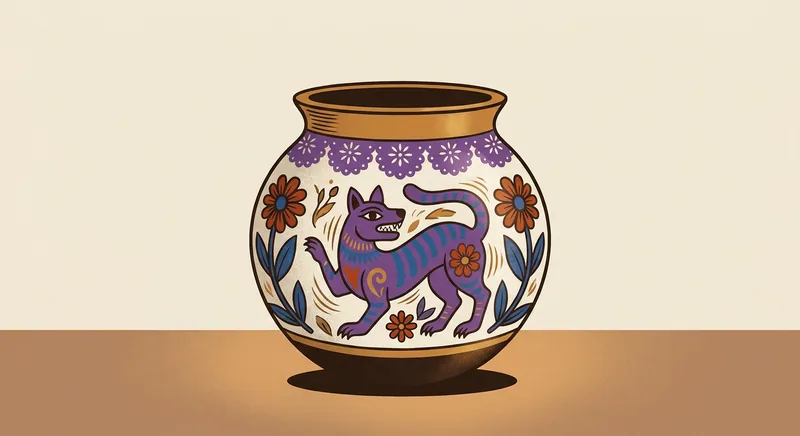
Barro bruñido is polished before firing and usually retains a smooth, unglazed surface. Petatillo takes its name from the lattice of fine lines that fills the background as though it were a petate; its decoration demands a steady hand and many hours. Barro betus, meanwhile, is known for its vivid colors and fantastical figures or animals, associated with families and artists from Tonalá. Visiting the National Museum of Ceramics offers a useful map before diving into the tianguis with a magpie’s enthusiasm.
- 1For barro bruñido, look for a polished surface and well-integrated designs, not a plastic coating that imitates the shine.
- 2For petatillo, note the density and regularity of the background lines, as well as the main composition.
- 3For tableware and containers, ask whether they are food-safe and contain lead; do not assume based on appearance.
- 4Ask for the name of the workshop or artisan and keep cards, receipts, or signatures: authorship deserves care, too.
- 5If you go to the tianguis, arrive early and bring wrapping material; a thin bag is not armor.
Mexican ceramics carry a significant public health concern: some traditional low-temperature glazes have used lead. Public institutions and many workshops have promoted lead-free glazes, but the transition is not uniform. If the piece will come into contact with food or drink, buy from producers who can explain their materials and processes; for greater certainty, laboratory tests and official certifications are available, though their availability varies. A beautiful cazuela should hold beans, not toxic secrets.
These five towns show that craftsmanship is not a static relic, but a form of knowledge that negotiates every day with the market, shortages of raw materials, trends and the desires of younger generations. Traveling to learn about it demands more than admiration: it requires paying fairly, recognizing creators and accepting that not everything is made for our camera or our living room. A well-chosen piece extends the visit, but does not replace it. In the end, what one takes home should not be only clay, metal, thread or bark, but a more attentive way of looking at the work of others’ hands.
- Fomento Cultural Banamex, Great Masters of Mexican Folk Art, collection and publications on Mexican folk art.
- Oaxaca State Museum of Folk Art, Government of the State of Oaxaca, information on pottery from San Bartolo Coyotepec.
- Casa de las Artesanías de Michoacán, institutional information on hammered copper from Santa Clara del Cobre.
- National Institute of Anthropology and History (INAH), research and outreach materials on amate paper and Otomí traditions in San Pablito.
- Jalisco Ministry of Culture, National Ceramics Museum, information on pottery techniques from Tonalá.