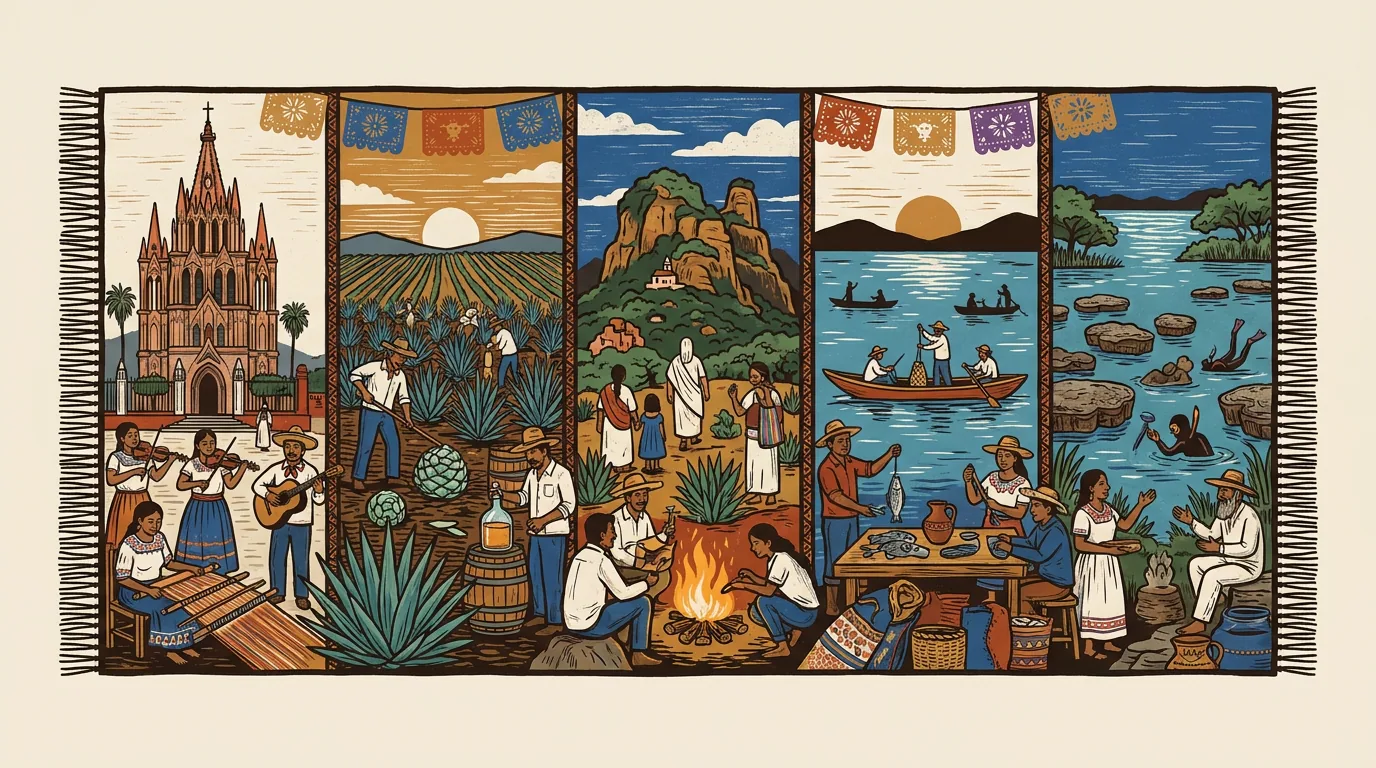
There are towns we visit, and then there are towns that have also learned how to be looked at. In Mexico, the Pueblo Mágico designation began in 2001 as a federal program to recognize communities with historical, cultural, natural or symbolic heritage capable of sustaining a tourism offering of their own. The word “mágico” is effective for promotion, though on its own it does not explain the parish archives, family workshops, smoke-filled kitchens or conflicts that shaped each place. Of the many destinations included in the program, we chose five that consistently rank among the best known and most visited: San Miguel de Allende, Tequila, Tepoztlán, Pátzcuaro and Bacalar.
A Popular List, Not a Ranking
Talking about the “most popular” requires clarification: there is no single, permanent official ranking of all the Pueblos Mágicos by number of visitors. Visitor numbers change according to the year, season and how they are measured; moreover, San Miguel de Allende formally left the program when its historic center and the Sanctuary of Jesús Nazareno de Atotonilco were added to the UNESCO World Heritage List in 2008. We include it because it was among the first places to receive the designation and, in travelers’ memories, remains associated with the phenomenon that propelled the brand. It is not cheating: it is administrative history in comfortable shoes.
- 1Enduring national and international fame.
- 2Recognizable historical or natural heritage.
- 3A cultural identity that cannot fit into a single photograph.
- 4A constant presence on travel routes, in guidebooks and in travel conversations.
- 5Current tensions among conservation, tourism and everyday life.
San Miguel de Allende: Stone, Conspiracy and the World
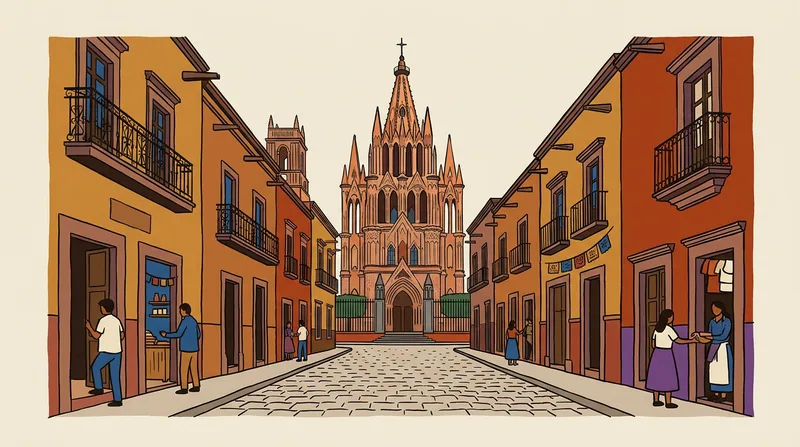
Before it became a favorite backdrop for weddings and magazine covers, San Miguel was a colonial town located along the routes connecting the mines of Zacatecas with Mexico City. Its name honors Fray Juan de San Miguel, a Franciscan associated with the settlement’s founding in the 16th century; “de Allende” was added in memory of Ignacio Allende, who was born there in 1769 and played a leading role in the insurgency. The military officer’s birthplace, now a museum, helps restore historical depth to a downtown that sometimes seems taken over by beautifully lit terraces. Commerce, religion, military life and domestic life converged in its streets long before brunch arrived.
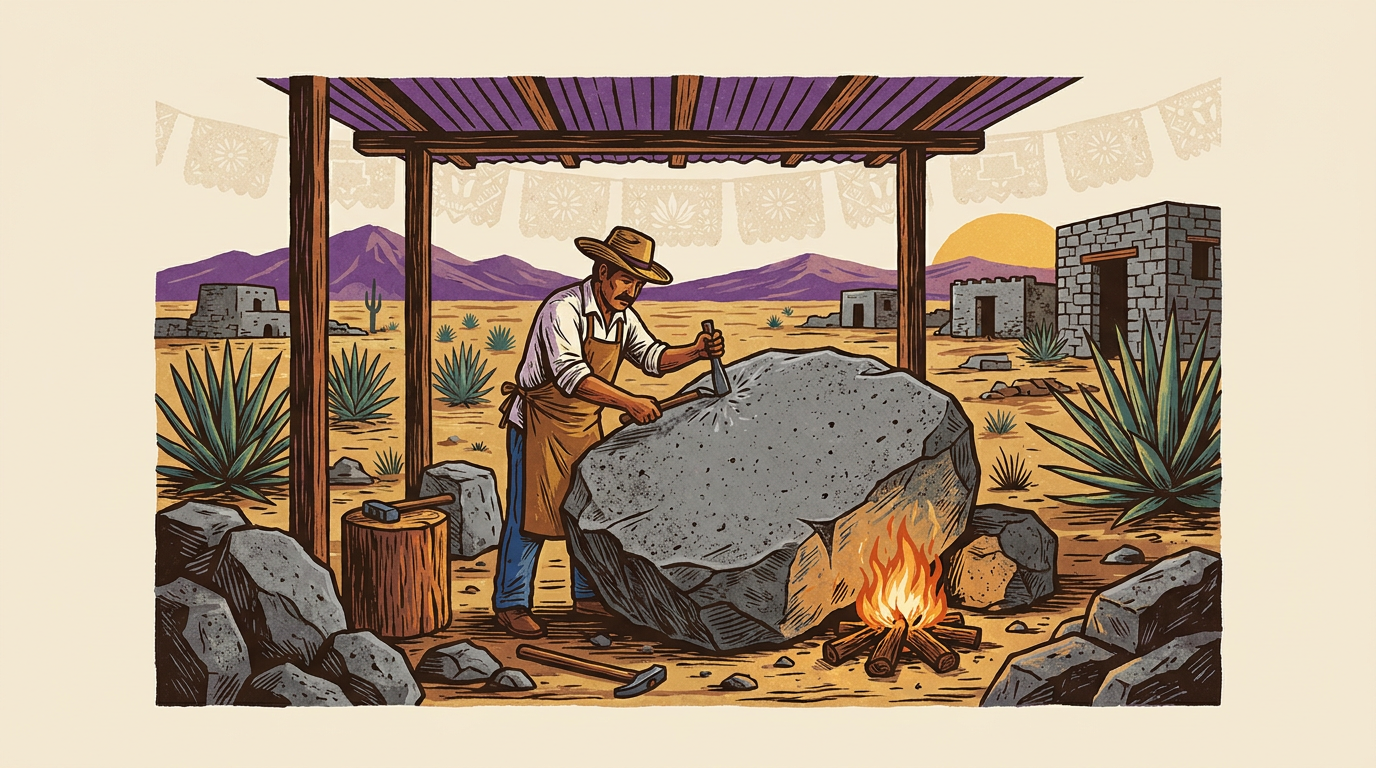
The Parroquia de San Miguel Arcángel dominates the plaza with a neo-Gothic facade designed in the 19th century by master stonemason Zeferino Gutiérrez. It is often said that he used images of European churches as references; what can be confirmed is that his work transformed an earlier parish building and created the silhouette that now defines the city. Nearby, the former Colegio de San Francisco de Sales recalls San Miguel’s educational importance during the colonial period, while Atotonilco preserves an extraordinary ensemble of religious murals. Calling it the “Sistine Chapel of Mexico” works for the brochure, but looking at its walls without comparisons is far more interesting.
The presence of foreign artists and residents grew during the 20th century, encouraged by schools such as the Instituto Allende and by the arrival of American students after World War II. That exchange gave the city an international profile, but it also raised questions that remain relevant: who can afford a house downtown? Which businesses survive rising rents? How much of local life ends up turned into scenery? Beauty loses none of its merit when its costs are discussed. On the contrary, a city is better understood when we also listen to those who sweep the plaza after the party.
Tequila: The Landscape That Ended Up Inside a Bottle
Tequila, Jalisco, shares its name with a drink whose history is often summed up as agave, stills and emergency mariachi. The reality is much longer. Agave drinks have been consumed in the region since pre-Hispanic times, though distilled tequila emerged during the colonial period through techniques introduced and adapted after the conquest. Its production took shape among haciendas, taverns, taxes, trade networks and the knowledge of jimadores; it was not born from a providential bolt of lightning striking a blue agave heart, no matter how lovely the legend may be.
The town lies at the foot of the Tequila volcano, surrounded by fields of Agave tequilana Weber, blue variety. In 2006, UNESCO added the Agave Landscape and Ancient Industrial Facilities of Tequila to the World Heritage List, recognizing the crop as well as the distilleries and settlements associated with it. The denomination of origin, established in 1974 and later expanded, defines the territories where the drink may legally be produced under that name. So not every agave spirit is tequila, just as not every gentleman with a mustache is a revolutionary.
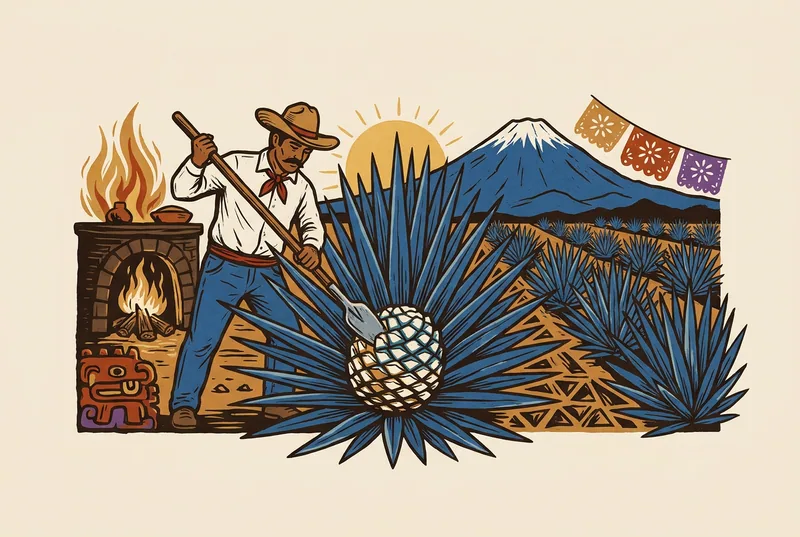
Visiting a distillery lets you follow the plant’s journey to the oven, milling, fermentation and distillation. It is worth remembering, however, that the landscape is not merely an agricultural postcard: it depends on skilled labor and faces problems such as the spread of monoculture, price fluctuations and the loss of genetic diversity. There is also an urban culture around the parish church of Santiago Apóstol, the old factories and the neighborhoods where the industry shapes schedules, trades and family memories. The bottle is only the final chapter; the territory wrote the ones before it.
“For every ill, mezcal; for every good, that too.” The saying belongs to the broad world of agave spirits, but in Tequila it should be used with precision: mezcal and tequila share a family, not a legal identity or a uniform process.
Tepoztlán: mountain, market and a rebellious biography
Less than two hours from Mexico City —when traffic decides to cooperate—, Tepoztlán brings together an archaeological site on the mountain, a 16th-century convent, neighborhoods with chapels and a market where history is eaten in tacos, itacates and seasonal stews. Its name comes from Nahuatl and is associated with copper, tepoztli, although exact translations vary depending on the toponymic analysis. The town retains a strong community identity and a long history of defending its territory against outside projects. That political dimension is often left out of the selfie taken from the Tepozteco.
At the top of the mountain stands a small temple dedicated to Ometochtli Tepoztécatl, a deity associated with pulque. The visible building dates to the Postclassic period and was part of a broader ritual landscape, not a gym designed to put Sunday hikers to the test. Down below, the Exconvento de la Natividad was built by Dominicans in the 16th century and is part of the Earliest 16th-Century Monasteries on the Slopes of Popocatépetl inscribed by UNESCO. Its murals and convent spaces reveal the complex —and also violent— encounter between European evangelization and Indigenous societies.
The figure of the Tepozteco lives in oral accounts, festivals and written versions that combine pre-Hispanic and colonial times. One legend presents him as a miraculously born hero, conqueror of a fearsome creature and lord of the mountain; another festive tradition depicts his conversion to Christianity. They are legends, not notarized records, and that is precisely why they reveal how a community narrates its changes without entirely relinquishing its ancient symbols. The challenge for visitors is not to confuse respect with exoticism: Tepoztlán is not an automatic “energy” dispenser.
Pátzcuaro and Bacalar: two waters, two memories
Pátzcuaro, Michoacán, was a fundamental center of the Purépecha world and gained new importance during the 16th century under Michoacán’s first bishop, Vasco de Quiroga. His congregational, hospital and educational project left deep marks, although it should not be told as the solitary work of a benefactor without context: Indigenous communities participated with their own knowledge, interests and forms of organization. The Basílica de Nuestra Señora de la Salud, the Casa de los Once Patios and the Plaza Vasco de Quiroga offer a way to read different layers of that history. They also require walking slowly, which is a modest form of intelligence.
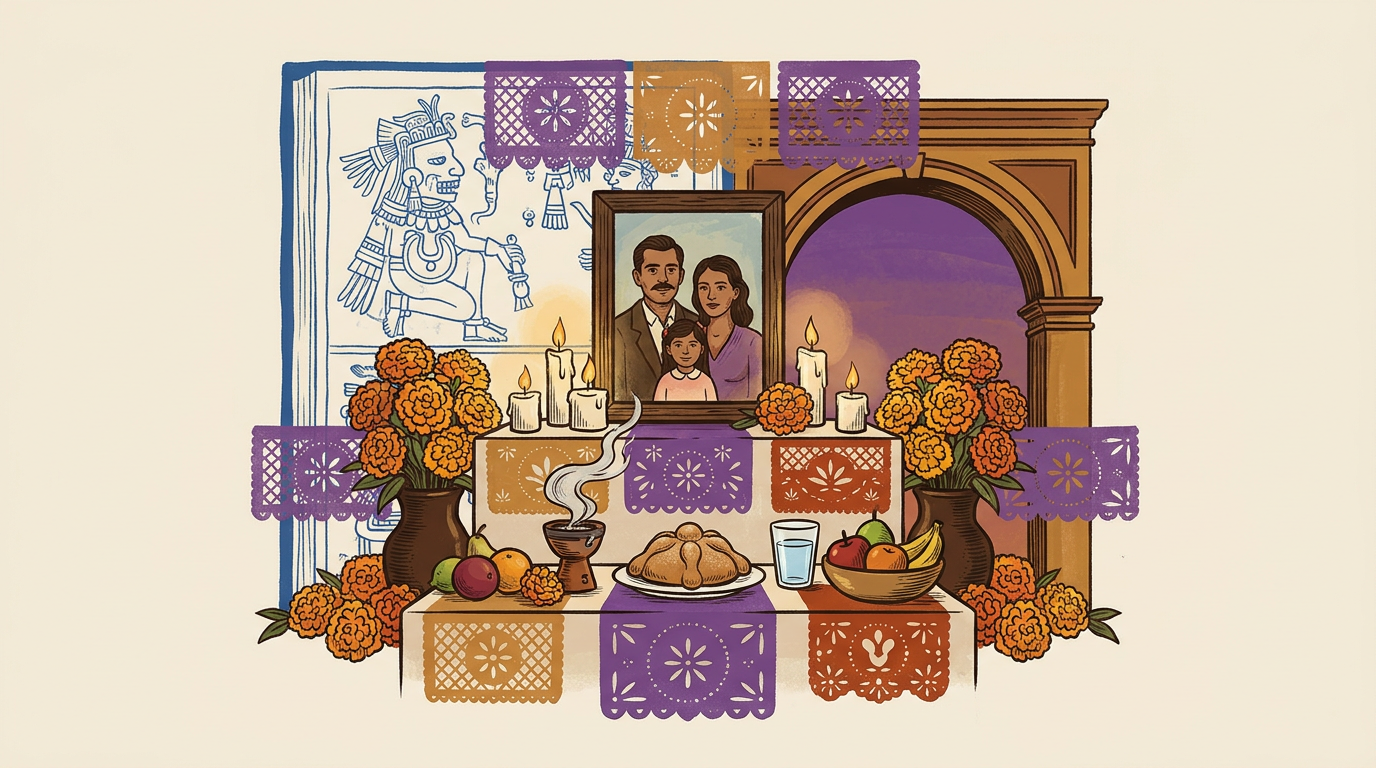
Lake Pátzcuaro binds together a region of islands and towns with fishing, farming and artisanal traditions. The celebrated Night of the Dead draws crowds to places such as Janitzio and Tzintzuntzan, but it is not a show staged for tourists: these are living funerary practices that differ among communities and families. Arriving with permission, avoiding intruding on vigils and not using the cemetery as a photo studio should be basic courtesy. Contemporary Purépecha culture is not limited to that night, either; it is expressed in language, music, textiles, pottery, cuisine and communal organization throughout the year.
Farther southeast, Bacalar, Quintana Roo, looks out over a lagoon of shifting hues fed by underground water systems. The present-day town developed over an ancient Maya settlement and was a strategic point along routes between the Yucatán Peninsula and the Caribbean. During the colonial period, it endured attacks by privateers and trade disputes; in the 18th century, the Fuerte de San Felipe was built to bolster its defenses. In the 19th, the region was a theater of the Caste War, a conflict that began in 1847 between Maya rebels and Yucatecan elites, with deep social, territorial and economic causes.
The lagoon is often promoted as the Lagoon of Seven Colors, a tourism slogan referring to variations in depth, the lakebed and light. More important than counting shades of blue is protecting the stromatolites, structures formed by microbial communities whose presence offers insight into some of the most ancient processes of life on Earth. Touching them, stepping on them or boating carelessly can damage them, while wastewater and urban growth threaten the system’s balance. Bacalar reminds us that natural heritage is not a swimming pool with a beauty filter: it is a territorial organism with limits.
- 1In San Miguel, visit museums and workshops, not just terraces.
- 2In Tequila, ask about the work of the jimador and the origin of the agave.
- 3In Tepoztlán, respect closures, trails and community decisions.
- 4In Pátzcuaro, attend celebrations without turning someone else’s grief into a prop.
- 5In Bacalar, avoid polluting sunscreens, anchors and contact with stromatolites.
These five places are popular because they distill powerful images: stone towers, rows of agave, a temple atop the mountain, candles beside the lake and an almost transparent lagoon. But their true interest emerges when the image opens up to reveal work, disputes, languages, faith, ecology and memory. The Pueblos Mágicos program helped bring visibility and resources to numerous communities, while also encouraging real estate pressures, rapid commercialization and overly polished versions of the past. Traveling with historical curiosity does not mean arriving with a serious face; it means asking who sustains the beauty we came to celebrate.
The magic, if we want to keep the word, does not lie in pretending that time has stood still. It lies in recognizing that these towns continue to change and that their residents are not supporting characters in our vacations. A responsible visit leaves money at local businesses, respects community rules, conserves water, and accepts that not everything exists to be photographed. In the end, the best memory is not having found an untouched Mexico—that country never existed—but having learned to see a living one.
- Ministry of Tourism, Government of Mexico, Pueblos Mágicos Program.
- UNESCO World Heritage Centre: Protective Town of San Miguel and the Sanctuary of Jesús Nazareno de Atotonilco; Agave Landscape and Ancient Industrial Facilities of Tequila; Earliest 16th-Century Monasteries on the Slopes of Popocatépetl.
- National Institute of Anthropology and History (INAH), information on the archaeological zones of El Tepozteco and the historical heritage of Pátzcuaro, Tequila and Bacalar.
- Tequila Regulatory Council, history and framework of the Tequila Designation of Origin.
- Enrique Florescano, Ethnicity, State and Nation: An Essay on Collective Identities in Mexico, Taurus.