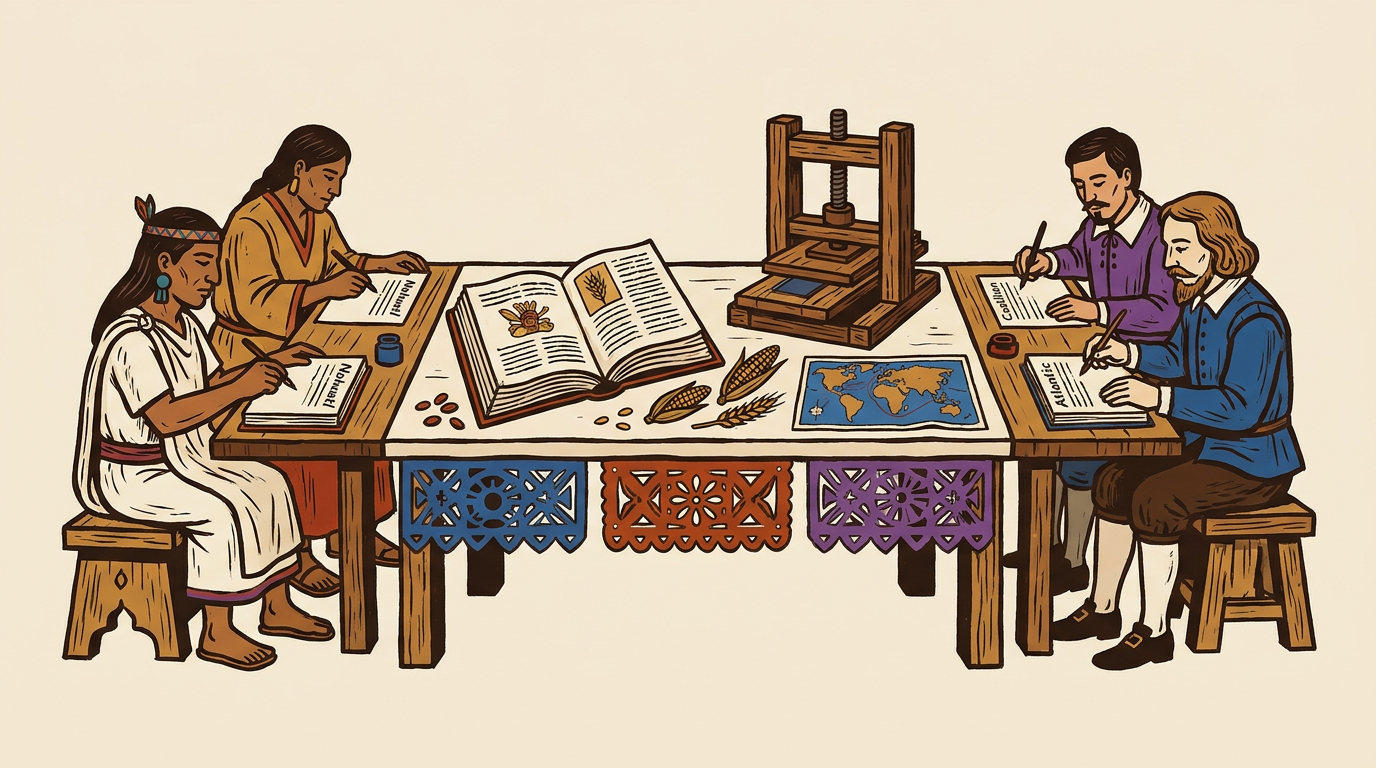
Asking why the conquest “was positive” may seem simple, but the wording hides the answer within the question. The conquest of Mexico was a war, not a cultural exchange program: there were massacres, enslavement, forced tribute, dispossession and a demographic catastrophe worsened by diseases from Eurasia. That does not prevent us from acknowledging the innovations, mixtures and connections that emerged during the period; rather, it requires us to ask who gained each advantage, who paid its cost and what Indigenous peoples did with what was new. Here are ten facts, not to absolve the conquest, but to understand how a wounded society produced transformations we still live with today.
First, Take the Bow Off the War
1. The fall of Mexico-Tenochtitlan was not the work of a small group of Spaniards alone. Hernán Cortés had tens of thousands of Indigenous allies, including Tlaxcalans, Huejotzincas and other peoples who opposed Mexica power or sought to shift the regional balance. They had their own reasons: political rivalries, tribute burdens, survival and opportunities for alliance. Saying so does not make the conquest “positive”; it restores agency to those who for a long time appeared as supporting players in a European feat.
2. Epidemics transformed the continent with a violence that no optimistic assessment should conceal. Smallpox erupted in 1520 and was followed throughout the 16th century by new epidemic waves, including those of 1545 and 1576; along with war, hunger, displacement and exploitation, they caused an enormous population decline, although estimates vary by region and method. Pathogens had no moral intent, but their arrival took place within a colonial order that compounded vulnerability. Something new can change history without being a benefit, just as a fire can change a city without improving it.
Not every change is progress, and not every exchange was voluntary.
Words, Type and Records
3. Spanish expanded its presence and eventually served as a common language across much of New Spain and, centuries later, independent Mexico. This facilitated communication among regions and today connects Mexico with a vast international community, but its expansion was not a neutral gift: it coexisted with shifting policies of evangelization, administration and Hispanization, some openly coercive. For much of the colonial period, moreover, Nahuatl served as a lingua franca, and many officials learned Indigenous languages. The Mexican result is not an untouched Spanish, but one seasoned with words such as aguacate, tomate, chocolate, coyote and tianguis; language, too, knows how to welcome guests and then charge them rent.
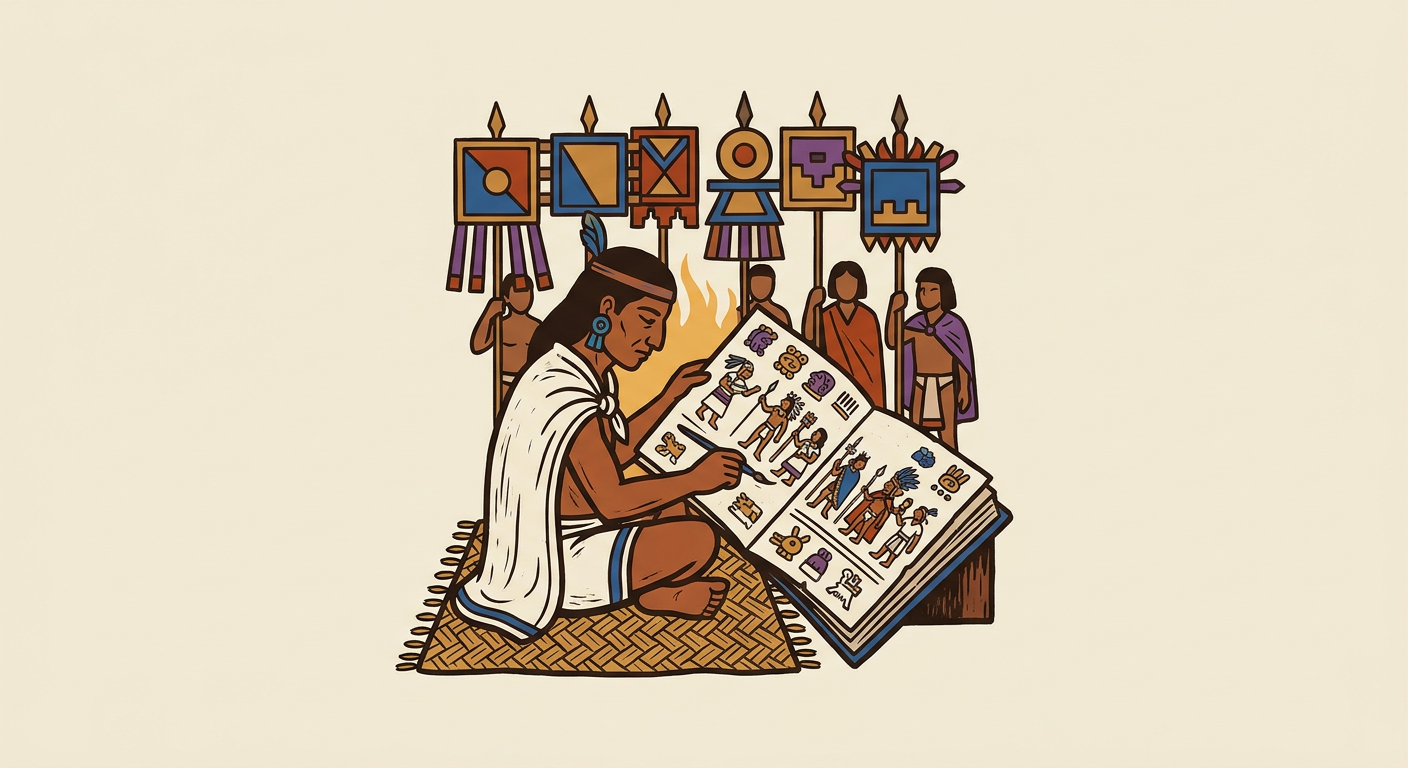
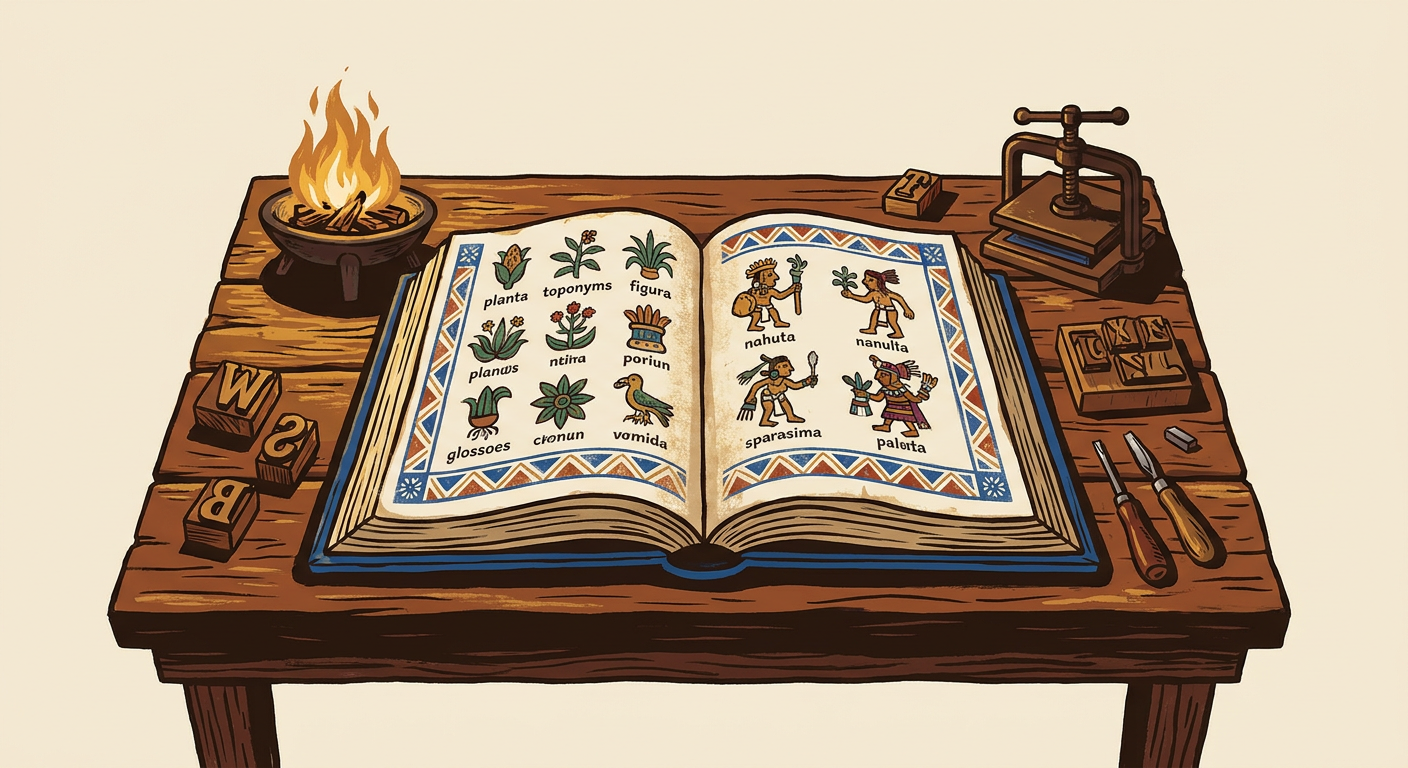
4. Alphabetic writing and the printing press opened up new ways to record knowledge, lawsuits, wills, chronicles and vocabularies. Mesoamerican peoples already had complex traditions of pictographic writing and folded books; what was new was the adoption of the Latin alphabet to write Nahuatl, Maya, Mixtec and other languages with remarkable precision. The printing press began operating in Mexico City in 1539, the first established in the Americas. Its arrival was tied to the Church and the colonial government, but Indigenous authors and scribes made it their own to preserve memory, litigate land claims and recount the conquest from perspectives that contradicted the victors.
5. The founding of the Royal and Pontifical University of Mexico in 1551 brought the capital of New Spain into the European university tradition. The arts, theology, law and medicine were taught there—fields of knowledge useful for training professionals and discussing public affairs. However, access was restricted by gender, social status and institutional rules; it was neither a modern nor a universal university, despite the generosity of its name. There were also institutions such as the College of Santa Cruz de Tlatelolco, inaugurated in 1536 for young Indigenous nobles, where intellectual exchange produced extraordinary works and more than a few tensions.
The Table Was Never the Same
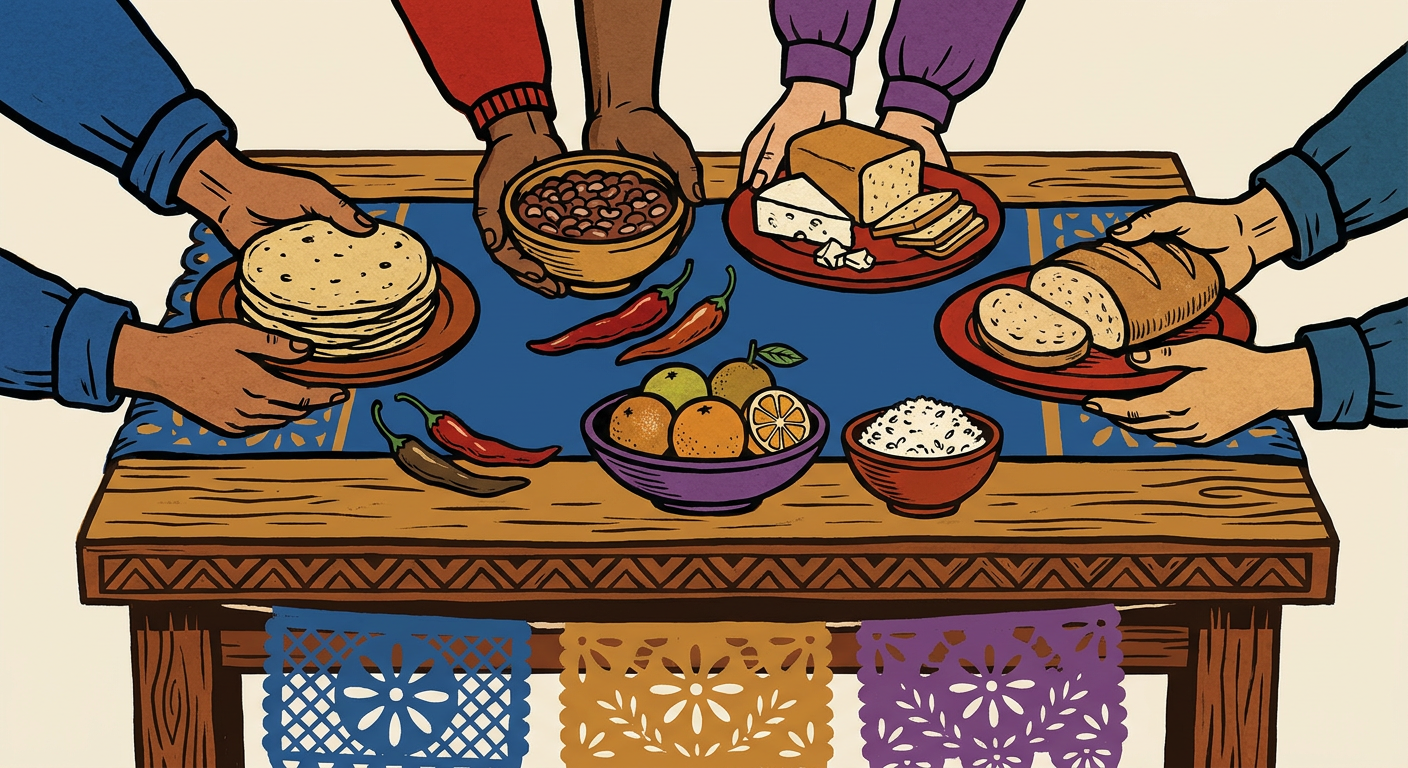
6. The conquest introduced animals, plants and techniques from Europe, Africa and Asia into American food systems. Wheat, rice, sugarcane, citrus fruits, cattle, pigs, sheep, goats and chickens changed landscapes and cuisines; some products arrived directly with the Spaniards, while others traveled through broader imperial networks. That process gave rise to breads, cheeses, cured meats, convent sweets and mestizo stews that today seem as though they have always been around. But livestock also encroached on farmland, sugar depended on exploited labor and the introduction of new species carried environmental costs: pigs did not arrive handing out free carnitas, nor did sugarcane come without a bill.
7. The exchange flowed in both directions, and Mesoamerica gave the world essential ingredients. Corn, cacao, tomatoes, chiles, vanilla, avocados and various species of beans transformed diets and economies far beyond New Spain. Mexican cuisine emerged from Indigenous, European, African and Asian encounters, but its backbone—nixtamalized corn, chiles, beans and squash—had thousands of years of history before 1519. Calling it all a “contribution of the conquest” erases the fact that much of what was shared with the world was Indigenous agricultural knowledge.
- 1Wheat adapted to the local climate and gave rise to regional breads, but it did not displace corn as the national staple.
- 2Livestock provided meat, milk, leather and draft power, while also putting pressure on land and resources.
- 3Sugarcane fueled mills and confectionery, frequently sustained by forced or enslaved labor.
- 4Cacao, vanilla, tomatoes and chiles crossed the Atlantic and transformed entire cuisines.
- 5Rice, plantains and various spices show that the exchange was not only between Europe and the Americas: Africa and Asia were also at the table.
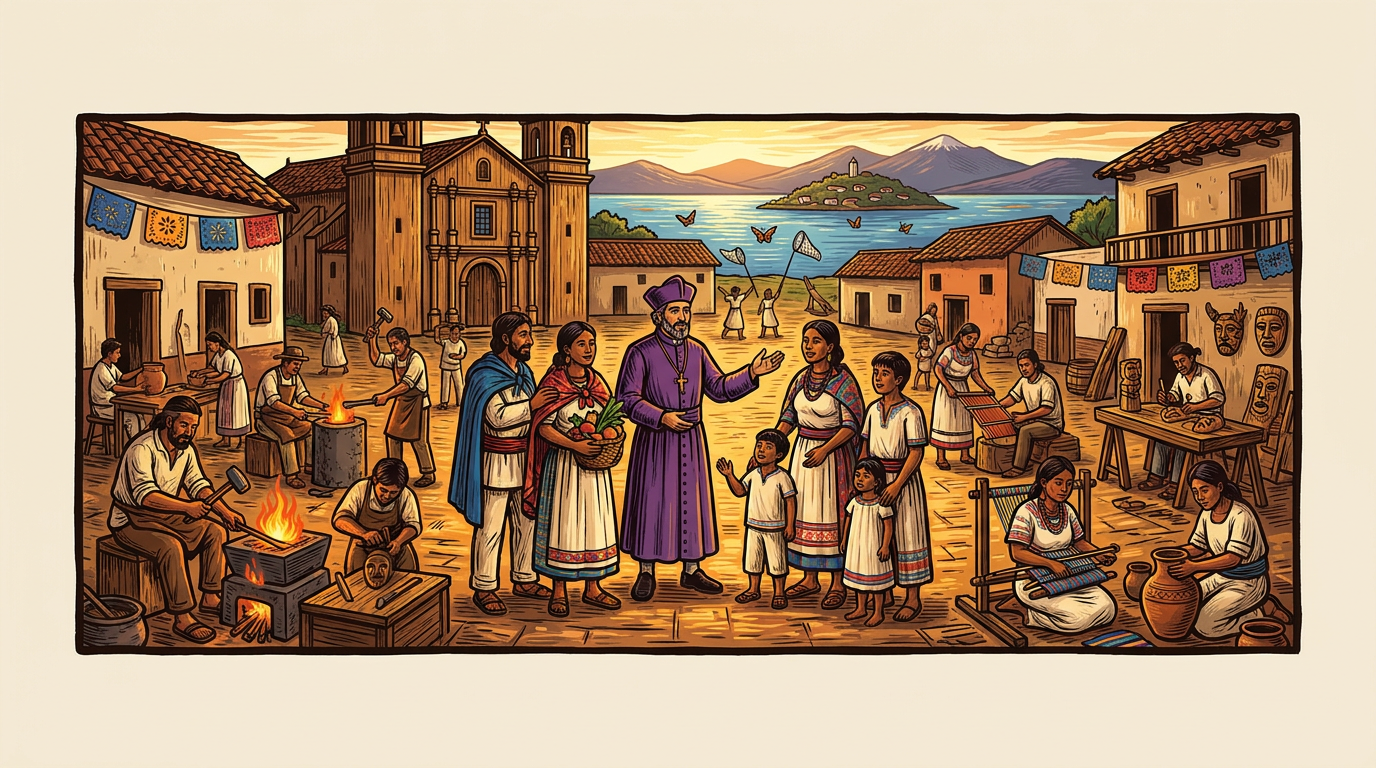
8. The introduction of horses, draft animals, certain iron tools and new craft techniques changed transportation and production. In some places, they made it easier to move goods, farm and practice trades such as blacksmithing; in others, they reinforced warfare, territorial control and mining. Indigenous artisans did not passively receive these techniques: they adapted them to local materials, designs and needs, as can be seen in textiles, ceramics, carpentry and metalwork. Historical innovation rarely arrives in pure form; it usually enters through the door of power, and then people turn it into something else.
A more connected world, but also a more unequal one
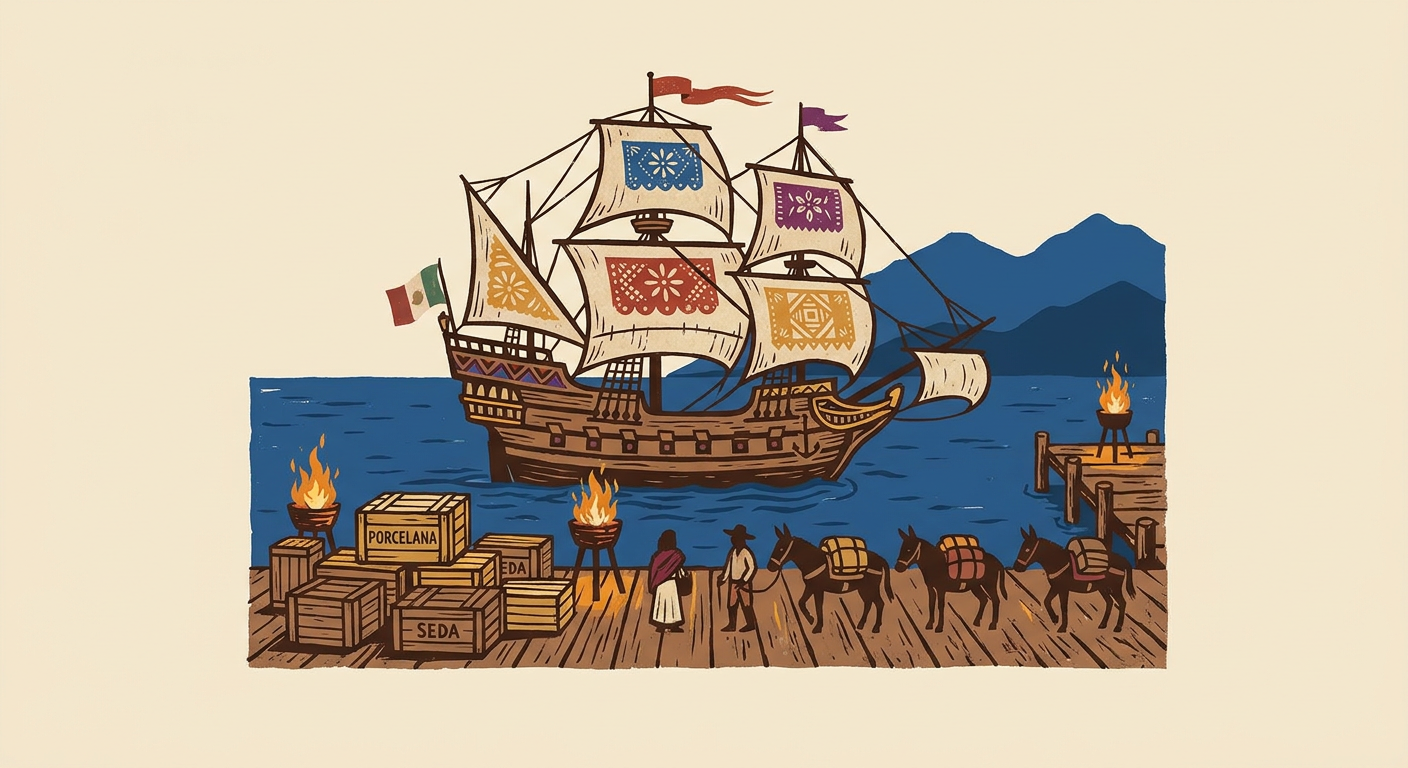
9. New Spain became part of global trade networks. Silver from mines such as Zacatecas circulated to Europe and Asia, while the Manila galleon connected Acapulco with the Philippines beginning in 1565; silks, porcelain, spices, people, plants and ideas traveled along those routes. Mexico thus became an early hinge between the Atlantic and Pacific, a position that enriched cities and produced hybrid objects of great beauty. The other side of the story was dangerous mining work, colonial taxation, African and Asian slavery, and an economy largely oriented toward the empire’s needs.
10. The colonial order created institutions that left lasting marks: town councils, high courts, parishes, hospitals, archives, roads and legal codes. Some Indigenous communities used the courts, land titles and Indigenous republics to defend a measure of autonomy, though always within a hierarchical system that classified people, collected tribute and privileged certain corporations and groups. New Spanish hospitals combined Christian charity, social control and medical practices from different traditions; town councils organized urban life, but did not distribute power equally. The fact that an institution has endured does not prove that its origins were benevolent: it shows that history reuses even the tools made to command.
These ten facts allow us to speak of useful legacies—shared languages, books, foods, technologies, connections and institutions—without describing them as rewards granted by the conquest. Many emerged despite the violence, others initially benefited minorities, and almost all were transformed by Indigenous, African, European and Asian hands. Mexico is neither the happy product of a defeat nor an intact copy of an earlier world: it is a society built through resistance, appropriation, loss and creation. The most fruitful question, then, is not whether the conquest was positive, but how people made a life from what remained; there, and not in the sword, begins the admirable part of the story.
- Matthew Restall, Seven Myths of the Spanish Conquest, Paidós, 2004.
- Miguel León-Portilla, Vision of the Vanquished. Indigenous Accounts of the Conquest, National Autonomous University of Mexico, revised and expanded edition, 2007.
- James Lockhart, The Nahuas After the Conquest. A Social and Cultural History of the Indigenous Population of Central Mexico, Sixteenth Through Eighteenth Centuries, Fondo de Cultura Económica, 1999.
- Serge Gruzinski, The Four Parts of the World. A History of Globalization, Fondo de Cultura Económica, 2010.
- National Institute of Anthropology and History, public outreach and research materials on the Conquest of Mexico and New Spain, www.inah.gob.mx.