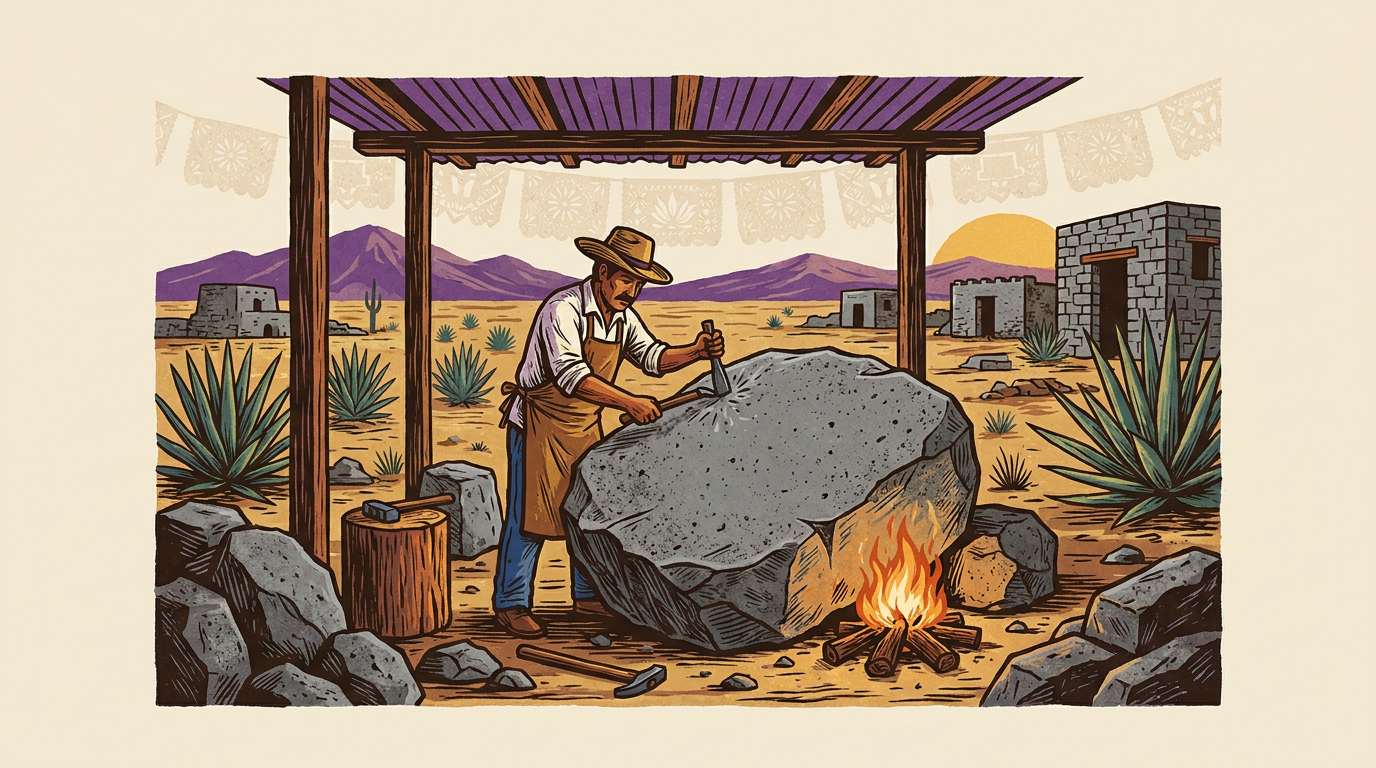
In San Salvador el Seco, stone seems to have learned to walk: it comes down from the hillsides, enters the courtyards, and ends up transformed into a wall, basin, metate, or ornament. Here, in Puebla’s eastern highlands, volcanic material is not a motionless landscape, but a tool, a trade, and family memory. That is why the municipality is known as a stoneworking town, a name that sounds rough and precise, like the first strike of a chisel. Its history cannot be contained in a founding date alone; it is also written in heavy objects that outlive those who made them.
A Land Made by Fire
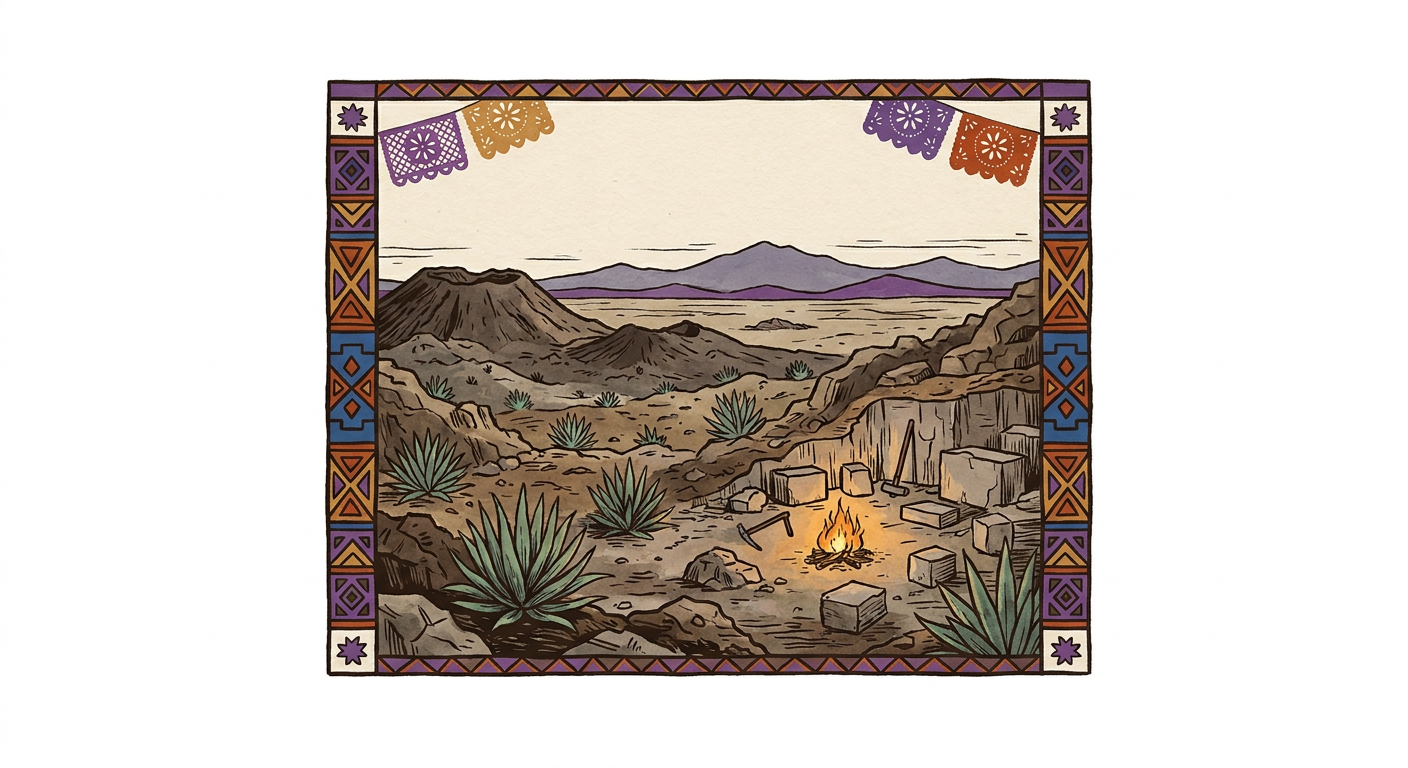
San Salvador el Seco lies in a region of high plains, volcanic soils, and a climate rather sparing with rain. The Spanish name “El Seco” refers precisely to those environmental conditions, although local history predates the modern municipality and is linked to ancient settlements in eastern Puebla. During the colonial period, the roads between Puebla, Veracruz, and the towns of the highlands fostered the exchange of goods, techniques, and people. The stone available in the surrounding area became a building resource and, over time, a recognizable specialty.
From Boulder to Object
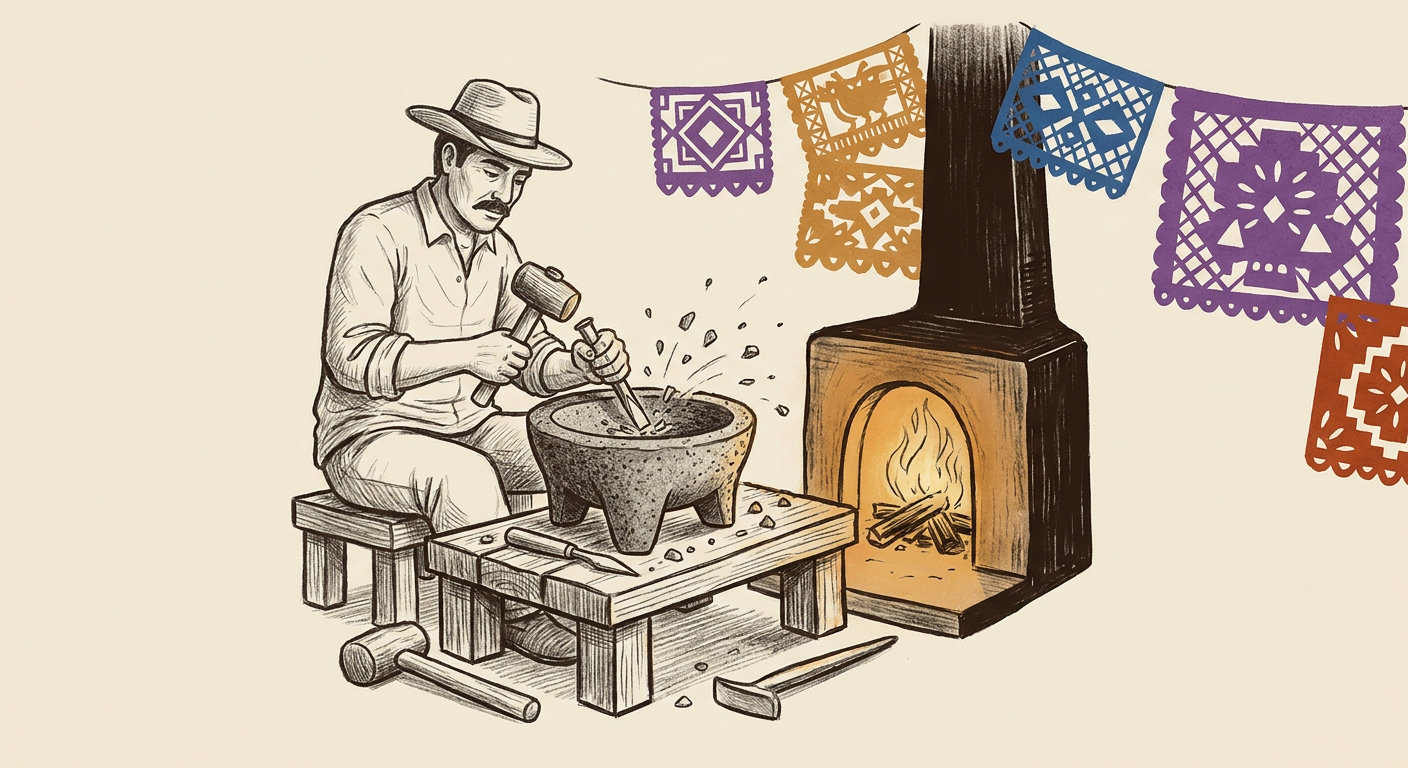
Stonework begins long before the final form. The vein must be identified, the block separated, and its cracks read: a misjudged fissure can ruin hours of work. Next come roughing out and carving, traditionally done with a sledgehammer, point chisel, chisel, and other striking tools. Strength matters, of course, but experience rules; hitting harder is not always the answer, and when facing a stubborn rock, muscle without an ear for it only makes a racket.
- 1Select a stone without fractures that could compromise the piece.
- 2Rough out the volume until the general shape emerges.
- 3Carve surfaces, edges, and hollows with measured blows.
- 4Refine the texture according to its use: grinding, holding water, building, or decorating.
- 5Check the piece’s stability; stonework beauty must also stand up to daily use.
“Stone is not conquered: it is understood.” A workshop saying that sums up knowledge passed down through generations.
Art to Use, Not to Admire from Afar
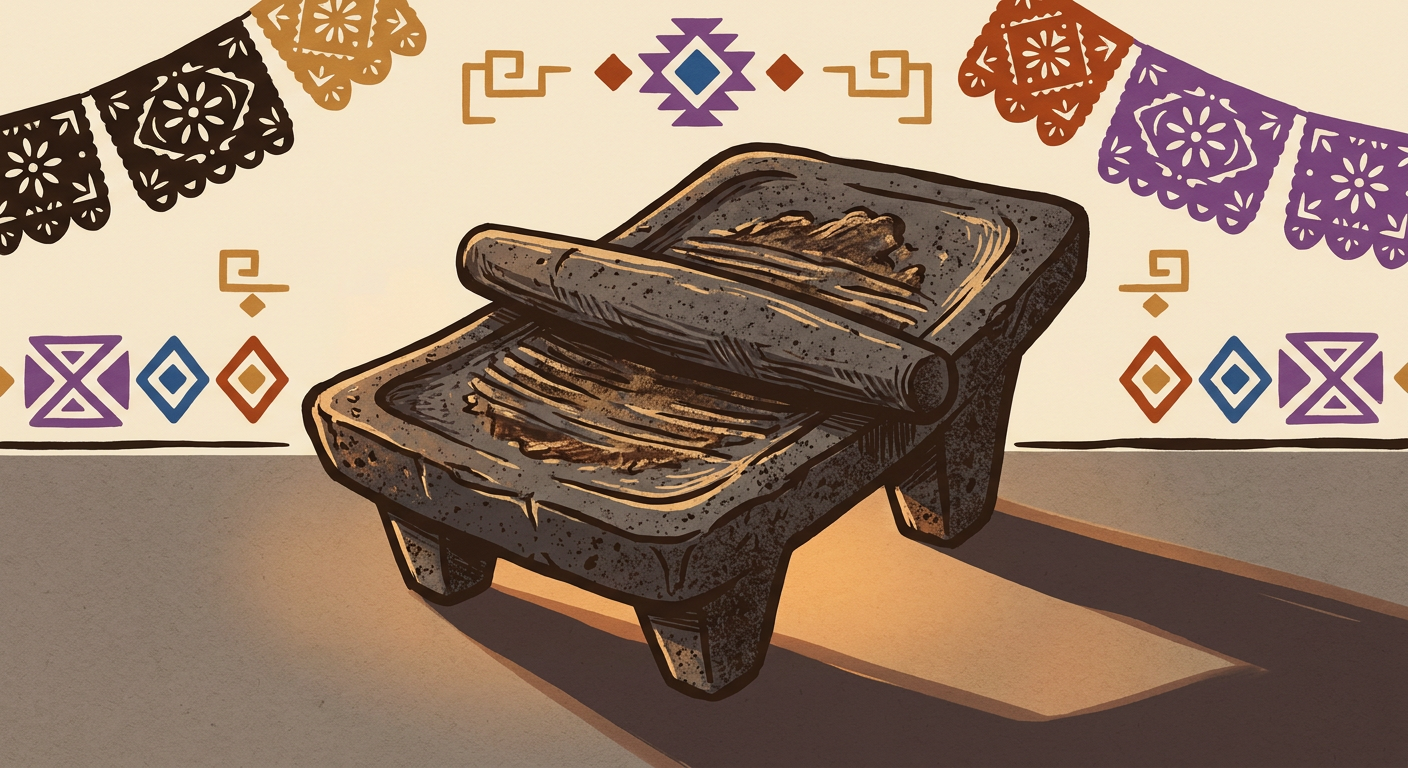
Calling the stonework of El Seco art does not require putting every metate on a pedestal. Its value lies precisely in uniting form and function: a basin holds water, a lintel provides support, a grinding stone transforms corn, chiles, and seeds. In these pieces, proportion, finish, and tool marks reveal aesthetic decisions, even though they were created to perform specific tasks. It is applied art in the truest sense of the term: it is touched, carried, inherited, and sometimes chipped as well.
Stone objects have long been part of the region’s kitchens, corrals, facades, courtyards, and cemeteries. Some remain in place for decades; others travel to markets and cities, where their maker’s identity may be lost and they may be placed under the generic label of “Puebla folk art.” That lack of a signature does not mean a lack of authorship. Behind every piece are technical knowledge, a choice of materials, and a community tradition that deserves to be documented without turning it into a frozen tableau.
Tradition Changes Too
Like all trades, stonecutting has changed with the arrival of power tools, new designs and different commercial networks. Machines shorten certain processes, but they cannot replace the judgment needed to select the material or mastery of form. At the same time, industrially made containers and changes in construction compete with pieces that require days of work and are anything but easy to transport. The trade’s continuity depends as much on those who teach it as on buyers who understand that something handmade should not be priced like a stone picked up by the side of the road.
To tell the story of El Seco as a town of stoneworkers is to see art where it often goes unnoticed: beneath a pot, beside a doorway or in the dust-covered hands of someone in a workshop. There is no need to invent a legend to make this relationship with the material extraordinary; geology, labor and several generations of patience are enough. Stone may seem eternal, but the knowledge needed to transform it is not. If that knowledge is lost, the objects will remain; if it is preserved, a way of listening to the earth will remain as well.
- National Institute of Statistics and Geography (INEGI), Compendium of Municipal Geographic Information 2010: San Salvador el Seco, Puebla.
- National Institute for Federalism and Municipal Development (INAFED), Encyclopedia of the Municipalities and Boroughs of Mexico: San Salvador el Seco, Puebla.
- Government of the State of Puebla, Ministry of Culture, Cultural Information System of the State of Puebla.
- Museo Amparo, Pre-Hispanic Art Collection: materials on Mesoamerican grinding implements.