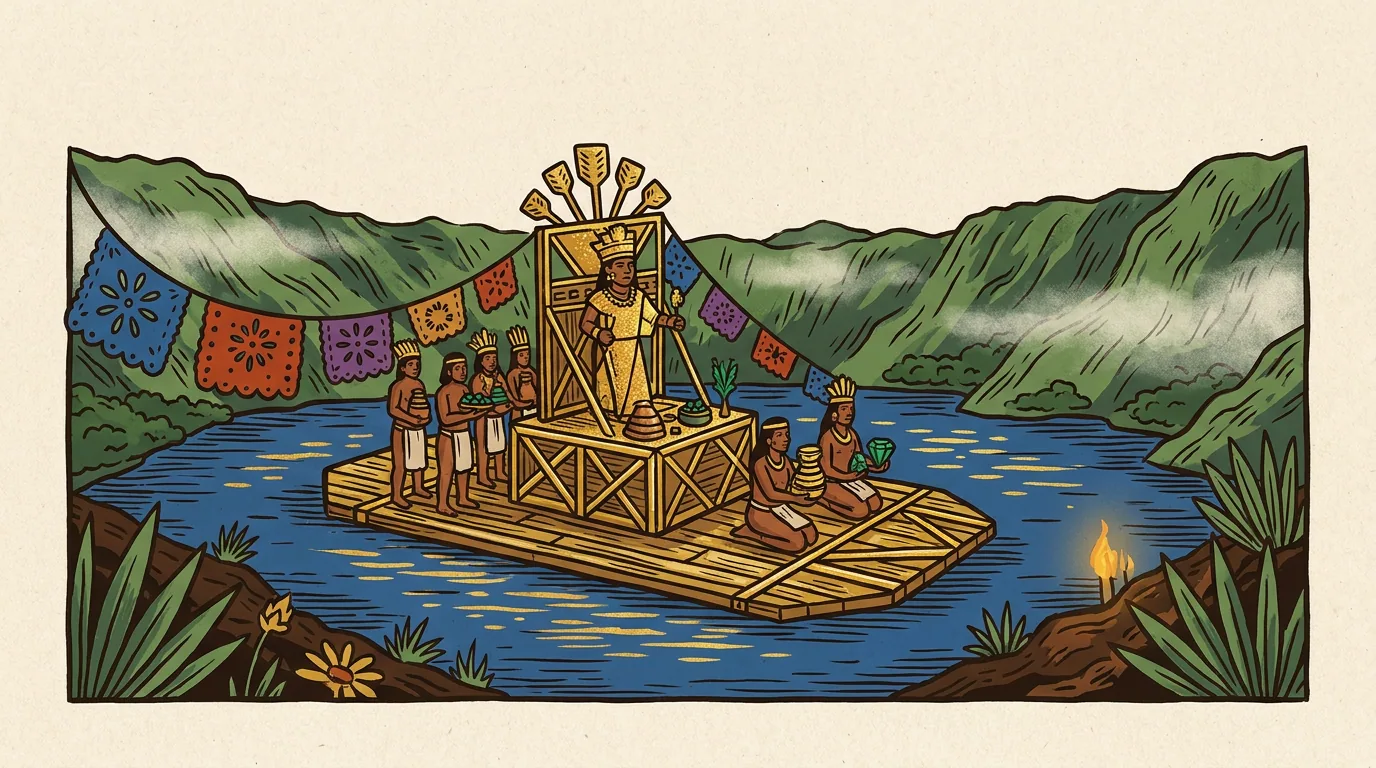
El Dorado did exist, but not as the city of solid gold that set the European imagination ablaze. At first, the name did not refer to a place, but to a person: “the gilded one,” a ruler covered in gold dust during a ceremony of the Muisca, a people of the eastern Andes in what is now Colombia. With each retelling, translation and embellishment, that ritual figure became a kingdom, then a city and finally a continental mirage. The Spaniards searched for golden streets; behind the legend lay something more complex: a society rich in goldwork, trade and ceremonial meaning.
Before it was a city, it was a man
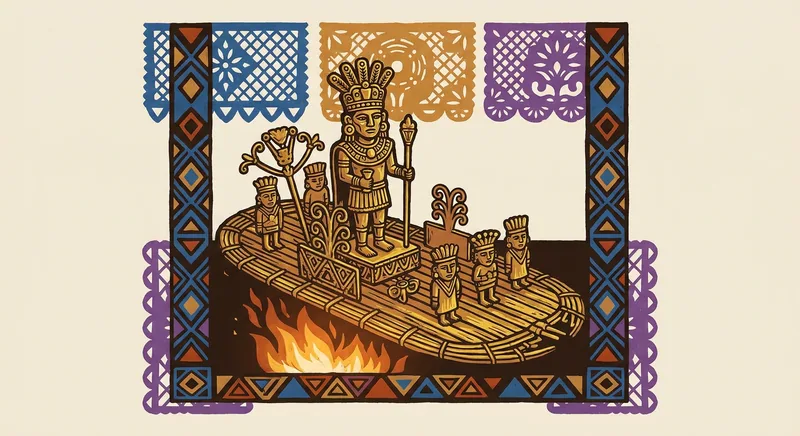
The best-known version is associated with Lake Guatavita, where, according to 16th-century chroniclers, a new Muisca ruler sailed on a raft, covered in gold dust, to offer precious objects to the waters. Juan Rodríguez Freyle recounted the ceremony decades later in «El Carnero»; his text is a late colonial source, not a live recording, so it must be read with caution. However, the famous Muisca raft preserved at the Museo del Oro in Bogotá confirms that aquatic offerings and ceremonial scenes were part of that world. It confirms a ritual, not a metropolis with sidewalks made of gold bars.
From ritual to impossible map
News of American gold traveled quickly and with little restraint. In 1539, the expeditions of Gonzalo Jiménez de Quesada, Sebastián de Belalcázar and Nikolaus Federmann converged near the Bogotá plateau, each arriving by a different route and with fairly similar ambitions. Belalcázar helped spread the expression «El Dorado», associated with the lord covered in gold. But when Guatavita failed to yield the expected treasure, imaginary geography did what convenient promises usually do: it moved a little farther away.
During the 16th century, El Dorado began to shift toward the Llanos and the Guianas. Some versions placed it in Manoa, a supposed city beside Lake Parime, which appeared on European maps for generations. In 1595, Walter Raleigh sailed along the Orinoco and later published «The Discoverie of the Large, Rich, and Bewtiful Empire of Guiana», where he gave the tale new life in print. He did not find the city; he did help many readers see it as almost as easy to locate as a capital city with mail service.
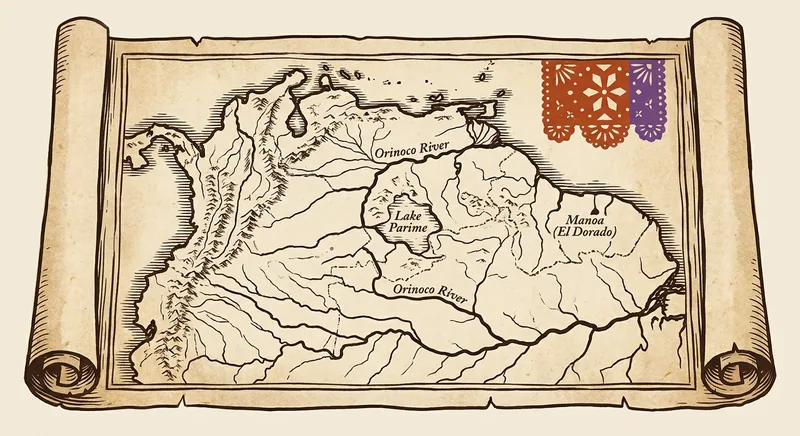
«El Dorado was not an address: it was an expectation that changed its address every time reality caught up with it».
Gold, water and the Muisca world
For the conquistadors, gold was portable wealth, potential currency and proof of success. For the Muisca, many metal objects had ritual, political and social uses; their value did not depend solely on weight. Tunjos—small votive figures—were placed in lakes, caves and other sacred spaces. Reducing that practice to a poorly hidden vault was a cultural mistake that proved highly profitable for storytellers and disastrous for those who endured invasions, looting and forced labor.
- 1The Muisca did develop refined goldwork, especially in alloys of gold and copper.
- 2Offerings in lakes are supported by archaeological objects and colonial accounts, although the accounts must be compared critically.
- 3There is no archaeological evidence of a pre-Hispanic city called El Dorado built or covered in gold.
- 4The supposed Lake Parime remained on European maps despite not corresponding to a large permanent body of water.
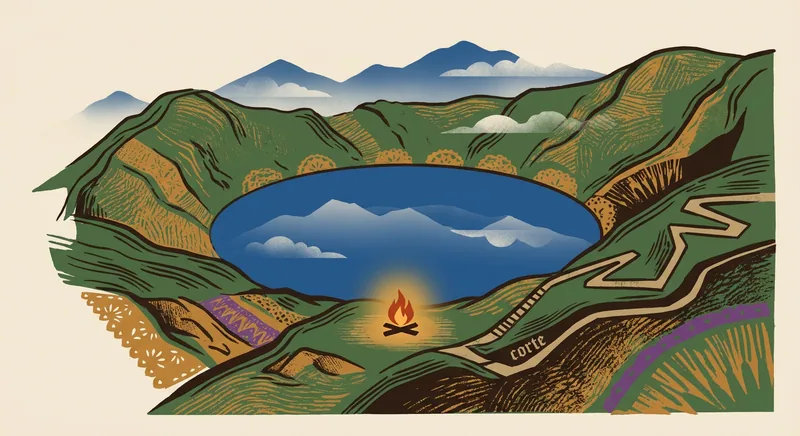
Greed even transformed the landscape. Lake Guatavita was altered several times in attempts to drain it: excavations took place from the colonial period onward and, centuries later, foreign companies revived the effort. Some objects were recovered, but never the treasure that could justify the fever. The mountain still bears a gash associated with one of those attempts, a rather eloquent scar of what a fantasy can do when it finds investors.
What really existed
So, did El Dorado exist? A story existed, probably originating in Muisca ceremonies, then reworked by chroniclers, conquistadors, cartographers and adventurers. There was gold worked with great mastery, offerings and a political organization that Europeans only half understood. There is no evidence of a golden city, either in Colombia or in the Guiana where the search ultimately ended. The answer loses a fabulous city, but recovers a far more interesting human story.
El Dorado also offers a way to see how certainty is manufactured: a ritual becomes a rumor, the rumor enters a book, the book makes its way onto a map, and the map sends men across jungles. The legend survived because it promised riches that were always close at hand yet never verifiable, a mechanism that remains in excellent health to this day. Perhaps the real discovery lies not in asking where that city was, but who needed it to exist. Sometimes, the most enduring gold does not shine underground: it gleams in the eyes of someone who has already decided to find it.
- Banco de la República, Museo del Oro (Colombia), resources on the Muisca raft and the offerings of Muisca societies.
- Juan Rodríguez Freyle, “El Carnero” (written in the 17th century; critical edition by Biblioteca Ayacucho).
- Walter Raleigh, “The Discoverie of the Large, Rich, and Bewtiful Empire of Guiana” (1596).
- Encyclopaedia Britannica, “El Dorado” entry.
- John Hemming, “The Search for El Dorado,” Phoenix Press, 2001.