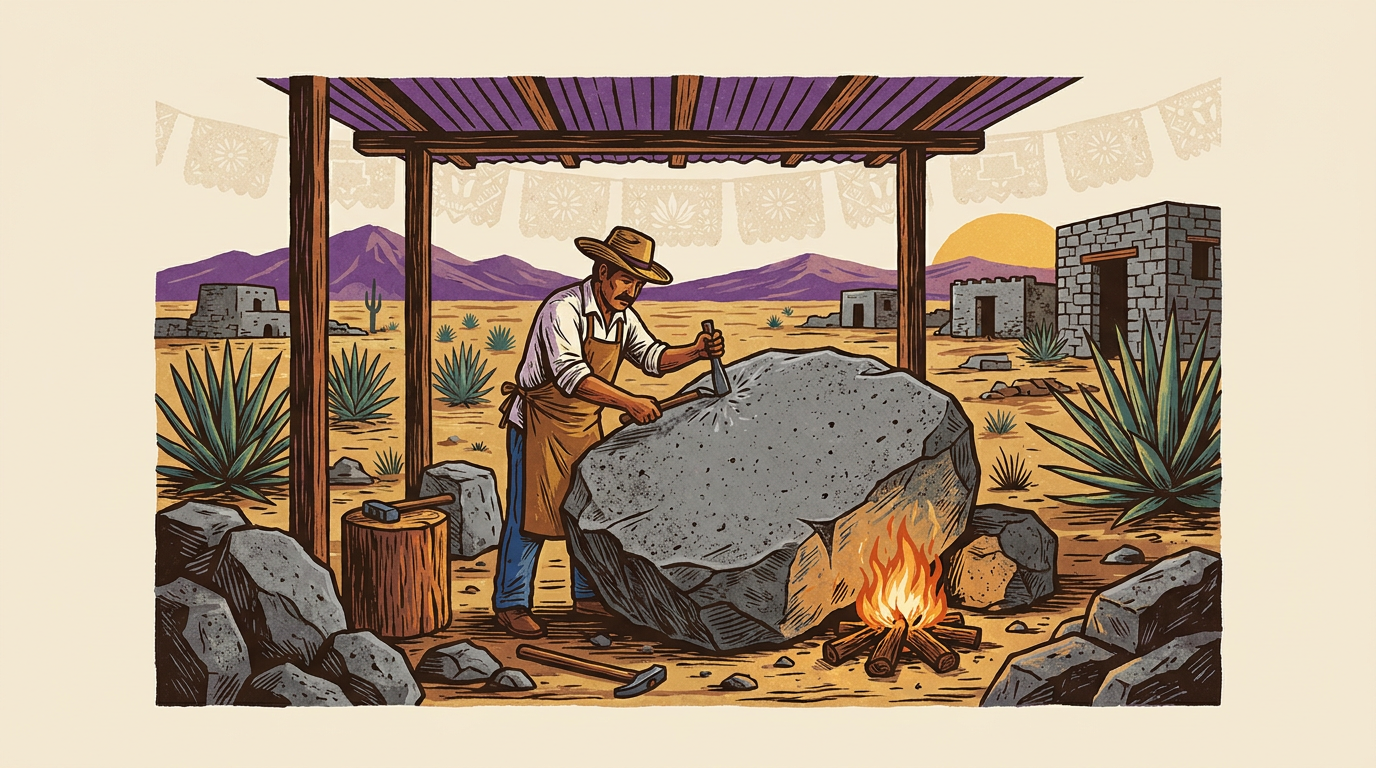
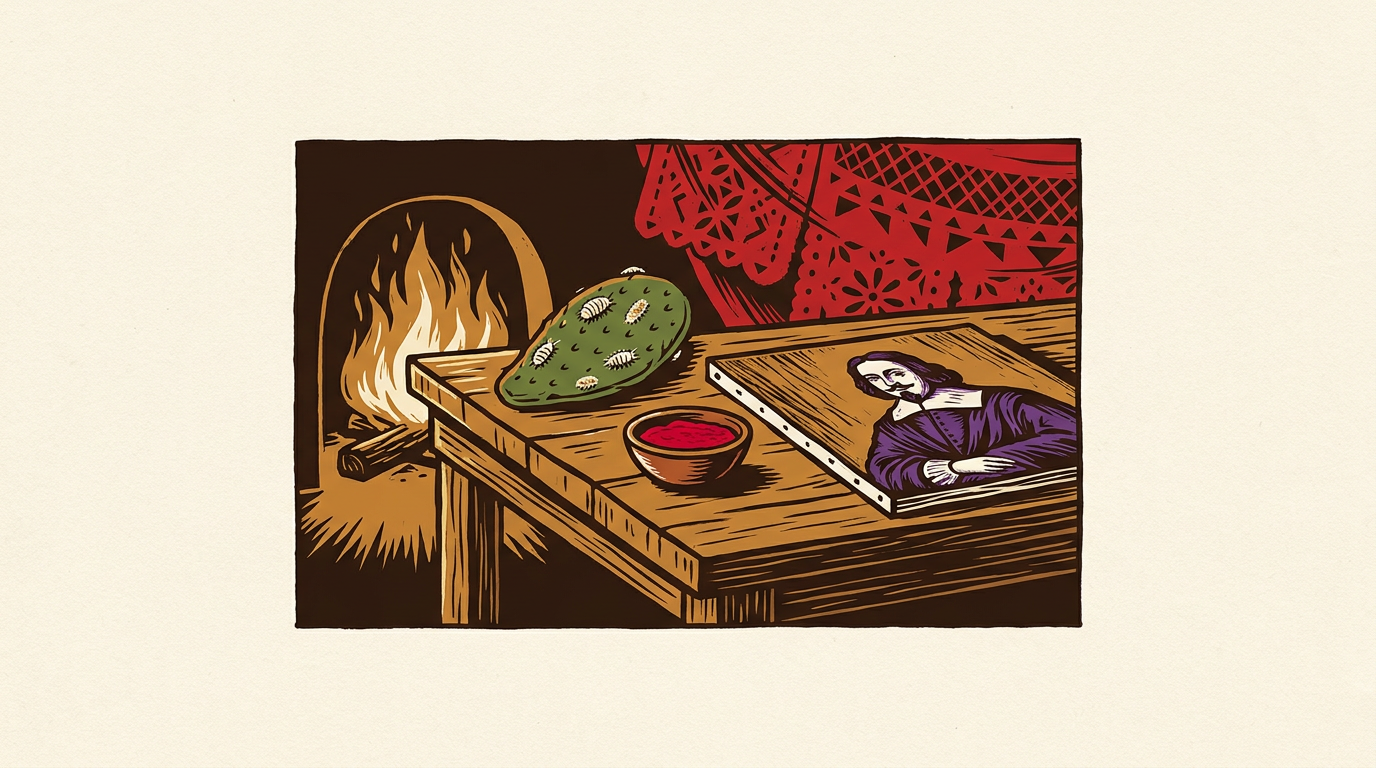
In some 17th-century European portraits, red seems to have a pulse: it burns on a sleeve, deepens across velvet, and peeks through on a lit cheek. Part of that glow began far from the palaces, on the pads of a Mexican nopal. That is where the cochineal lives, a tiny insect that yields an extraordinary dye. It was not exactly every king’s “favorite color,” nor was it Rembrandt’s exclusive secret, but it was an extremely expensive material coveted by both worlds.
An Insect Dressed in White
Cochineal comes primarily from the female Dactylopius coccus, a parasite of the nopal. Its body contains carminic acid, a chemical defense that, when processed with different substances, produces reds, carmines, scarlets, and violets. To the naked eye, the colonies look like white specks because the insects cover themselves with a waxy secretion. Beneath that modest fuzz lay a chromatic fortune; nature, like certain bankers, is not in the habit of flaunting its capital.
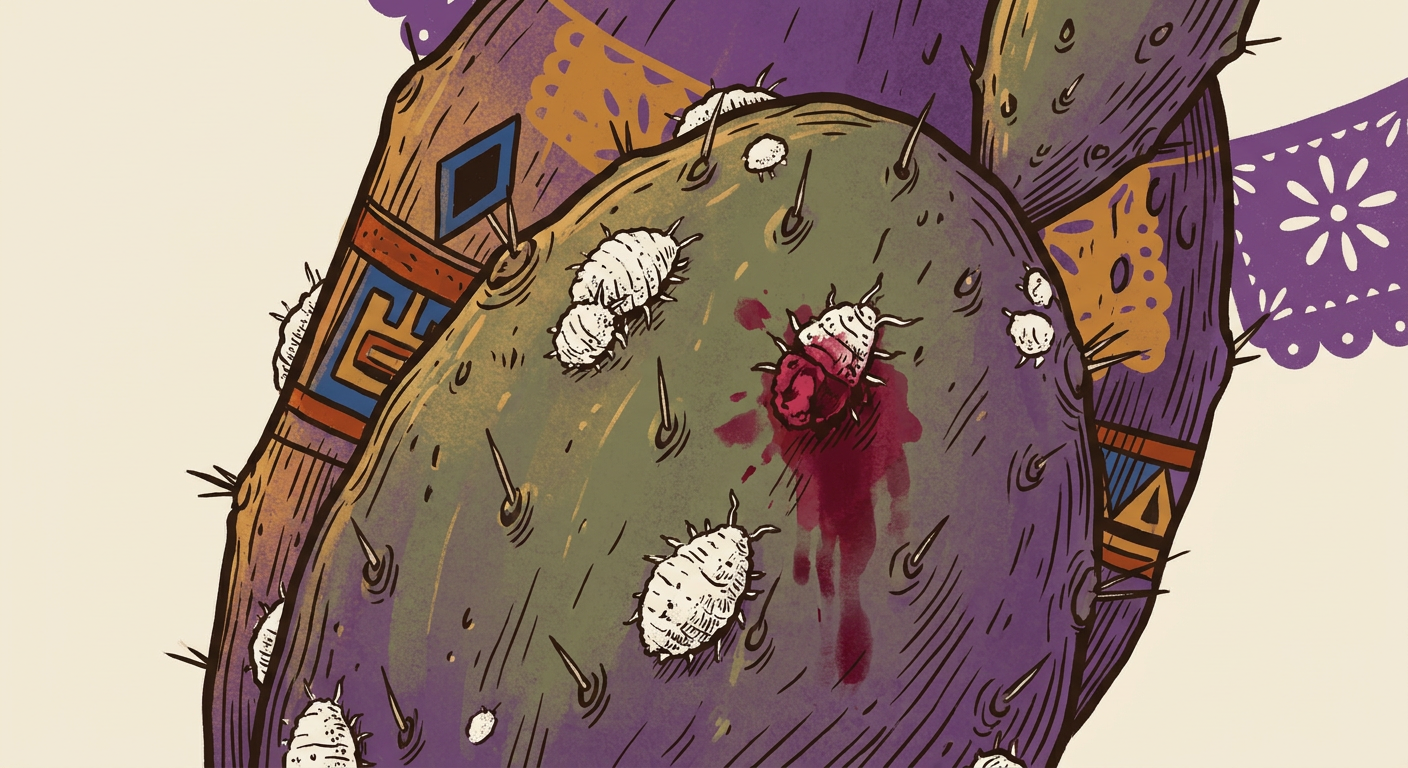
Mesoamerican peoples knew and raised cochineal before the arrival of the Spanish, especially in regions of what are now Oaxaca, Puebla, and Tlaxcala. The dye was used to color textiles, decorate objects, and make pigments; early colonial sources recorded its production and its Indigenous names. After the conquest, the Spanish Crown incorporated cochineal into the empire’s trade networks. For centuries, it was one of the most valuable exports from the Americas, surpassed only by certain metals in some periods.
From Oaxaca to Royal Wardrobes
Dried cochineal traveled from New Spain to Seville and, later, Cádiz; from there, it entered textile workshops and markets across Europe, Asia, and the Mediterranean. Its intensity surpassed that of many available red dyes and made it possible to obtain luminous, relatively long-lasting shades. Scarlets and crimsons appeared in court dress, uniforms, tapestries, and ecclesiastical vestments, all settings where color also signaled hierarchy. Calling it “the red of kings” oversimplifies the story, but it gets one thing right: that pigment circulated among those who could afford ostentation visible from several yards away.
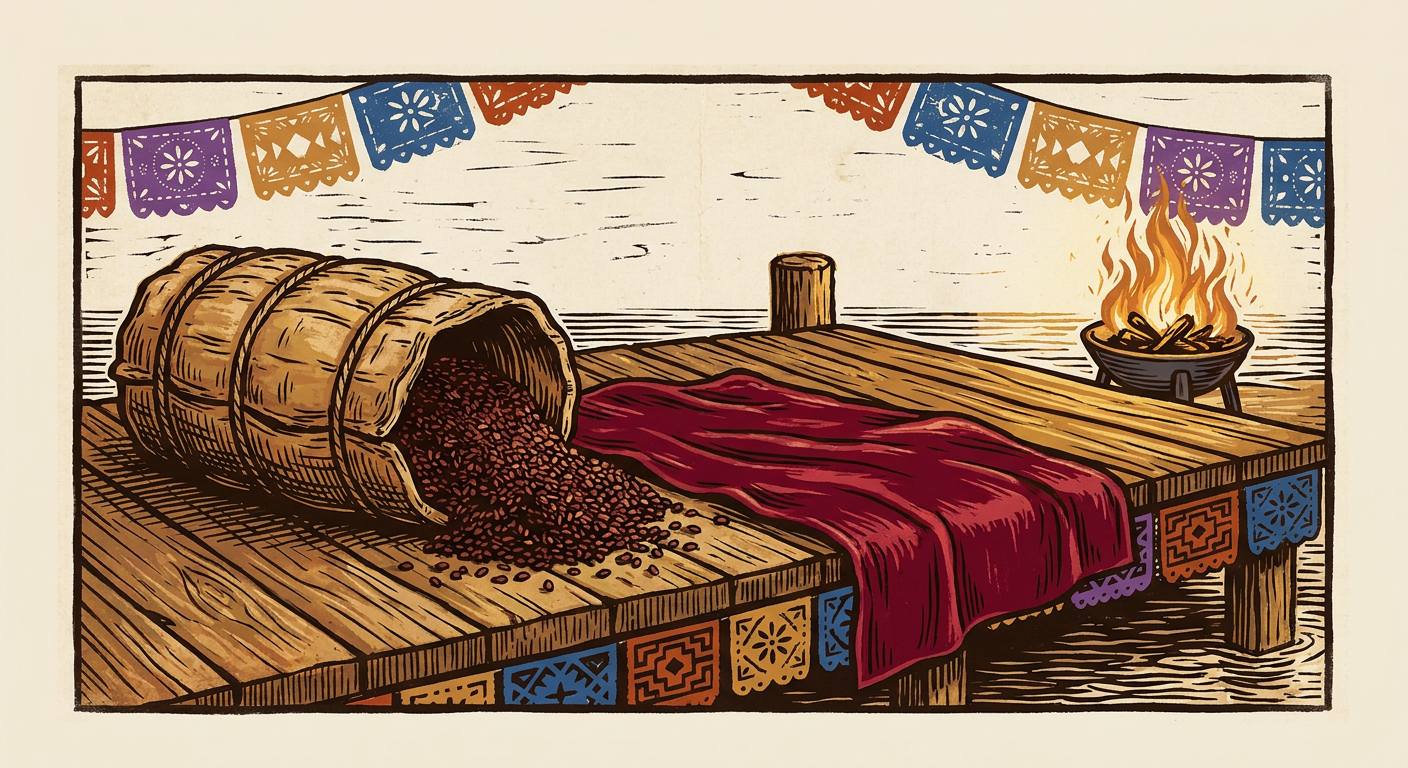
Red did not merely clothe power: it made power visible.
- 1In Mexico, cochineal was raised on selected nopales.
- 2The insects were collected and dried to make them easier to transport.
- 3In workshops, the dye was ground and extracted in water.
- 4Mordants and metallic salts were used to modify the shade and colorfastness.
- 5The final product could dye fibers or be turned into a lake pigment for painting.
Rembrandt Enters in Red
Rembrandt van Rijn worked with transparent red lake pigments, often applied over more opaque layers to create depth. Technical studies of his paintings have identified organic red pigments associated with cochineal in some works and mixtures, although determining the exact biological origin is not always straightforward. It is therefore best to avoid the romanticized image of the master keeping a jar labeled “Mexican secret.” What is truly fascinating is more material: his workshop was part of a global economy capable of carrying an American insect all the way to a panel or canvas in Amsterdam.
Lake pigments had a quality Rembrandt used masterfully: they let light pass through and reflected it back tinted. Layered over ochres, vermilion, or other pigments, they produced warm shadows and reds that did not look like a flat surface, but like depth. They were also delicate: some organic dyes change or lose intensity with exposure to light and the passage of time. That is why the red we see in a museum today may be only an aged relative of the one that left the workshop.
An empire in a single brushstroke
The history of carmine compels us to look at a painting beyond its signature. Every red brings together Indigenous farmers, merchants, porters, dyers, apothecaries, and painters—as well as taxes, monopolies, and trade secrets. Europe turned cochineal into an emblem of luxury, but the knowledge underpinning its production had been developed in Mesoamerica. The pigment was global before the word “globalization” became an inevitable topic of after-dinner conversation.
In the 19th century, synthetic dyes displaced much of the old cochineal trade, although carmine is still used and its artisanal cultivation persists, especially in Oaxaca. Today, when standing before a Baroque portrait, it is worth looking closely at the red with a different question in mind: not only who painted it, but where it came from. Perhaps it began on a nopal, under the sun, in the tiny body of an insect. Sometimes the history of art is not hidden behind the painting, but pulsing in a brushstroke.
- Elena Phipps, Cochineal Red: The Art History of a Color, The Metropolitan Museum of Art and Yale University Press, 2010.
- Amy Butler Greenfield, A Perfect Red: Empire, Espionage, and the Quest for the Color of Desire, HarperCollins, 2005.
- National Gallery, London, Making Colour, exhibition catalog, 2014.
- Ashok Roy, ed., Artists’ Pigments: A Handbook of Their History and Characteristics, vol. 2, National Gallery of Art and Oxford University Press, 1993.
- Biodiversity Heritage Library, Francisco Hernández, Historia natural de Nueva España, a 16th-century work in later editions.