Fresh huitlacoche does not ask for reverence: it asks for a good eye, gentle hands, and an unhurried skillet. Beneath its ashen appearance is an edible fungus with an earthy, slightly sweet flavor deeply tied to corn. Treated well, it stays juicy and fragrant; mishandled, it can turn into a watery or dried-out paste. The difference lies less in a secret recipe than in knowing how to choose, clean, and cook it with restraint.
What is that gray cloud?
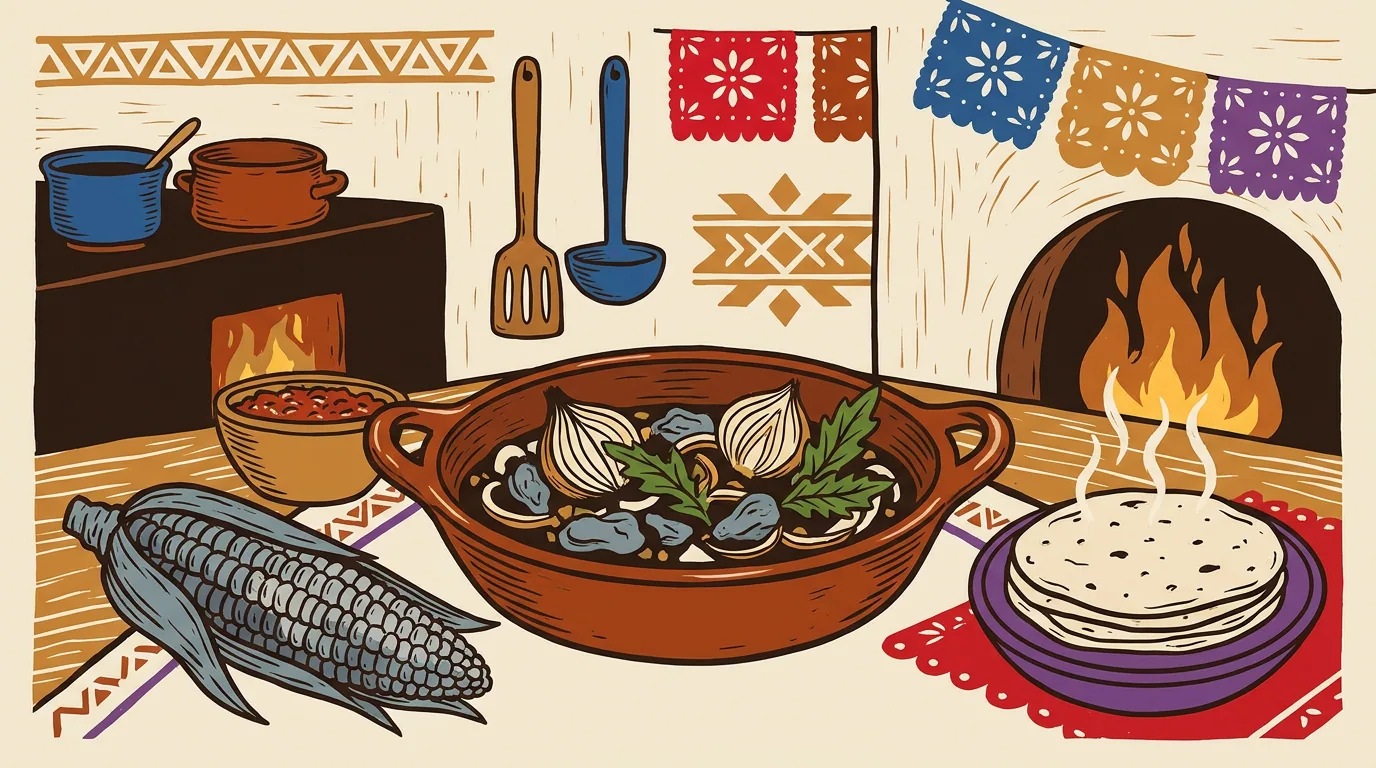
Huitlacoche, or cuitlacoche, results when corn is infected by the fungus Ustilago maydis. It transforms the kernels into swollen galls that, while tender, have pearl-gray or bluish hues and a dark interior that is still fleshy. As they mature, they fill with black spores, lose their firmness, and make more of a mess than a meal. For cooking, choose young, whole specimens without a sour smell, excessive sliminess, or dry patches.
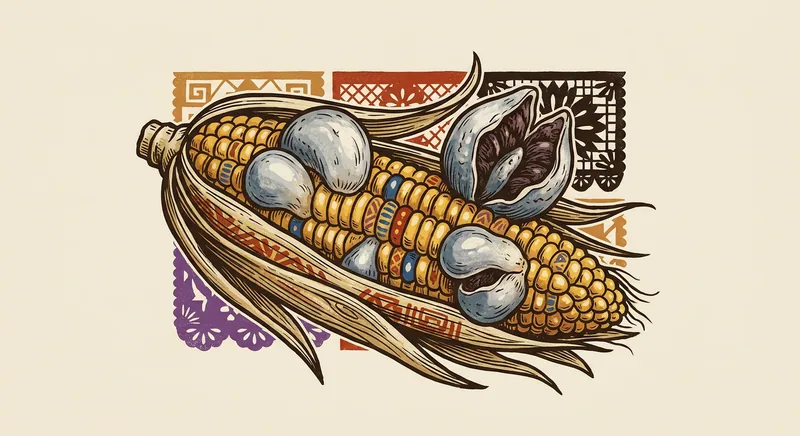
Its presence in Mexican kitchens is a genuine tradition, especially in corn-growing regions in the center of the country. It is another matter to claim, without qualification, that it was a delicacy reserved for pre-Hispanic emperors or that we know exactly how it was served before the Conquest: those stories circulate widely, but documentary evidence is limited and calls for caution. Cooking does not need imperial genealogies to have dignity. An ear of corn, a comal, and generations who learned to make use of what the milpa provided are enough.
Clean it without erasing its character
- 1Separate the tender galls from the ear with your fingers or a small knife; remove hard bits of cob, leaves, and corn silk.
- 2Discard pieces that are completely powdery, dried out, slimy, or smell fermented. Dark coloring is normal; a bad smell is not.
- 3Do not soak it: it absorbs water and loses its texture. If there is dirt on it, clean it with a brush, a barely damp cloth, or a very quick rinse.
- 4Cut it only if the pieces are large. Small ones can go into the skillet whole and will retain their bite better.
- 5Cook it the same day, or refrigerate it unwashed in a ventilated container for no more than one or two days.
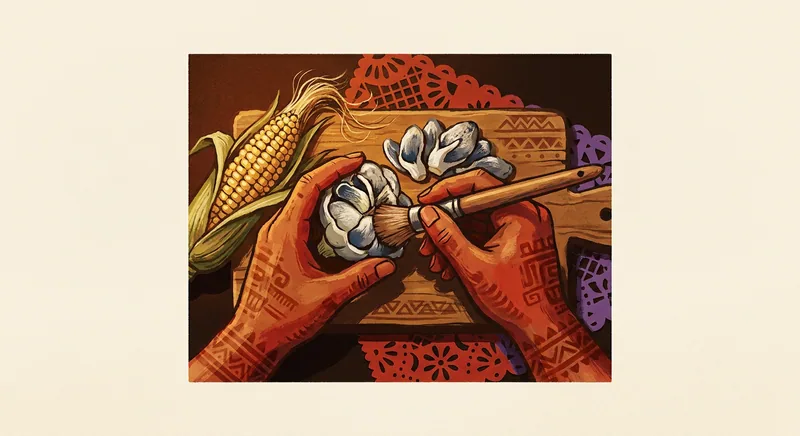
There is no need to sterilize it until it loses its soul. Like any fresh ingredient, it should be handled with clean utensils and cooked before eating; the goal is to remove impurities, not wash it for an eternity. If you bought it already removed from the cob, make sure it still has recognizable pieces and some firmness. Fresh huitlacoche is perishable, and its aroma should evoke damp corn, mushrooms, and clean earth, never a bucket forgotten under the sink.
“You do not correct huitlacoche: you accompany it.”
Medium heat, light seasoning
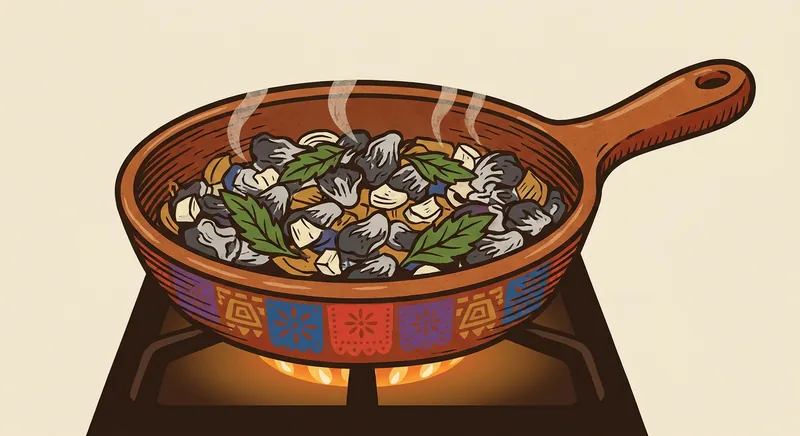
The everyday base is simple: oil or lard, chopped onion, and, if you like, garlic or green chile. Sauté the onion first, add the huitlacoche and a pinch of salt, and cook over medium heat for eight to twelve minutes, stirring gently. The fungus will release liquid, darken, and cook down; it is ready when the juices have concentrated and the pieces are cooked but not dry. If the skillet is flooded, raise the heat slightly instead of cooking it to exhaustion.
Epazote is a wonderful match, but it is best added near the end to preserve its fragrance. Poblano or serrano chiles, tender zucchini, or corn kernels also work, as long as none of them upstages the star. A splash of stock can help create a juicy preparation, but it is not essential: huitlacoche provides moisture of its own. Taste for salt at the end, since reducing concentrates everything, and a generous hand can turn the skillet into the Dead Sea.
From quesadilla to tamal
For quesadillas, let the stew cool slightly before spooning it onto corn tortillas; that way it will not tear the masa or make the cheese watery. Oaxaca, asadero, or a fresh cheese that melts gently are good companions, not a five-kilo blanket. For soup, blend some of the cooked huitlacoche with stock and leave the rest in pieces for texture; finish with cream only if you want extra roundness. It can also be mixed with masa or used as a tamal filling, making sure the stew is thick and cold before wrapping.
- 1Quesadillas: stewed huitlacoche, corn tortilla, and a moderate amount of cheese; serve with salsa verde if it is not too acidic.
- 2Soup: onion, huitlacoche, corn or chicken stock, with some of it blended; serve with corn kernels or tortilla strips.
- 3Tamales: a well-reduced filling with epazote and poblano chile; let it cool so it doesn’t soften the masa.
- 4Eggs and rice: add the stew at the end to warm it through without breaking it down any further.
Treating huitlacoche as a delicate ingredient doesn’t mean making it inaccessible. It means respecting its season, avoiding excess water, seasoning without fanfare, and stopping the cooking while it still has body. Its most convincing place is not in a display case of curiosities, but in everyday food: inside a tortilla, perfuming a broth, or tucked into a tamal. Perhaps that is its best story: the milpa transforms an accident of the corn, and the kitchen, without fuss, turns it into a craving.
- National Autonomous University of Mexico, Digital Library of Traditional Mexican Medicine, “Cuitlacoche” entry.
- Royal Spanish Academy and Association of Academies of the Spanish Language, Dictionary of the Spanish Language, “huitlacoche” and “cuitlacoche” entries.
- Diana Kennedy, The Essential Cuisines of Mexico, Clarkson Potter, 2000.
- George C. Vaillant, Aztecs of Mexico: Origin, Rise, and Fall of the Aztec Nation, Penguin Books, 1962.
- Cornell University, College of Agriculture and Life Sciences, plant pathology information on corn smut (Ustilago maydis).