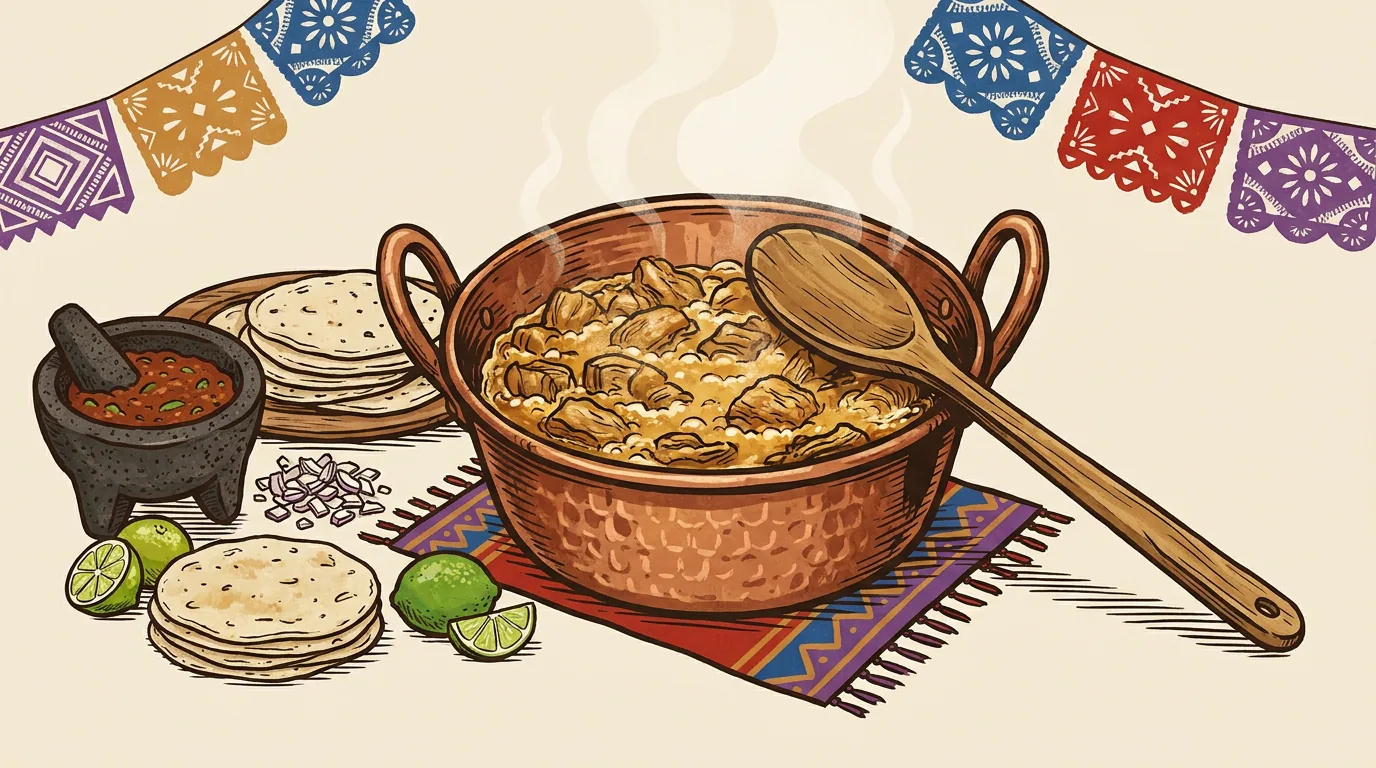
A hammered copper cazo does not work miracles, but it distributes heat with enviable discipline. In it, the pork goes from a gentle simmer to frying in its own fat until tender inside, golden outside, and dangerously easy to sneak a bite from before serving. Carnitas are deeply tied to Michoacán, where every family and every stand defends its method with arguments that usually include years of experience and some conveniently incomplete secret. This recipe offers a homemade version that stays true to the essential technique without turning the cazo into a cabinet of curiosities.
Copper, fire, and patience
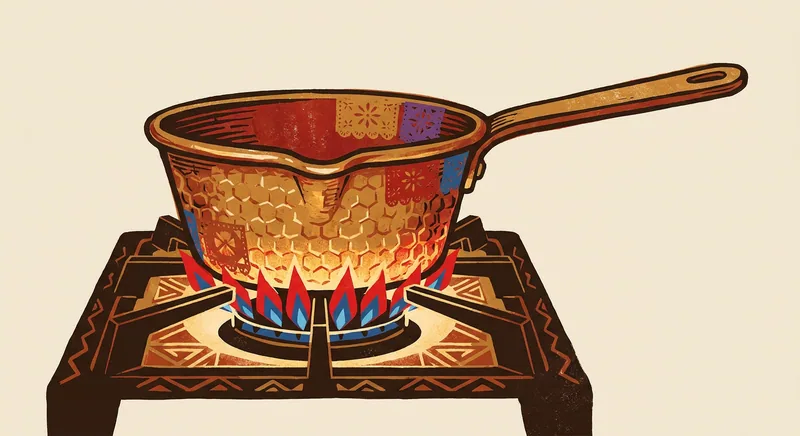
Copper conducts heat quickly and evenly, an advantage when cooking large pieces of meat and keeping the frying temperature steady. Use a cazo made for cooking, with a clean interior and no verdigris; if it has an inner layer of tin, it must be intact. Since carnitas are not an acidic preparation, they are often made in unlined copper, but never use a decorative piece or a vessel with green corrosion. Before starting, wash and dry the cazo thoroughly: noble metal, yes; immune to neglect, no.
- 12 kg pork, cut into large pieces: solid shoulder meat, ribs, and a little skin
- 2750 g lard, approximately
- 31 cup water
- 42 tablespoons coarse salt, plus more to taste
- 51 orange, halved
- 64 garlic cloves, lightly crushed
- 71 cup whole milk, optional
- 8Warm tortillas, white onion, cilantro, limes, and salsa for serving
From simmer to confit
- 1Pat the meat dry and season it with the salt. Choose pieces of similar size so they finish cooking at the same time.
- 2Set the cazo over medium heat and melt the lard. Carefully add the water, then add the meat, skin, garlic, and orange.
- 3When it begins to simmer gently, lower the heat. Cook for 60 to 75 minutes, stirring occasionally with a long paddle and keeping the pieces from piling up.
- 4Remove the orange and garlic when they are deeply browned. If using milk, add it gradually once the meat is tender and the water has almost evaporated.
- 5Increase the heat slightly. As the water disappears, the cooking will turn into frying; stir more frequently until the surface is coppery and crisp.
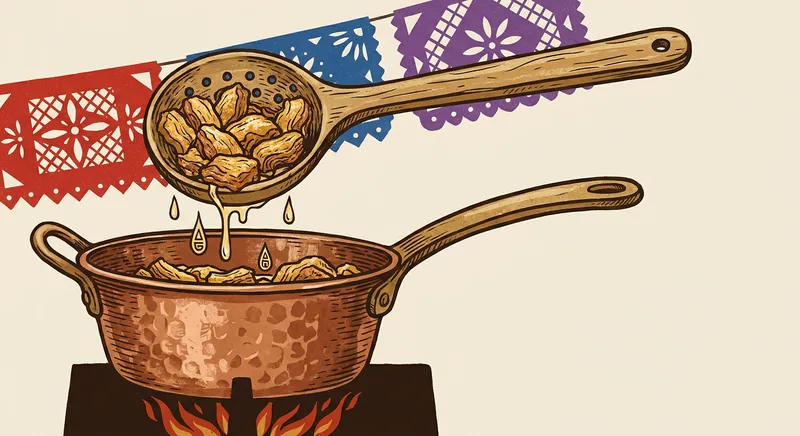
- 6Remove the carnitas with a slotted spoon and let them drain for 5 to 10 minutes. Taste and adjust the salt before chopping them.
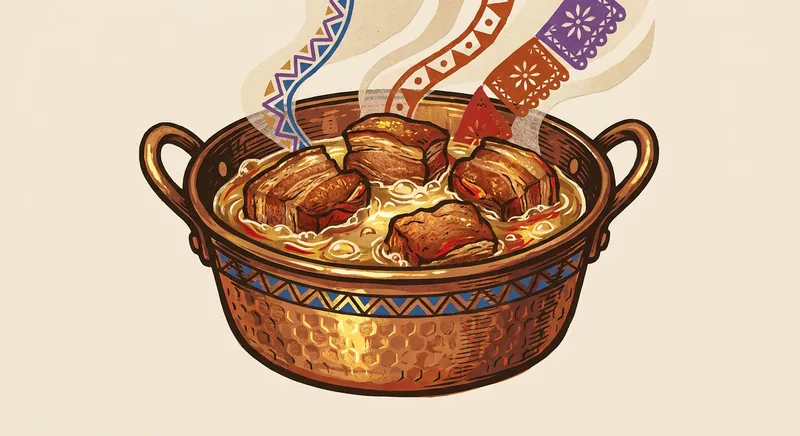
The first stage cooks and tenderizes the meat while there is still water in the pot; the second browns it once that moisture evaporates and the temperature of the fat rises. That transition is the heart of the recipe. If the heat is turned up too soon, the surface burns before the collagen has a chance to soften. The sound helps: the watery bubbling eventually becomes a drier, livelier sizzle.
“Carnitas cannot be rushed: first they grow tender, then they show off.”
How to tell when they are ready
The maciza should yield when squeezed with tongs, but retain enough structure to be chopped without turning stringy. The rib will be ready when the meat pulls away easily, and the skin should feel tender with golden edges. Keep the fat hot, not smoking: if steady smoke appears, remove the pot from the heat for a few moments. To check doneness accurately, the center of the pieces should exceed 63 °C and rest for at least three minutes, although in this preparation it will normally reach higher temperatures because of the time needed to become tender.
- 1Cut large pieces: small ones dry out before they brown.
- 2Do not fill the pot more than two-thirds full; hot fat needs space and respect.
- 3Use long utensils, keep a metal lid nearby, and never put out a grease fire with water.
- 4Strain the lard once it has cooled and keep it refrigerated if you plan to reuse it; discard any burned or rancid-smelling portion.
The taco and the memory of the craft
Chop the carnitas only as much as needed and mix them so that each taco includes maciza, rib, and a crisp edge or two. Serve them in a warm corn tortilla with onion, cilantro, lime, and a chile salsa; they do not need a procession of garnishes. In Michoacán, the assortment may include buche, nana, snout, ear, and other cuts, reflecting a cuisine that makes broad and knowledgeable use of the whole animal. At home, starting with three textures is enough to understand why the whole matters more than any single piece.
Making carnitas in copper means learning to watch, listen, and wait: none of those tasks can be fully contained by a timer. The pot conducts the heat, but the hand decides when to stir, lower the flame, or let the meat take on color. When the last taco disappears, something more than the aroma will remain in the kitchen: the certainty that a simple recipe can hold an entire craft.
- Diana Kennedy, The Cuisines of Mexico, Harper & Row, 1972.
- Ricardo Muñoz Zurita, Diccionario enciclopédico de la gastronomía mexicana, Larousse Cocina.
- Instituto Nacional de Antropología e Historia (INAH), outreach materials on traditional Mexican cuisine.
- U.S. Department of Agriculture, Food Safety and Inspection Service, Safe Minimum Internal Temperature Chart.