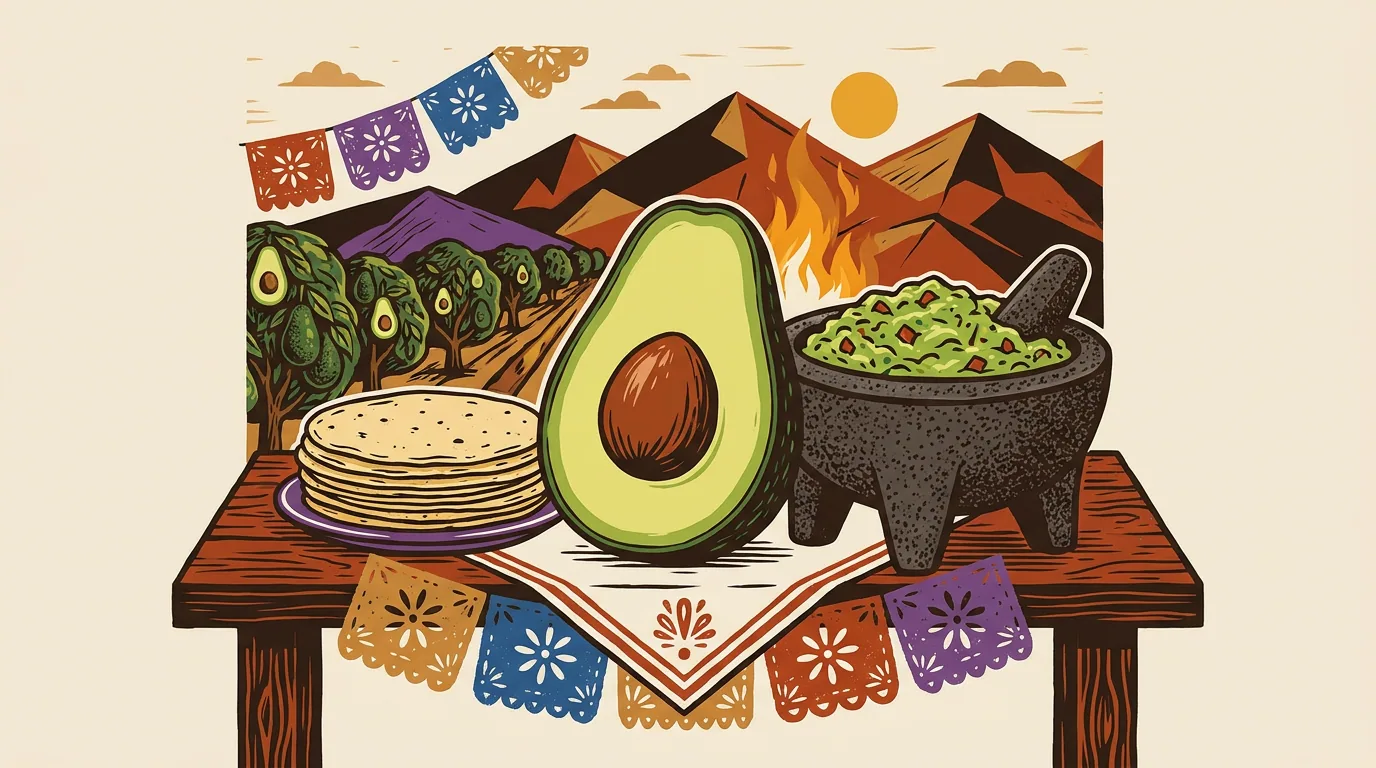
Few fruits tell the story of Mexico as quietly as the avocado. It was here long before anyone mashed it to serve with tacos, and centuries before it became toast, oil, a face mask and a breakfast photo. Its flesh nourished Mesoamerican peoples; its name traveled from Nahuatl to Spanish and from there across half the world. Today it is called “green gold,” a nickname that celebrates its value, but also compels us to ask who pays the cost of so much fortune.
A fruit born in the Americas
The avocado belongs to the species Persea americana and originated across a broad region of Mesoamerica. Archaeological evidence shows that its wild ancestors were eaten thousands of years ago: in Coxcatlán Cave, in the Tehuacán Valley, Puebla, remains were found spanning a long sequence that began around 8000 B.C. Over time, communities selected fleshier fruits, with smaller seeds and less astringent flavors. There was no inventor of guacamole with a signed and certified document, but rather entire generations of observation, cultivation and discerning palates.
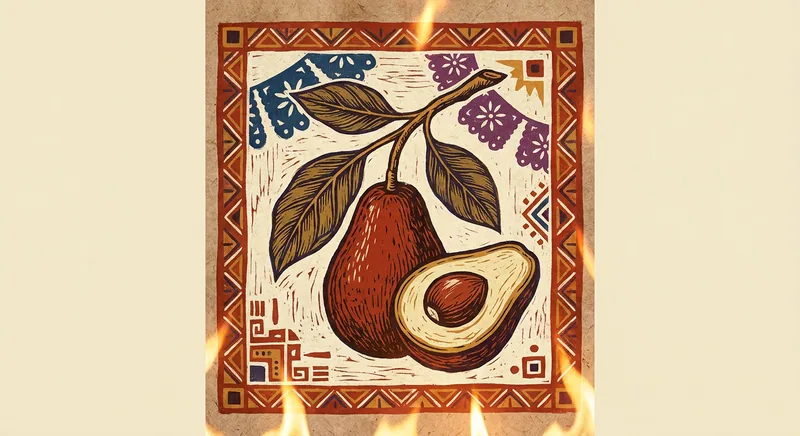
The word “aguacate” comes from the Nahuatl ahuacatl. It is often said to mean “testicle,” because of the fruit’s shape and because the same term could refer to that part of the body; the linguistic association is real, though it gave rise to modern legends about supposed ritual prohibitions for which there is no solid evidence. In the 16th century, Spanish chroniclers and naturalists recorded the fruit and its uses in different territories across the Americas. Francisco Hernández, physician to Philip II, described it during his studies of nature in New Spain.
From the tree to the molcajete
In Mexico, avocado has never been a green garnish added at the end just to make the dish look pretty. It brings fat, creaminess and freshness; softens the edge of chile, embraces the tortilla and turns a simple salsa into a complete meal. It is eaten sliced with salt, inside tortas and tacos, over soups, or mashed with chile, onion, cilantro and tomato, depending on the household and region. Guacamole does not have a single recipe: debating it as dogma would mean forgetting that every molcajete has its own character.
- 1Creamy flesh and primarily monounsaturated fat.
- 2Mild flavor that pairs well with chiles, acids, herbs and corn.
- 3Eaten raw, with no fuel needed for cooking.
- 4Varieties and preparations tied to regional cuisines.
- 5An everyday place at the table and another, more recent one, in global trade.
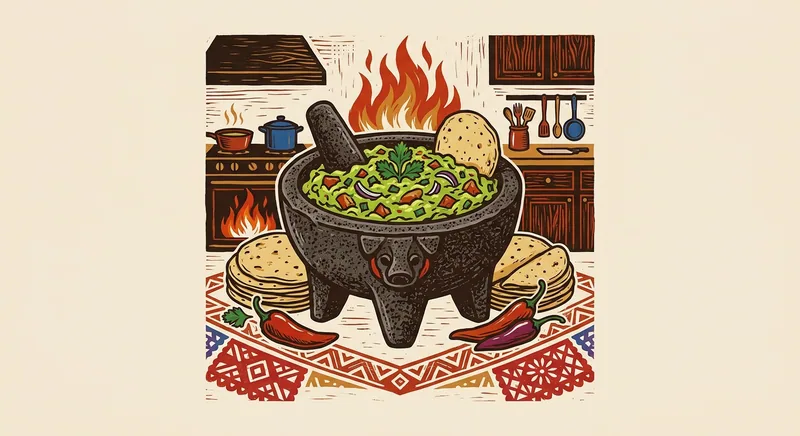
“Every molcajete has its own character; guacamole, fortunately, has no use for a notary.”
The rise of Hass
The avocado that dominates international shelves is Hass, a variety that originated in California from a seedling grown by Rudolph Hass and patented in 1935. Its rough skin, durability in transit and convenient ripening made it a favorite for trade. Mexico found in it a fortunate combination of climate, elevation and agricultural knowledge, especially in Michoacán, now the heart of national production. After the gradual opening of the U.S. market to Mexican fruit beginning in 1997, exports grew tremendously.
International demand, nutritional promotion and the popularity of Mexican cuisine turned the avocado into a global commodity. The nickname “green gold” refers to the income and jobs it generates for growers, packers, transporters and entire communities. It also explains why a fruit that was once seasonal and regional can now be found almost year-round in supermarkets in Tokyo, Toronto or Paris. But its gleam, as with nearly all gold, can be blinding.
The price of green gold
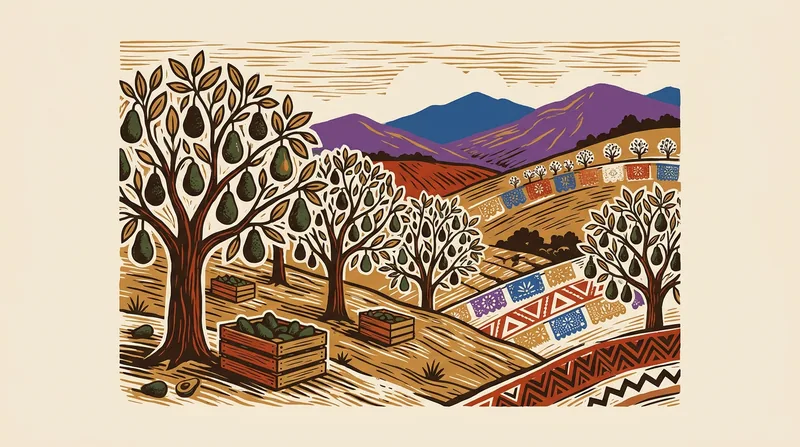
The boom has a delicate downside. The unregulated expansion of orchards can put pressure on forests, biodiversity, and water; in Michoacán, various institutions have documented land-use changes linked to agricultural production. Added to this are conflicts over economic control of the supply chain and security problems that should not be attributed, without nuance, to all growers. The challenge is to distinguish between legal orchards and harmful practices, strengthen traceability, and pay a price that makes it possible to produce without devouring the landscape.
Its importance today, then, is not measured only in tons exported. The avocado brings together biocultural heritage, nutrition, rural labor, home cooking, and commercial power within a single peel. Choosing fruit in season, asking where it comes from, avoiding waste, and supporting verifiable supply chains are small gestures, not magic solutions; but the table also votes with its fork. The true green gold is not the fruit alone: it is the tree together with the forest, water, memory, and communities able to make a dignified living from it.
- Smith, C. E. Jr., “Plant Remains”, in Douglas S. Byers (ed.), The Prehistory of the Tehuacan Valley, Vol. 1: Environment and Subsistence, University of Texas Press, 1967.
- Francisco Hernández, Natural History of New Spain, National Autonomous University of Mexico.
- Daniel Zizumbo-Villarreal and Patricia Colunga-GarcíaMarín, studies on the domestication and diversity of avocado in Mesoamerica, Plant Genetic Resources Newsletter, FAO/IPGRI.
- Agrifood and Fisheries Information Service (SIAP), Government of Mexico, Agrifood Overview: Avocado.
- National Commission for the Knowledge and Use of Biodiversity (CONABIO), EncicloVida: Persea americana.