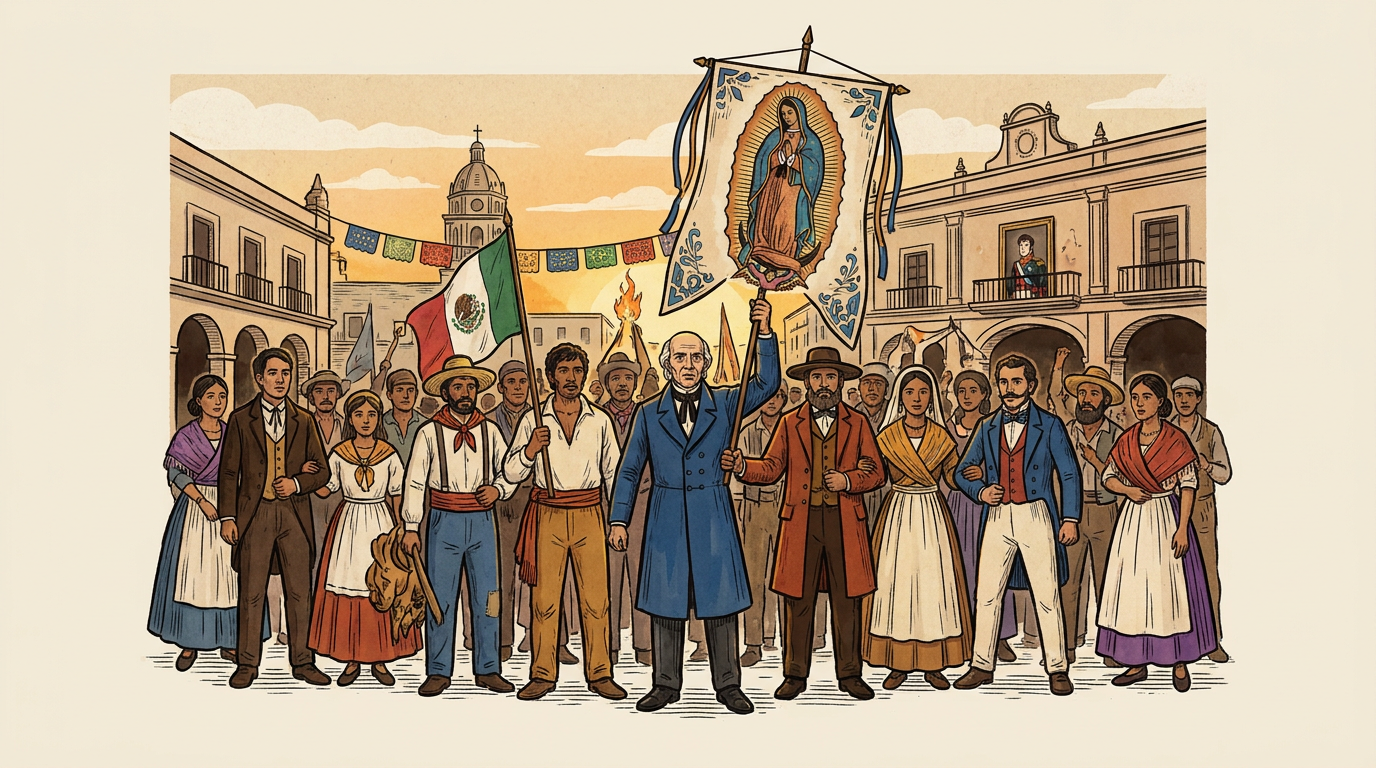
The classroom scene seems crystal clear: Miguel Hidalgo rings a bell, shouts “Long live Mexico!” and announces that the nation has decided to throw off three centuries of Spanish rule. It is an effective image for the calendar, but far too tidy for a dawn as confusing as that of September 16, 1810. The first insurgents did not share a single program, and many did not seek an immediate break with the Spanish monarchy. Independence began, to a large extent, as a struggle to decide who could govern New Spain while the legitimate king was being held captive.
A kingdom without a king
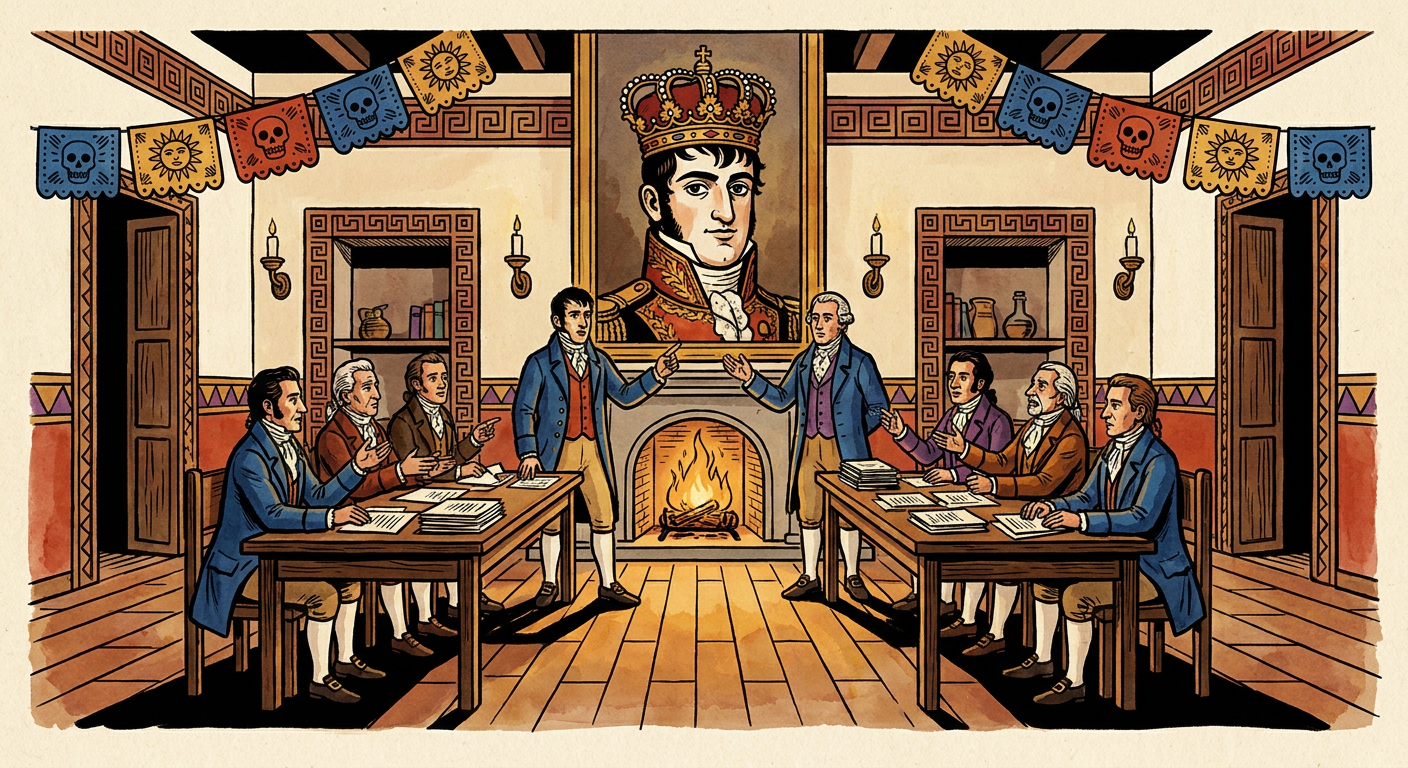
To understand it, we have to cross the Atlantic. In 1808, Napoleon Bonaparte invaded Spain, forced Charles IV and Ferdinand VII to abdicate in Bayonne, and placed his brother Joseph Bonaparte on the throne. The monarchy was left leaderless, and its territories faced an explosive question: if the legitimate king could not govern, where did sovereignty reside? In Spain, juntas emerged claiming to exercise it provisionally in the name of Ferdinand VII; in the Americas, several groups asked why they could not do the same.
At the time, New Spain was not a colony administered exactly like those of nineteenth-century imperialism, but rather a kingdom of the Spanish Monarchy, though it was subordinate to authorities from the Iberian Peninsula and riven by deep inequalities. Its Creole elites—Spaniards born in the Americas—had wealth and local influence, but resented restrictions on holding certain offices and the Bourbons’ centralizing reforms. Added to this were taxes, agricultural crises, tensions in Indigenous towns and haciendas, and discontent among castas and urban workers. The king’s captivity did not create those grievances, but it opened a crack through which they all burst forth, each with its own unsettled score.
Long live Ferdinand, death to bad government
The Querétaro conspiracy, which included Hidalgo, Ignacio Allende, Juan Aldama, Josefa Ortiz de Domínguez, and others, was uncovered before the planned date of the uprising. Hidalgo then called his parishioners together in Dolores in the early hours of September 16. No literal, contemporary transcription of his words exists; accounts of the famous Grito were written later and differ from one another. That is why it is wise to be wary both of the perfectly rehearsed “Long live Mexico!” and of any reconstruction that claims to know every phrase uttered beside the parish church.
What proclamations, testimonies, and insurgent slogans do show is the presence of Ferdinand VII as a banner of legitimacy. People shouted long live the captive king and denounced the “bad government,” the gachupines, or the rule of Europeans from the Iberian Peninsula. That does not make the movement tame: claiming the right to govern in the monarch’s name could be a cautious formula, a sincere conviction, or a shared language for bringing together different forces. In the political world of 1810, invoking the king was not mere decoration; it made it possible to rebel against specific authorities without yet declaring that the entire monarchy lacked legitimacy.
“Long live religion! Long live our Most Holy Mother of Guadalupe! Long live Ferdinand VII! Long live America and death to bad government!”—version of the Grito attributed to Hidalgo by Juan Aldama in his 1811 statement; it is not a literal transcription of that dawn.
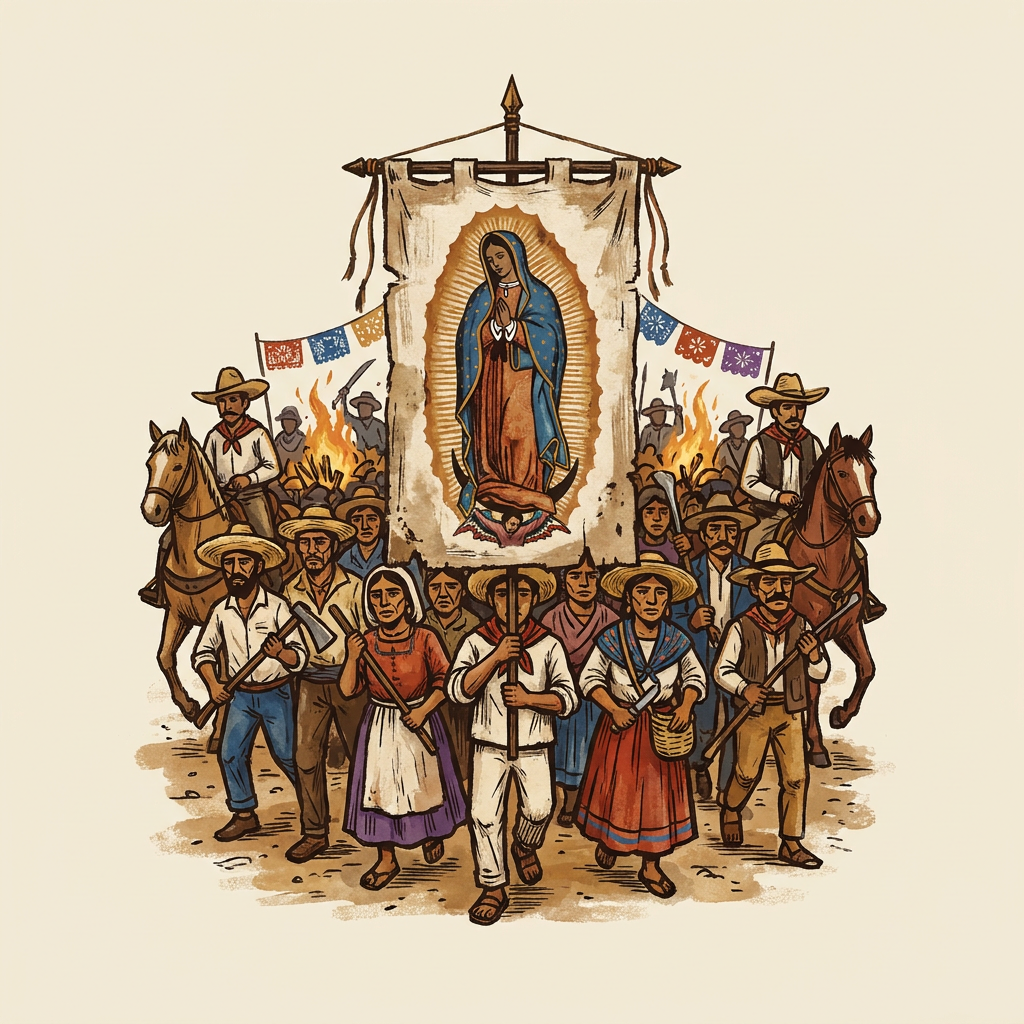
The crowd that joined Hidalgo was hardly an assembly of constitutionalists with minutes and coffee, either. Peasants, Indigenous people, mine workers, artisans, ranchers, and members of castas joined a massive mobilization in which religious loyalty, rejection of local authorities, grievances over land and tribute, hunger, and hopes for justice all mingled. Hidalgo abolished slavery in Guadalajara and ordered the suspension of tribute imposed on castas, radical measures for the social order of New Spain. Insurgent violence—such as the massacre of Spaniards at the Alhóndiga de Granaditas—and the brutal royalist repression made it impossible to present the war as a civic ceremony complete with a bell.
Independence was invented along the way
To say that the movement was not born with a unanimous intention to separate from the Crown does not mean that no one was thinking about independence. Ideas changed as the war went on, and the break became clearer as paths to reconciliation closed and repression intensified. After Hidalgo, Allende, Aldama, and Jiménez were captured and executed in 1811, Ignacio López Rayón tried to organize the movement through the Supreme National American Junta. His Constitutional Elements still recognized that sovereignty emanated from the people but was vested in Ferdinand VII: a combination that seems contradictory today but made political sense at the time.
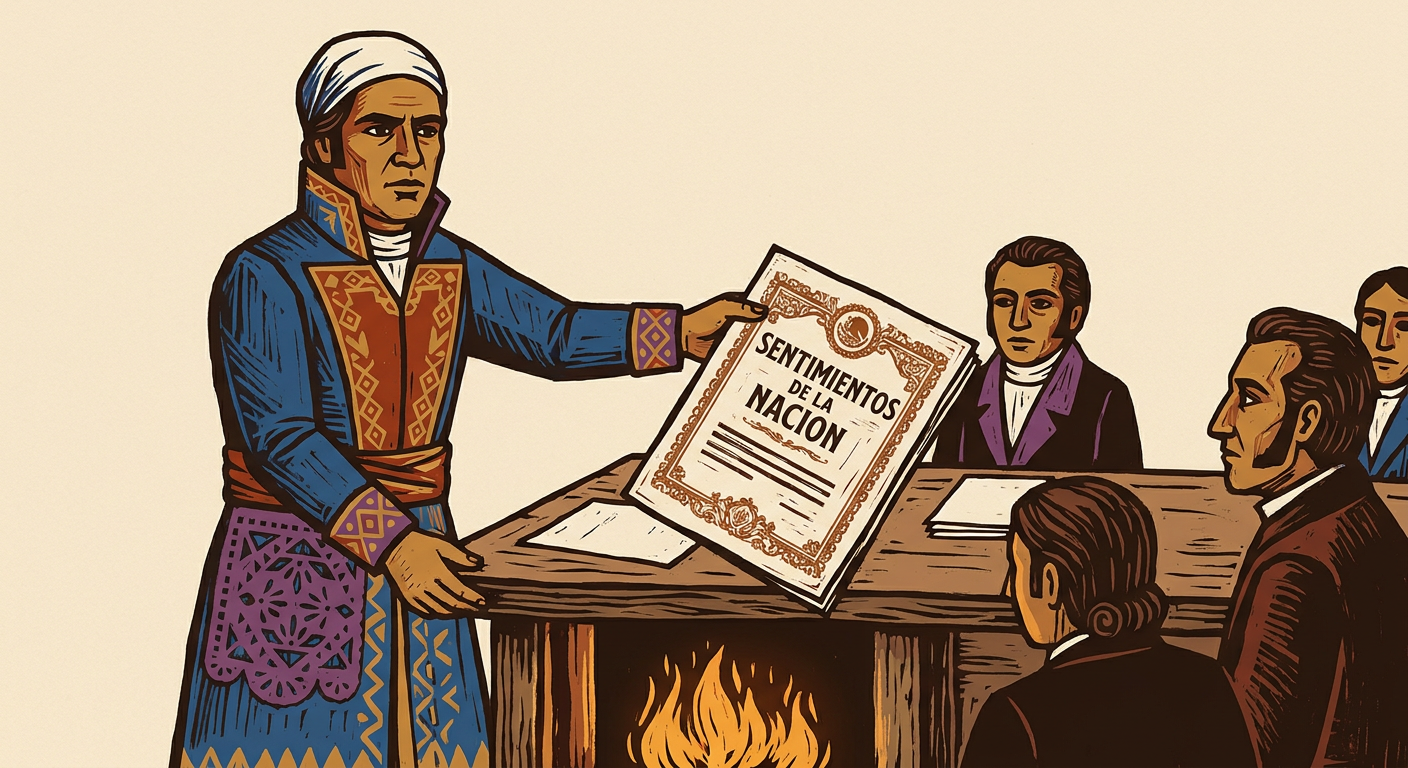
José María Morelos pushed the cause in a different direction. In the Sentiments of the Nation, presented to the Congress of Chilpancingo on September 14, 1813, he called for America to be “free and independent of Spain and of every other Nation, Government, or Monarchy.” The wording no longer left a seat reserved for Ferdinand VII. In November, Congress formally declared its dependence on the Spanish throne severed, and in 1814 it enacted a republican constitutional decree in Apatzingán, although the war prevented it from being implemented effectively.
- 11808: the Napoleonic invasion triggers a crisis of legitimacy throughout the Spanish Monarchy.
- 21810: Hidalgo’s insurrection fights the viceregal government while invoking, among other banners, Ferdinand VII.
- 31811: López Rayón seeks to organize an American sovereignty still nominally linked to the king.
- 41813: Morelos and the Congress of Chilpancingo clearly declare independence.
- 51814: the Constitution of Apatzingán proposes a representative, republican order.
- 61821: the Plan of Iguala brings about separation through an independent Catholic monarchy.
The path, therefore, was not a straight line from the Grito to the tricolor flag. There were autonomist, monarchist, republican and popular projects; there were also disagreements over property, equality, religion and the role of corporate bodies. Some insurgents wanted to profoundly transform society; others aspired above all for Americans to govern their own kingdom. The word “independence” ultimately brought them together, but it never erased their differences. Revolutions, like family moles, often share a name and argue over the ingredients.
1821: separating in order to preserve
After Morelos was executed in 1815, the insurgency survived in regional strongholds, including those led by Vicente Guerrero and Guadalupe Victoria. Meanwhile, Fernando VII had returned to the throne in 1814 and restored absolutism. The decisive shift came in 1820, when a liberal revolution in Spain forced the king to reinstate the Constitution of Cádiz of 1812. In New Spain, sectors of the clergy and the elites feared that the new liberal regime would curtail ecclesiastical and corporate privileges; separation, once a threat to the established order, began to look like a way to protect it.
Agustín de Iturbide, a former royalist commander, negotiated with Guerrero and proclaimed the Plan of Iguala on February 24, 1821. Its Three Guarantees were the Catholic religion, independence and union between Americans and Europeans. The new country was envisioned not as a republic, but as a constitutional monarchy: the crown would be offered first to Fernando VII or to another prince from a reigning European house. The paradox is delicious and fierce: Mexico achieved its independence from Spain by offering its throne to the king of Spain.
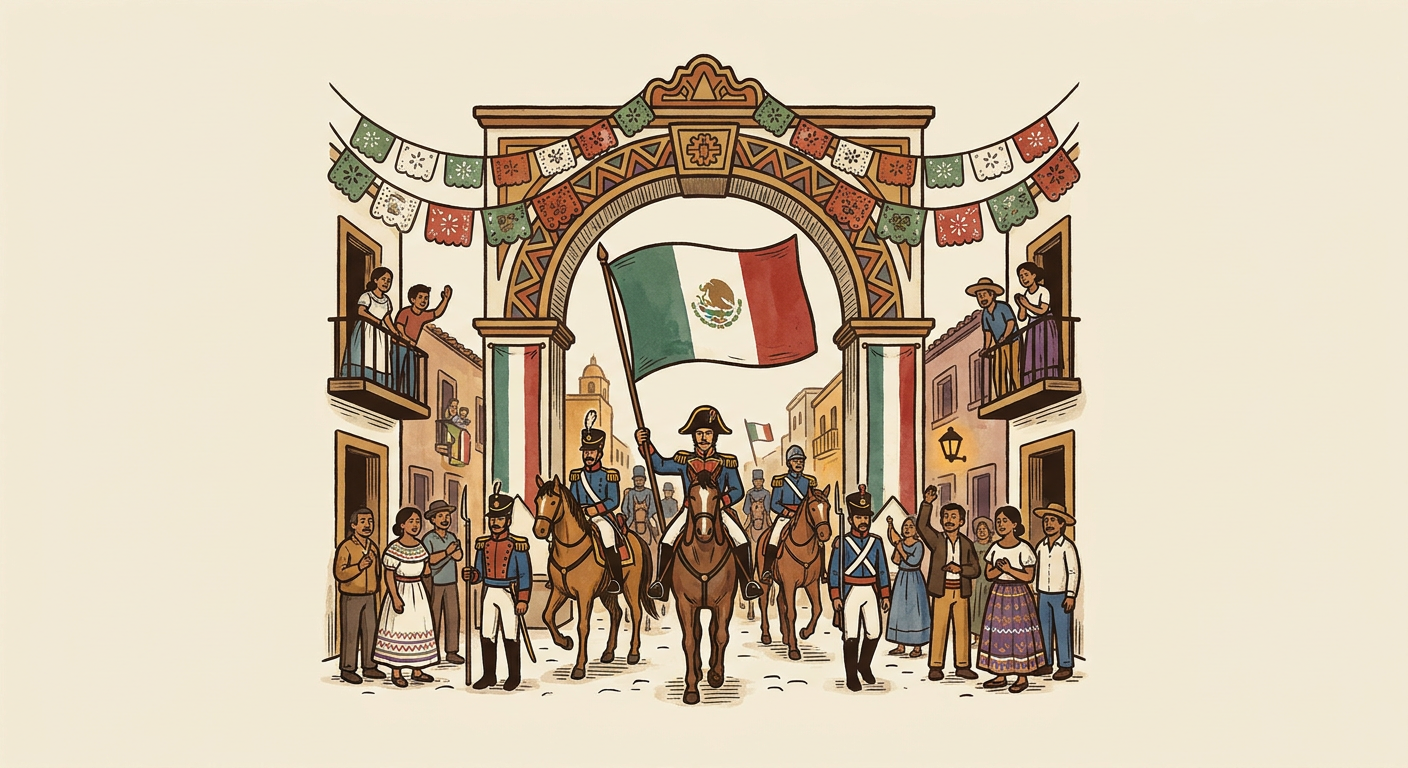
The Army of the Three Guarantees entered Mexico City on September 27, 1821, and the Act of Independence was signed the following day. The Mexican Empire was born with Iturbide as its dominant figure and, in 1822, as Emperor Agustín I. It was short-lived: he was overthrown in 1823, and the federal republic was established the following year. The consummation of independence, the empire and the republic were distinct chapters; combining them into a single scene makes for a tidy story, but not a true one.
Neither a lie nor a holy card
So, is it false to say that Hidalgo began the Independence movement? No: his rebellion set off a war that destroyed the viceregal order and unleashed forces that could no longer be tucked back into the sacristy. What would be false is to attribute to him, from the very first peal of the bell, a national program identical to the one that triumphed eleven years later. It would also be misleading to claim that the entire movement was a monarchist maneuver with no aspirations for emancipation: Morelos and the Congress of Chilpancingo disprove that convenient notion.
Official memory chose symbols capable of uniting incompatible eras: Hidalgo as Father of the Nation, Morelos as political architect, Guerrero and Iturbide as the consummators of independence, and the Grito as Mexico’s instantaneous birth. It is understandable; nations need stories that can be proclaimed from a balcony without calling for an intermission. But history serves us better when it shows the seams: loyalty to Fernando VII, Creole autonomism, popular demands, insurgent republicanism and the conservatism of 1821 coexisted, clashed and evolved. There is no need to remove Hidalgo from the square, only to stop putting words in his mouth that he could not yet have spoken.
Mexico did not wake up independent one morning; it became independent through eleven years of war, defeats, pacts and ideological shifts. There was no single initial intention, because there was no single country imagined by everyone. The break with Spain ended up being more profound than the project envisioned by many of its earliest participants and, at the same time, more conservative than several insurgents had wanted. Perhaps that is the idea that lingers after the bell: a nation is born not when everyone knows where they are going, but when they can no longer return unchanged to the place they left.
- Virginia Guedea, En busca de un gobierno alterno: los Guadalupes de México, Universidad Nacional Autónoma de México, 1992.
- Ernesto Lemoine Villicaña (ed.), Morelos: su vida revolucionaria a través de sus escritos y de otros testimonios de la época, Universidad Nacional Autónoma de México, 1965.
- Jaime E. Rodríguez O., La independencia de la América española, Fondo de Cultura Económica / El Colegio de México, 1996.
- Instituto Nacional de Estudios Históricos de las Revoluciones de México (INEHRM), documents of the Independence movement: Plan of Iguala, Treaties of Córdoba and Act of Independence.
- El Colegio de México, Nueva historia general de México, 2010.