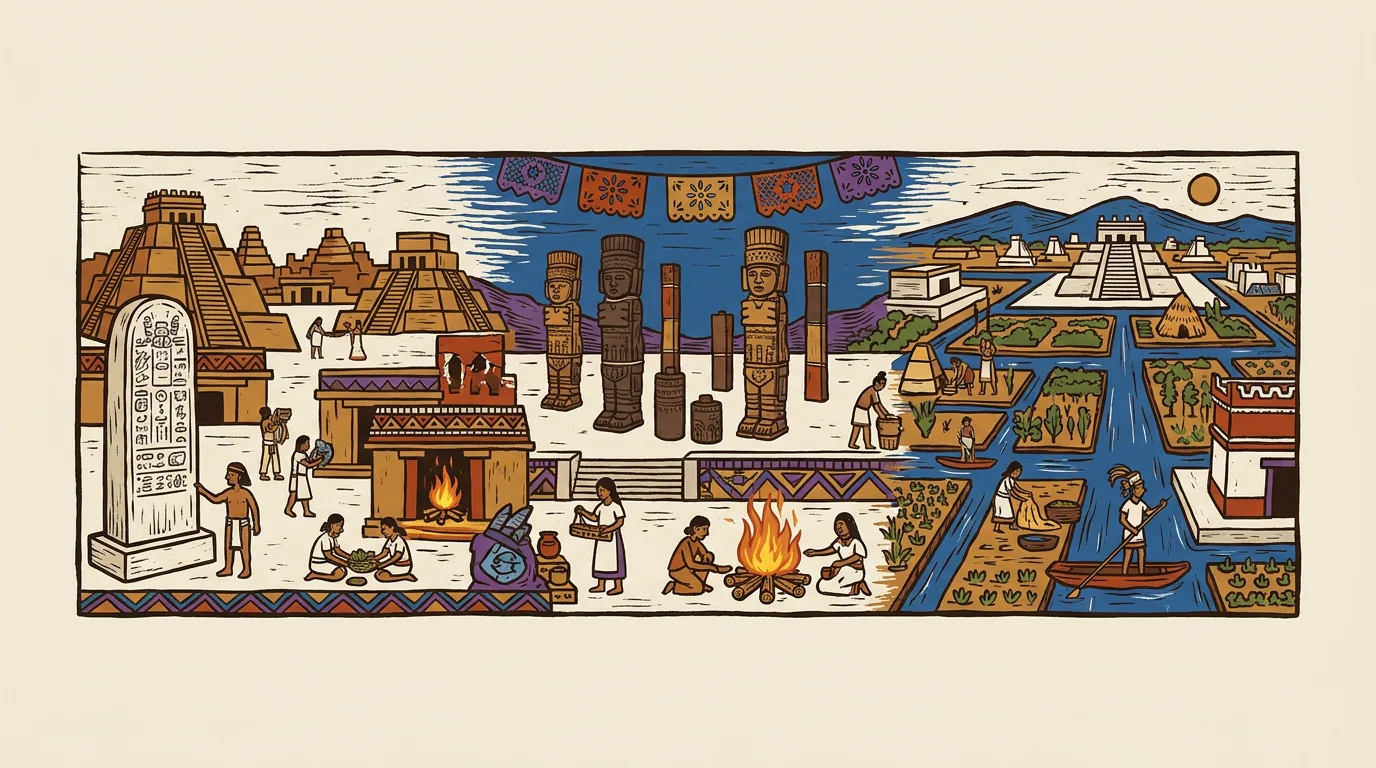
The question seems simple: who came first, the Maya, the Toltecs, or the Aztecs? But the Mesoamerican past cannot be lined up like a row of dominoes. While one city flourished, another was just being born; some peoples shared centuries, while others inherited symbols, trade routes, and stories from societies that had disappeared long before. The short answer is: the Maya began first, the Toltecs came later, and the Mexica—whom we usually call Aztecs—were the last of the three to build a great power. The fuller answer requires a timeline with several tracks running at once.
First, the clock: Mesoamerica was not a single civilization
Mesoamerica is the name scholars give to a vast cultural area that encompassed much of present-day Mexico and parts of Guatemala, Belize, Honduras, El Salvador, Nicaragua, and Costa Rica. Its peoples did not form one country or speak a single language, but they shared practices such as intensive maize cultivation, ritual calendars, markets, ball games, and certain religious and artistic traditions. To organize a history spanning more than three millennia, archaeology generally divides it into three major periods: Preclassic, Classic, and Postclassic. These are tools for study, not bells that every city obeyed at the same time.
- 1Preclassic, approximately 2500 BC-AD 200: farming villages, ceremonial centers, and complex societies became established; the Olmecs flourished and the first Maya cities emerged during this period.
- 2Classic, approximately AD 200-900: large urban centers and regional powers grew, among them Teotihuacan, Monte Albán, and numerous Maya cities.
- 3Postclassic, approximately AD 900-1521: new trade networks, migrations, and military powers emerged; this period includes Tula, the Mixtec lordships, the Purépecha, and Mexica rule.
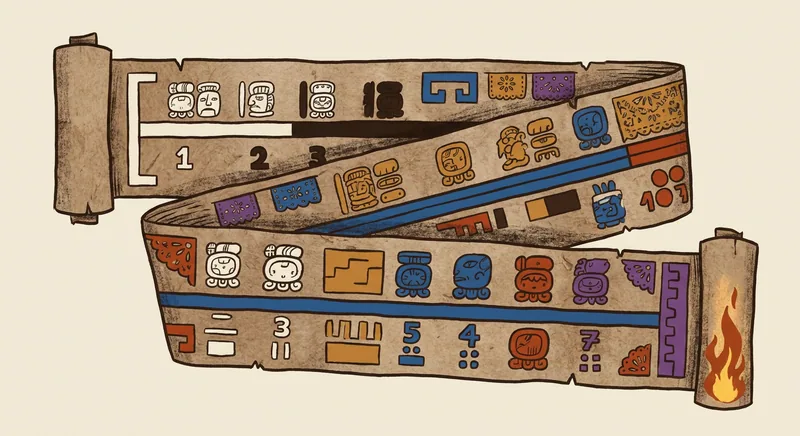
There is one important caveat: dates vary slightly depending on the region and the author. Moreover, a culture does not vanish when an academic period ends. The Maya peoples, for example, have existed for more than two thousand years and remain very much alive in communities that speak numerous Mayan languages. Saying that “the Maya disappeared” is not only incorrect: it confuses the abandonment of some ancient cities with the full history of millions of people.
The Maya: the first of the three, but also contemporaries of the others
The earliest farming communities connected to the Maya's long history date back to the second millennium BC. During the Preclassic, especially between 1000 BC and AD 200, major centers emerged in Guatemala, Belize, Chiapas, Tabasco, and the Yucatán Peninsula. Nakbé, El Mirador, San Bartolo, and Izapa help us understand that period of urban, political, and religious experimentation. Long before Tula or Mexico-Tenochtitlan, the Maya were already building monumental architecture and developing systems of writing and calendrical calculation.
The Maya Classic period, conventionally dated between AD 250 and 900, was the era of cities such as Tikal, Calakmul, Palenque, Copán, Yaxchilán, and Piedras Negras. There was no unified “Maya Empire”: there were numerous dynasties and city-states that formed alliances, traded, and also waged war against one another. Their rulers recorded births, accessions to the throne, rituals, and conflicts on inscribed monuments. Thanks to the decipherment of Maya writing, those stones ceased to be silent decoration and regained names, verbs, and very human disputes.
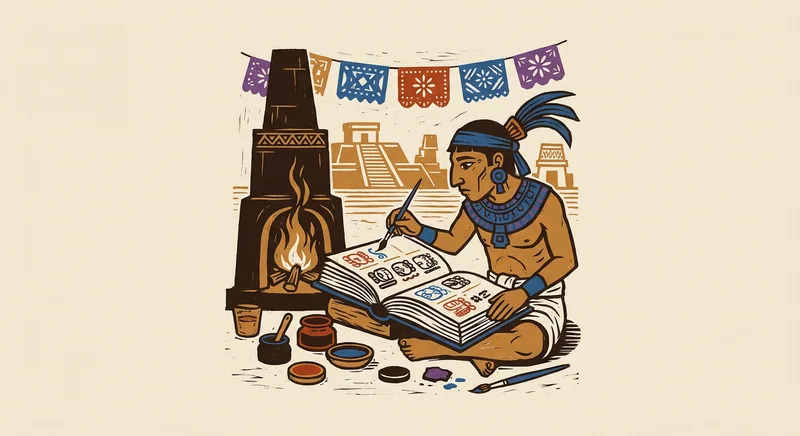
Between the eighth and tenth centuries, many cities in the southern lowlands underwent profound transformations: monumental construction declined, several dynasties came to an end, and numerous settlements were abandoned. The causes were multiple and varied by place: wars, political crises, droughts, environmental pressures, and breakdowns in trade networks. Maya life, however, continued in other regions. In the Postclassic, cities such as Chichén Itzá, Mayapán, Tulum, and the centers of the Guatemalan highlands prospered.
“Maya” does not describe a single historical experience either. In 1517 and 1519, Spanish expeditions encountered fully inhabited Maya cities, provinces, and lordships. The conquest of the region took generations: Tayasal, capital of the Itza in Petén, did not fall until 1697. So the Maya predated the Toltecs and Mexica, were contemporaries of both, and outlasted the fall of their capitals. A meaningful chronology must allow for that apparent contradiction.
The fall of a dynasty does not mean the disappearance of a people.
Toltecs: Tula between archaeology and legend
The city of Tula, in the present-day state of Hidalgo, reached its greatest importance approximately between AD 900 and 1150, during the Early Postclassic. Its monumental zone preserves pyramids, colonnades, warrior reliefs, and the celebrated sculptures known as atlantes. From there, an elite ruled a strategic region of central Mexico and participated in long-distance trade networks. In the basic sequence, Tula flourished after the heyday of many Classic Maya cities and several centuries before the rise of Mexico-Tenochtitlan.
The word “Toltec” requires care. In sixteenth-century Nahua sources, Tollan appears as a prestigious city and the Toltecs as masters of the arts, government, and knowledge. These accounts blend historical memory, political genealogy, and mythmaking; they do not function like a modern chronicle with flawless dates. Identifying every passage about Tollan with an event that took place at the archaeological site of Tula may be tempting, but it cannot always be demonstrated.
The traditions surrounding Topiltzin Quetzalcóatl illustrate the problem well. Various sources portray him as a ruler, priest, or exemplary figure of Tollan, and recount his departure from the city under circumstances that change from one version to another. There may be a historical basis, but the figure is wrapped in legendary and religious accounts. It is worth saying so without ruining the story: legend is also a source, but it answers different questions from those posed by an excavation.
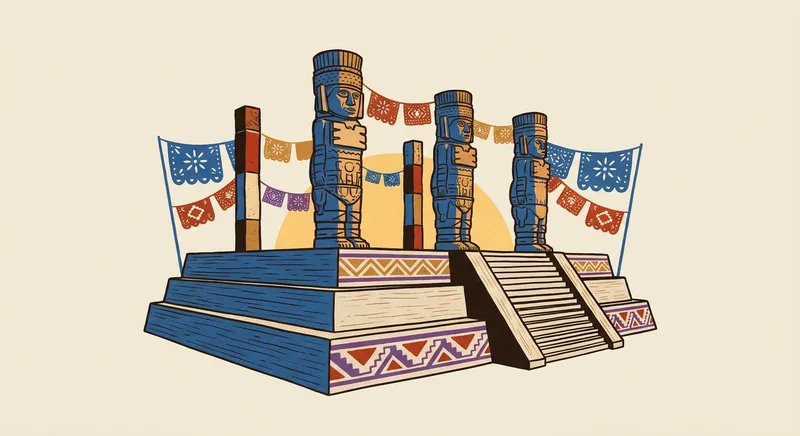
The relationship between Tula and Chichén Itzá has also been widely debated, since both sites share architectural and iconographic features, such as serpent-shaped columns and processions of warriors. In the past, that similarity was explained as a simple Toltec conquest of Yucatán. Today, more complex scenarios are considered: exchanges, maritime contacts, the movement of elites, and the adoption of shared political languages. The chronology also shows partially overlapping periods of development; there is no need to imagine a single caravan carrying every idea from Hidalgo.
Mexicas or Aztecs: the newcomers who inherited an ancient world
The Mexicas entered Mesoamerican history late, though they did not arrive on an empty stage. According to their own traditions, they migrated from Aztlan and passed through various places before settling in the Basin of Mexico. Aztlan has not been conclusively located and belongs to the realm of origin history, not to that of an address confirmed by archaeological GPS. What can be verified is that, during the 13th and 14th centuries, Mexica groups became part of a landscape filled with ancient cities, rival city-states, markets, and land that had already been claimed.
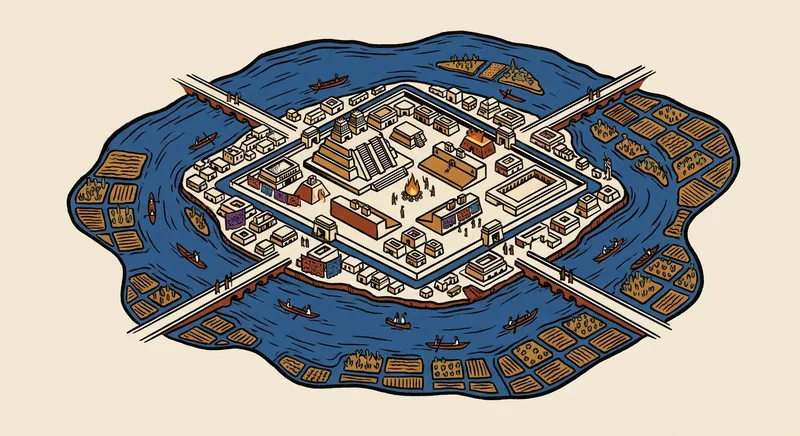
México-Tenochtitlan was traditionally founded in 1325, although the sources offer variations and archaeology requires that the date be treated with caution. In 1428, Tenochtitlan, Texcoco, and Tlacopan defeated Azcapotzalco and formed the alliance that historiography calls the Triple Alliance. For less than a century, their armies and tax collectors extended a tribute system across much of central and southern Mesoamerica. They did not rule the entire territory: the Purépechas resisted in the west and Tlaxcala maintained its independence, among other powers.
The term “Aztec” is useful as a general label, but it can obscure differences. It derives from Aztlan and is sometimes applied to various Nahua groups linked by migration stories; “Mexica” refers more precisely to the dominant people of Tenochtitlan and Tlatelolco. Their neighbors also spoke Náhuatl, but that did not make them Mexicas. Calling them all Aztecs is a little like inviting an entire family and giving it the name of the most famous cousin.
The Mexicas looked to the past to legitimize the present. They visited the ruins of Teotihuacan, reused ancient objects, and presented themselves as heirs to Toltec prestige. When the Spanish and their Indigenous allies arrived in 1519, Tula had not been a major capital for centuries, and Teotihuacan had been past its peak for nearly a millennium. México-Tenochtitlan fell in 1521 after a war marked by the siege, the smallpox epidemic, and the decisive participation of numerous Indigenous peoples who were enemies of the Triple Alliance.
The timeline truly worth remembering
- 12500 BC-AD 200: Preclassic; farming villages, the Olmecs, and the first Maya cities.
- 2AD 250-900: Maya Classic; the rise of Tikal, Calakmul, Palenque, and many other cities. At the same time, Teotihuacan and Monte Albán flourished.
- 3AD 900-1150, approximately: the height of Tula and of the archaeological culture associated with the Toltecs.
- 4AD 900-1520: Postclassic Maya societies; Chichén Itzá, Mayapán, and numerous city-states continue Maya history.
- 5AD 1325-1521: México-Tenochtitlan; from 1428 onward, the principal center of the Triple Alliance.
- 61521 did not bring the Indigenous world to a close: the power of the Triple Alliance ended and a colonial order began, but peoples, languages, and memories endured.
If we compare only the three names, the order in which they appeared is Maya, Toltec, and Mexica. But they should not be imagined as runners in a relay race, where one hands over the torch and disappears. The Maya span all three major periods; Tula belongs primarily to the Early Postclassic; Mexica power occupies only the final centuries before the conquest. They shared centuries, indirect contacts, and deliberate appropriations of the past.
Nor should we forget those left out of that popular question. The Olmecs developed major Preclassic centers before the height of the Maya; Zapotecs and Mixtecs built histories spanning millennia in Oaxaca; Teotihuacan was an enormous metropolis several centuries before Tula; the Purépechas built a state capable of containing Mexica expansion. The history of Mesoamerica does not have three steps, but rather a broad staircase, with landings, intersections, and the occasional loose stone.
The best answer, then, fits into one sentence, but it does not end there: the Maya came first, Toltec Tula flourished later, and the Mexicas arrived last. What matters is replacing the line with a tapestry. Each thread began at a different time, some ran alongside one another, and none was completely severed by the date printed in a textbook. Seeing the past this way does not make it more confusing: it restores its true form, made up of living peoples and of eras that touch one another.
- National Institute of Anthropology and History (INAH), Media Library and educational materials on the Maya, Tula and the Mexica.
- Michael D. Coe and Stephen Houston, The Maya, Thames & Hudson, 2015.
- Alfredo López Austin and Leonardo López Luján, Mexico’s Indigenous Past, Fondo de Cultura Económica and El Colegio de México, 1996.
- Richard F. Townsend, The Aztecs, Thames & Hudson, 2009.
- Enrique Florescano, Quetzalcóatl and the Founding Myths of Mesoamerica, Taurus, 2004.