The Mexican flag seems so familiar that it is hard to imagine it as an unfinished structure. Green, white, and red; eagle, nopal, and snake: everything looks destined to have belonged together since time immemorial. But the national banner is the result of many political decisions, changes of regime, and graphic adjustments, not a revelation that fell from the sky over Lake Texcoco. To understand its colors, we must return to 1821, when independence still smelled of gunpowder, fresh ink, and agreements between former enemies.
Before the Tricolor
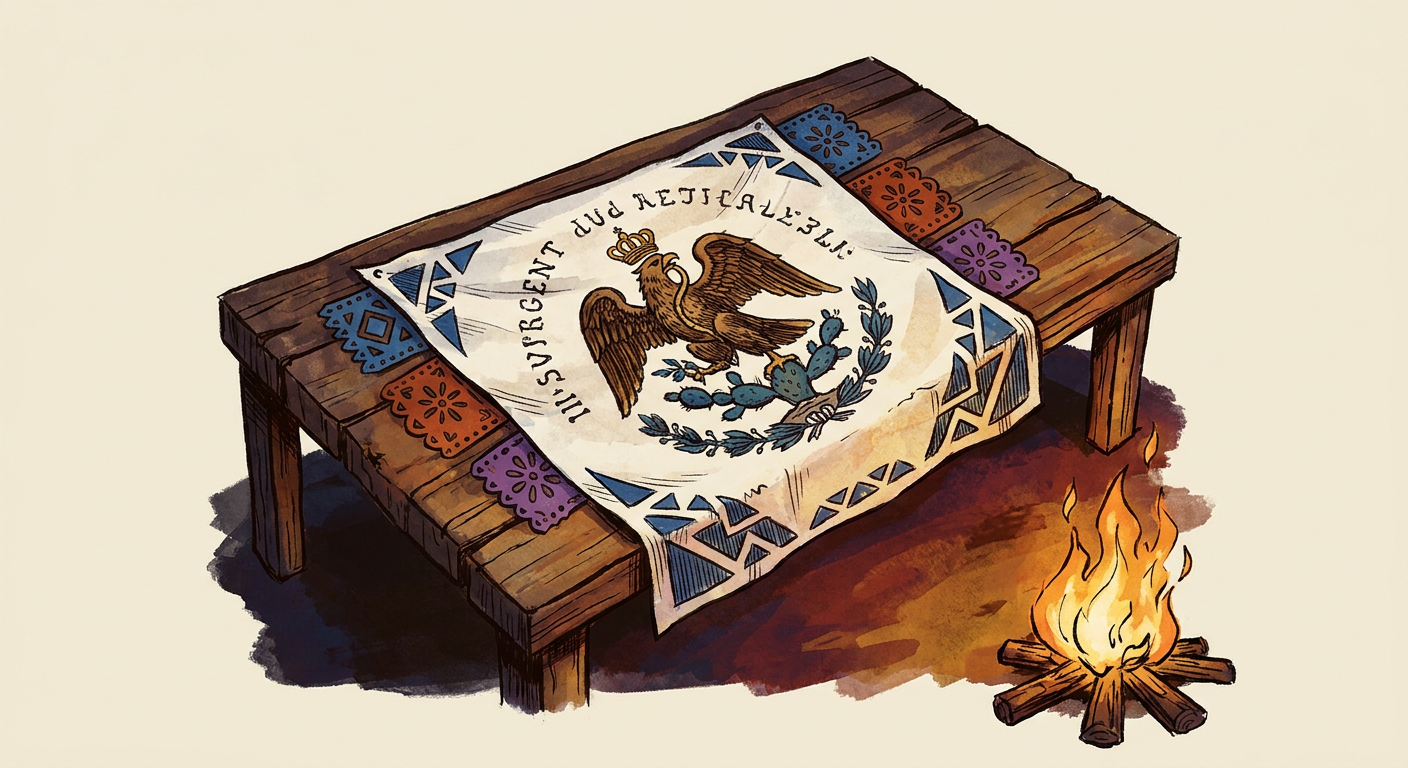
During the war that began in 1810, there was no single insurgent flag. Miguel Hidalgo took an image of the Virgin of Guadalupe as his banner; José María Morelos used standards featuring a crowned eagle atop a nopal and the Latin inscription “Oculis et unguibus aeque victrix”, generally translated as “with eyes and claws, equally victorious”. Other insurgent forces used white and blue cloths, crosses, virgins, eagles, and slogans of their own. Speaking of “the flag of Independence” in the singular oversimplifies a far more lively collection.
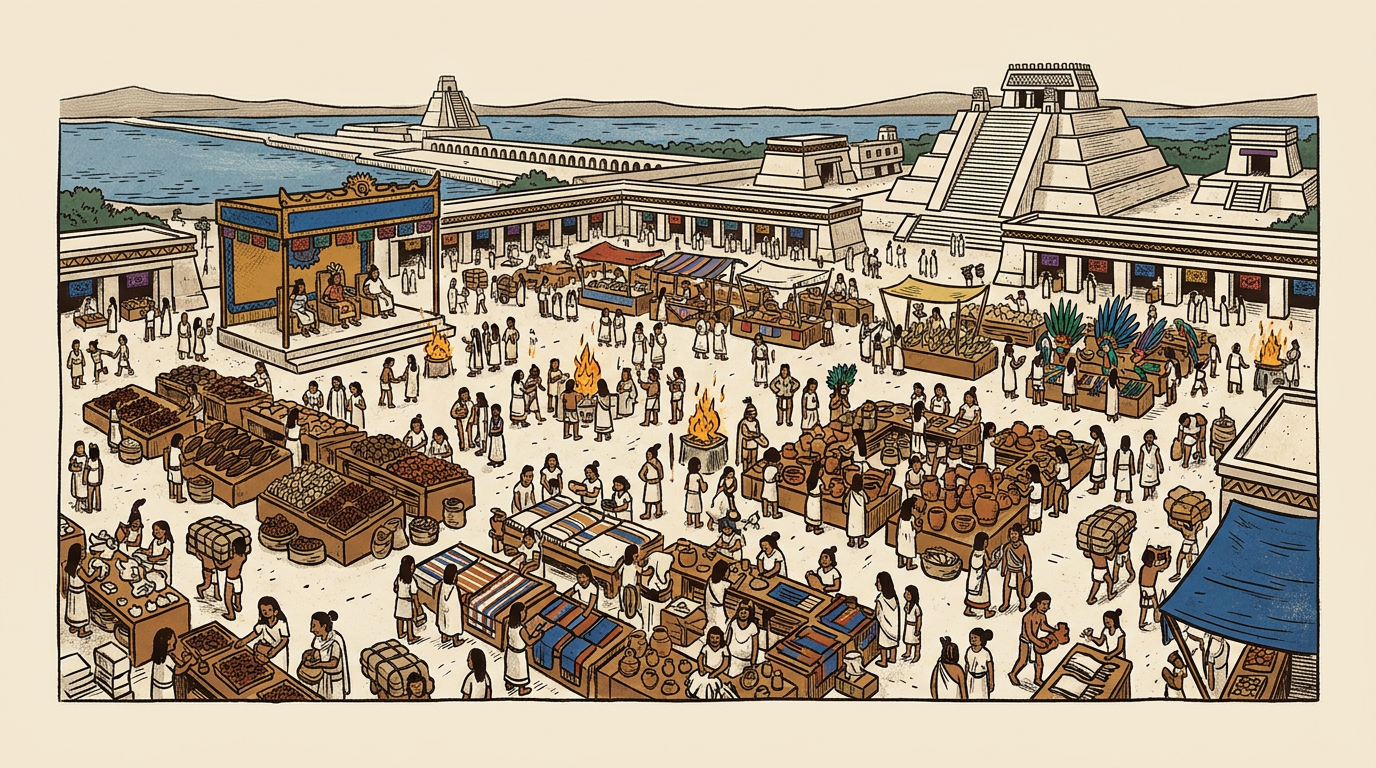
The eagle had ancient roots: it appears in stories and representations connected to the founding of Mexico-Tenochtitlan, although Indigenous and colonial versions do not always include a snake or depict exactly the same scene. After the Conquest, the emblem continued to circulate on coats of arms, maps, facades, and documents from Mexico City. So the insurgents did not pull it from an untouched archaeological chest: they inherited a symbol that had been evolving for centuries. History, like busy kitchens, reuses utensils and gives them new purposes.
Three Guarantees, Three Colors
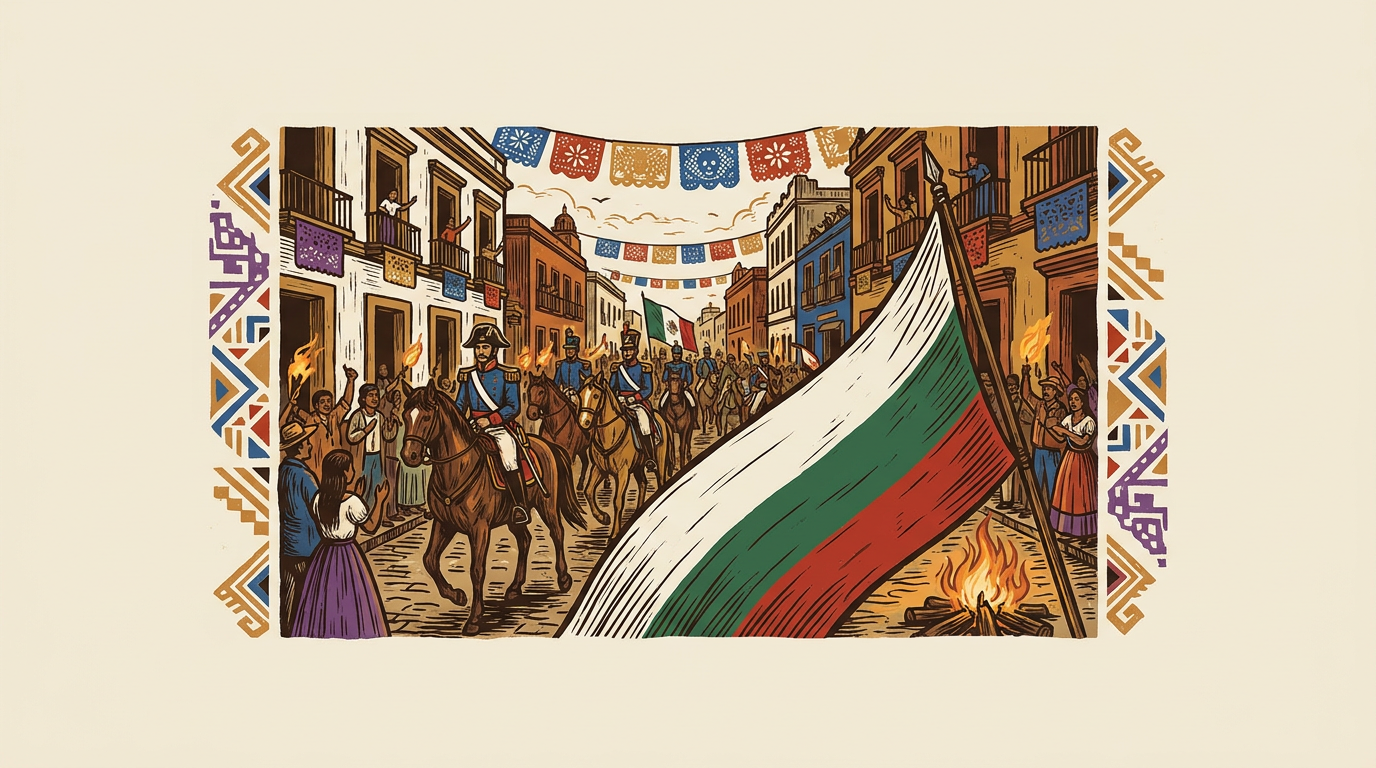
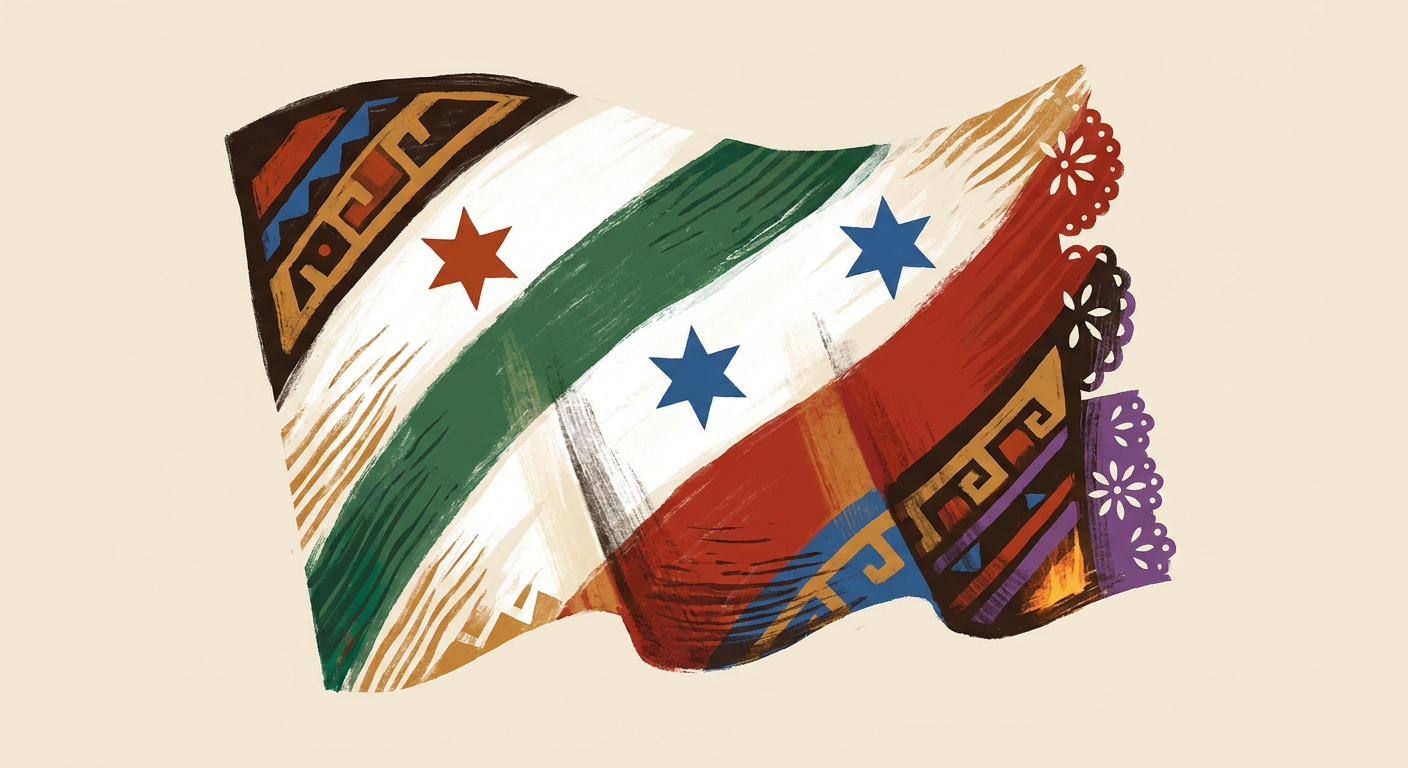
The tricolor appeared at the moment Independence was achieved. On February 24, 1821, Agustín de Iturbide proclaimed the Plan of Iguala, which proposed an independent constitutional monarchy and brought together royalist and insurgent forces under the Army of the Three Guarantees. Those guarantees were religion, independence, and union. The first Trigarante flags expressed that program in three colors, although they were not arranged vertically as they are today.
- 1White: the Catholic religion, declared by the Plan of Iguala to be the religion of the nation, with no tolerance for any other.
- 2Green: Mexico’s independence from Spain and any other power.
- 3Red: union, understood at the time as harmony and political equality between Americans and Europeans residing in the new country.
“Religion, Independence, Union”: these were the three political guarantees originally represented by the tricolor of 1821.
It is worth dispelling an idea often repeated at school ceremonies: the original meanings were not hope, unity, and the blood of the heroes. That interpretation came later and, moreover, varies depending on who tells it; nor is it established as the official interpretation in current law. In 1821, the message was direct and political: white for religion, green for independence, and red for union. It was not chromatic poetry, but a government program sewn into cloth.
The Order Matters Too
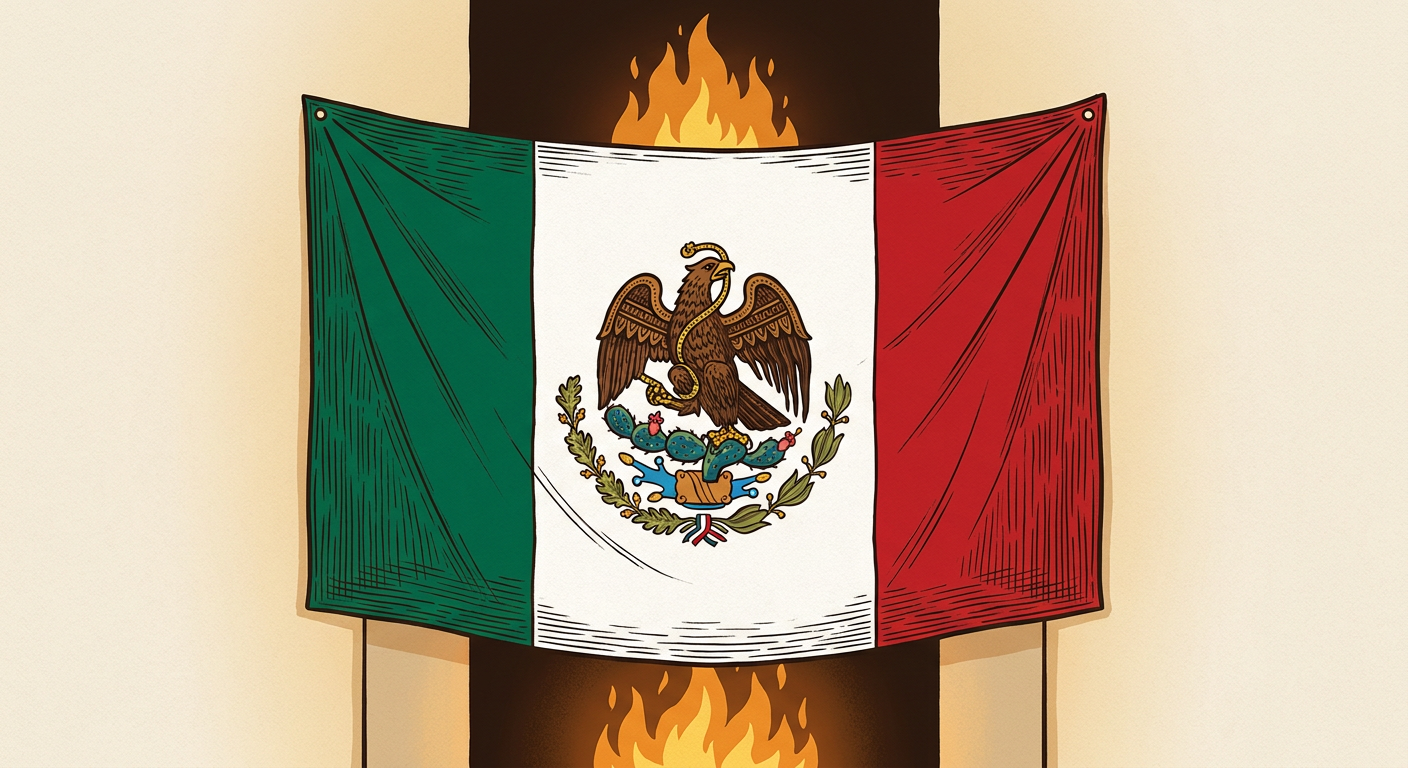
Once Independence was achieved, the Provisional Governing Junta decreed on November 2, 1821, that the national flag would retain the colors green, white, and crimson in vertical stripes and bear a crowned eagle on the white stripe. The order established at the time was green by the flagpole, white in the center, and red at the fly, an arrangement that remains in place. The imperial eagle alluded to the new regime led by Iturbide. Thus the basic structure of today’s flag was born, although the animal at its center would still undergo several changes in plumage.
The flag of the First Republic, adopted in 1823, removed the eagle’s crown and added oak and laurel branches. During the 19th century, the bird’s design, orientation, and posture changed as republics, empires, and governments succeeded one another; there were eagles facing forward, in profile, and with a more European air or a closer resemblance to Indigenous models. Maximilian crowned it again during the Second Empire and added eagles to the corners of certain banners. Each regime wanted to arrange the bird to suit its own drawing room, like an important relative in a family portrait.
From Iturbide to the Present Day
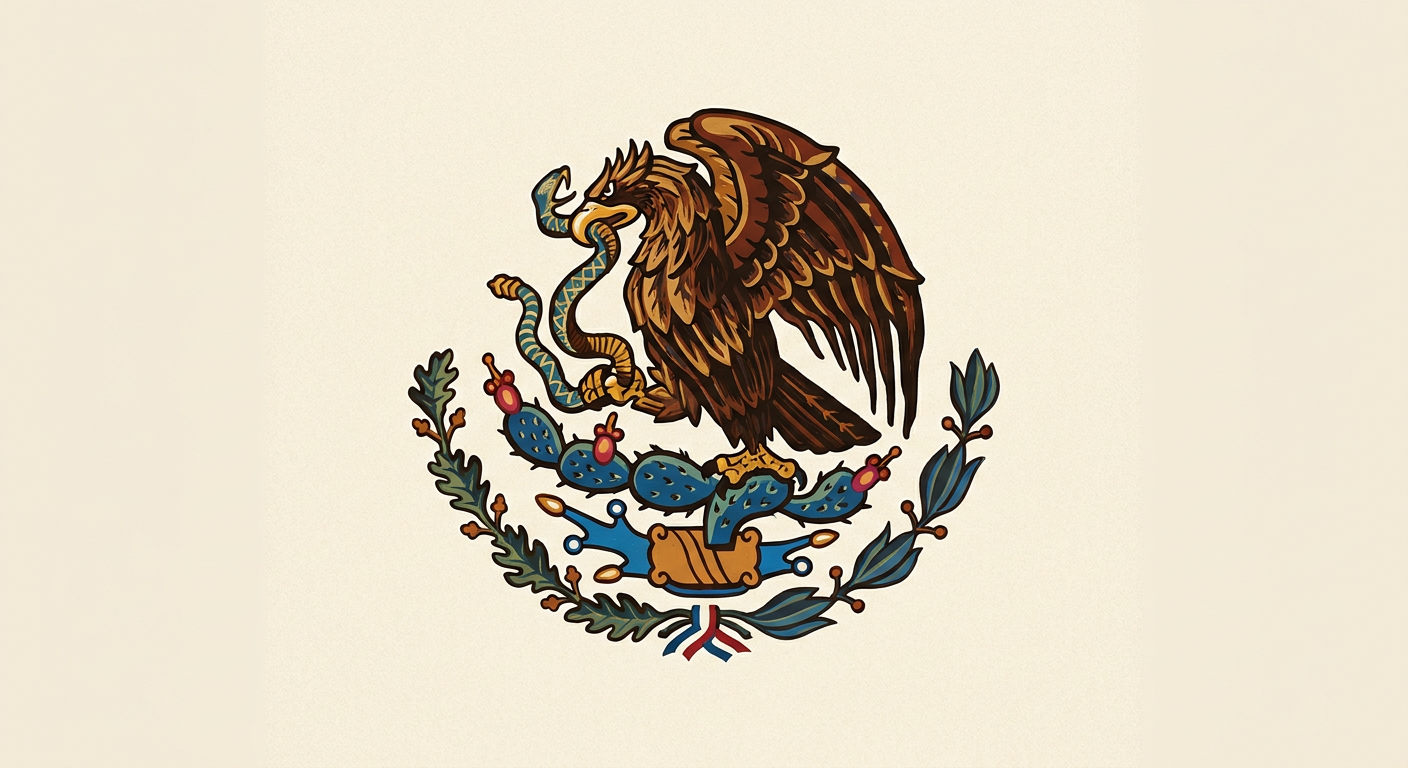
In 1916, Venustiano Carranza decreed that the eagle should appear in left profile, perched on a nopal and holding a snake in its beak. The current design of the National Coat of Arms was created by Francisco Eppens Helguera and Pedro Moctezuma Díaz Infante, and was officially established in 1968, during the presidency of Gustavo Díaz Ordaz. The Law on the National Coat of Arms, Flag and Anthem, enacted in 1984 and amended since then, defines the proportions, the order of the colors and the placement of the coat of arms. Curiously, the law describes the colors but does not assign them moral meanings.
When did hope, blood and other familiar interpretations enter the picture? After the separation of Church and State advanced by the Reform Laws, the religious meaning of white became awkward for the liberal civic narrative. Over time, secularized readings began to circulate: green as hope, white as unity or purity and red as the blood of national heroes. These are legitimate cultural interpretations, but they are not the documented meanings of the Trigarante tricolor, nor are they a mandatory formula established by law.
The scene of the eagle devouring a snake as though it had arrived fully formed from a single pre-Hispanic prophecy also deserves careful consideration. Various sources on the Mexica migration mention the eagle, the nopal and other signs, but the snake does not appear consistently; its inclusion and meaning were consolidated through a long colonial and national iconographic tradition. The coat of arms is ancient without being unchanging, Indigenous and New Spanish, republican and imperial by turns. Its power comes precisely from that eventful biography, not from an impossible purity.
Looking at the flag with rigor does not diminish its emotional power; it adds layers. Its colors emerged from an alliance in 1821 that defended religion, independence and union, and then survived the fall of the empire that brought them together. The eagle passed through conquests, insurgencies, republics and redesigns before taking its place at the center of the current flag. A flag is not a motionless relic: it is a conversation the country carries on with itself, even when it only half remembers where its words come from.
- Ministry of the Interior, Sentimientos de la Nación Legislative Museum, “History of the Mexican Flag.”
- National Institute for Historical Studies on the Revolutions of Mexico (INEHRM), materials on the Plan of Iguala and the Trigarante Flag.
- Martha Terán, “The Flag of Independence: Between History and Myth,” Institute of Historical Research, UNAM.
- Enrique Florescano, The Mexican Flag: A Brief History of Its Formation and Symbolism, Fondo de Cultura Económica.
- Chamber of Deputies of the Honorable Congress of the Union, Law on the National Coat of Arms, Flag and Anthem.