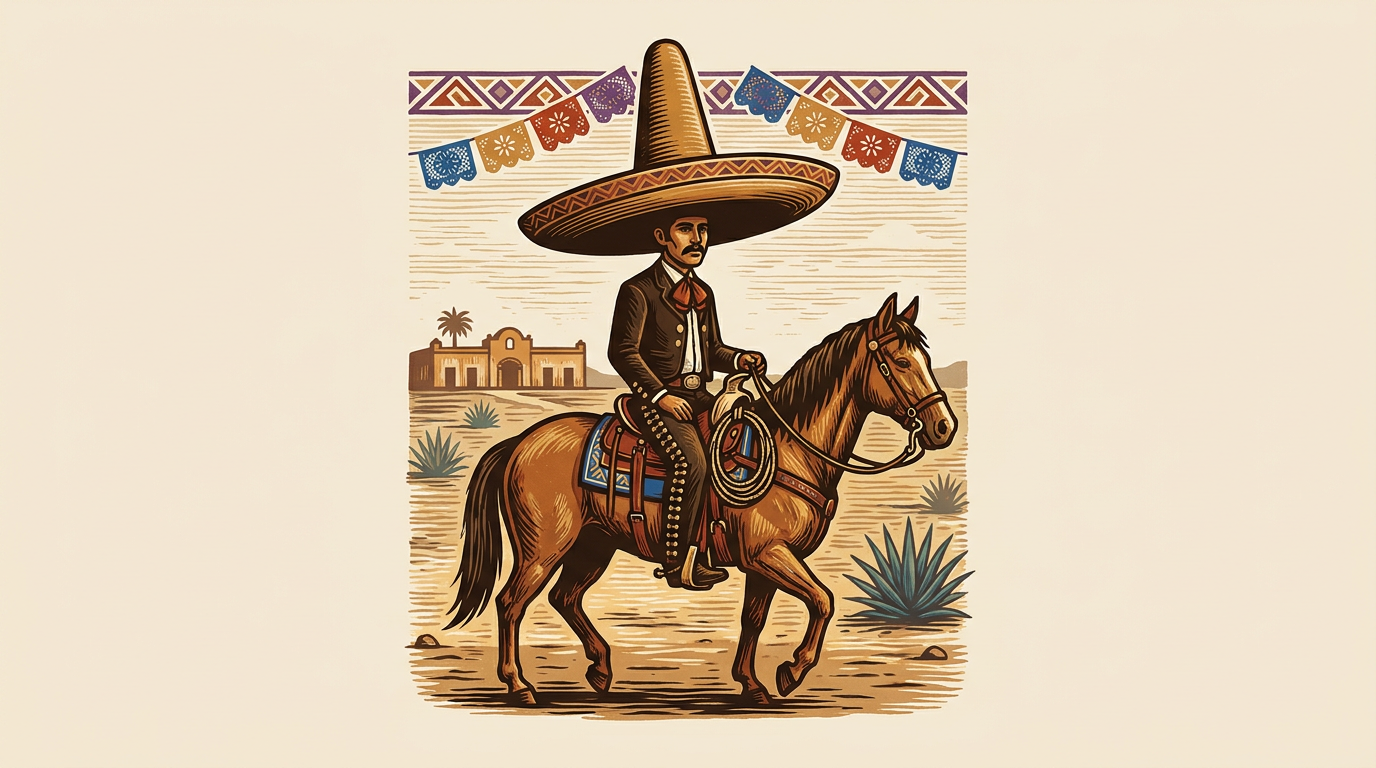
Say “Mexico” in almost any corner of the planet and someone will picture an enormous hat, with an upturned brim and embroidery bold enough to ask for its own table. The image is so familiar that it seems ancient, but it did not fall from the sky or emerge fully formed from a prop box. The charro hat took shape over centuries, among horsemen, haciendas, dusty roads, and changing fashions. Then art and film did their part: they turned it into a kind of flag with a crown.
First came the shade
“Sombrero” comes from “sombra,” or “shade,” a fairly straightforward clue to its original function. In New Spain, Indigenous headwear coexisted with European hats made of felt, palm, or straw, worn by different groups and adapted to local climates and trades. For those who worked on horseback, a wide brim protected against sun and rain; a firm crown helped the hat hold its shape, and a secure strap kept the wind from carrying off hat and dignity separately. There was no single inventor: there were generations of artisans and wearers refining an everyday tool.
The horseman gave it shape
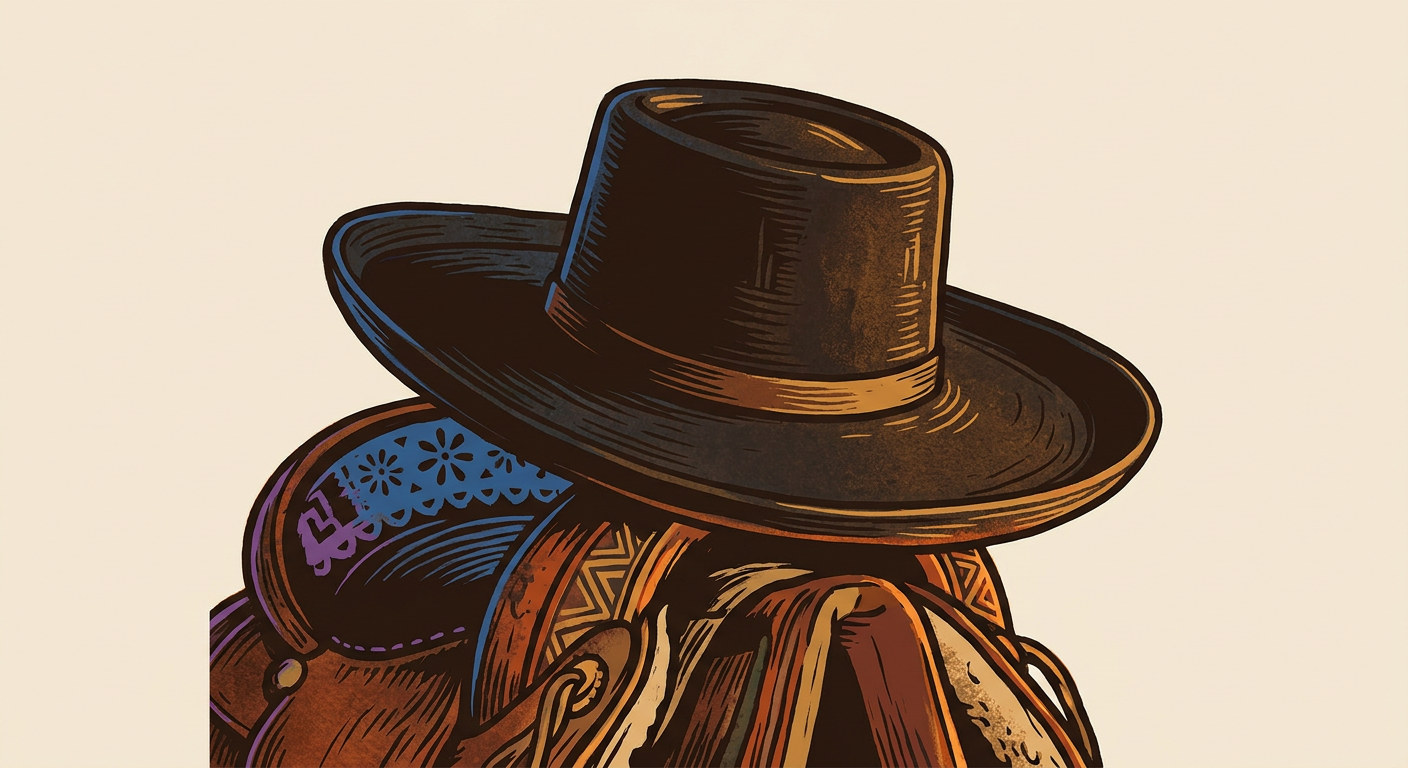
During the 18th and 19th centuries, cowboys, ranchers, and hacienda owners in livestock-raising regions—especially in central and western Mexico—developed their own equestrian clothing. The charro hat took shape in that world: a wide, upturned brim, a tall crown with indentations, and a chin strap to keep it in place. Materials and adornments reflected economic differences: there were understated hats for work and formal pieces with embroidery, silver or gold braid, and fine felts. The upturned brim was not mere flair; it made certain maneuvers on horseback easier and made the hat more durable.
It is best not to mistake every wide brim for a charro hat. Mexico has an immense family of regional hats: made of palm, petate, wool, or hair; coastal, northern, calentano, Huastec, and jaranero hats, among many others. The charro ended up at the center of the national portrait, but it was never the only one, nor did it represent every community equally. The history of clothing tends to be less uniform than school parades.
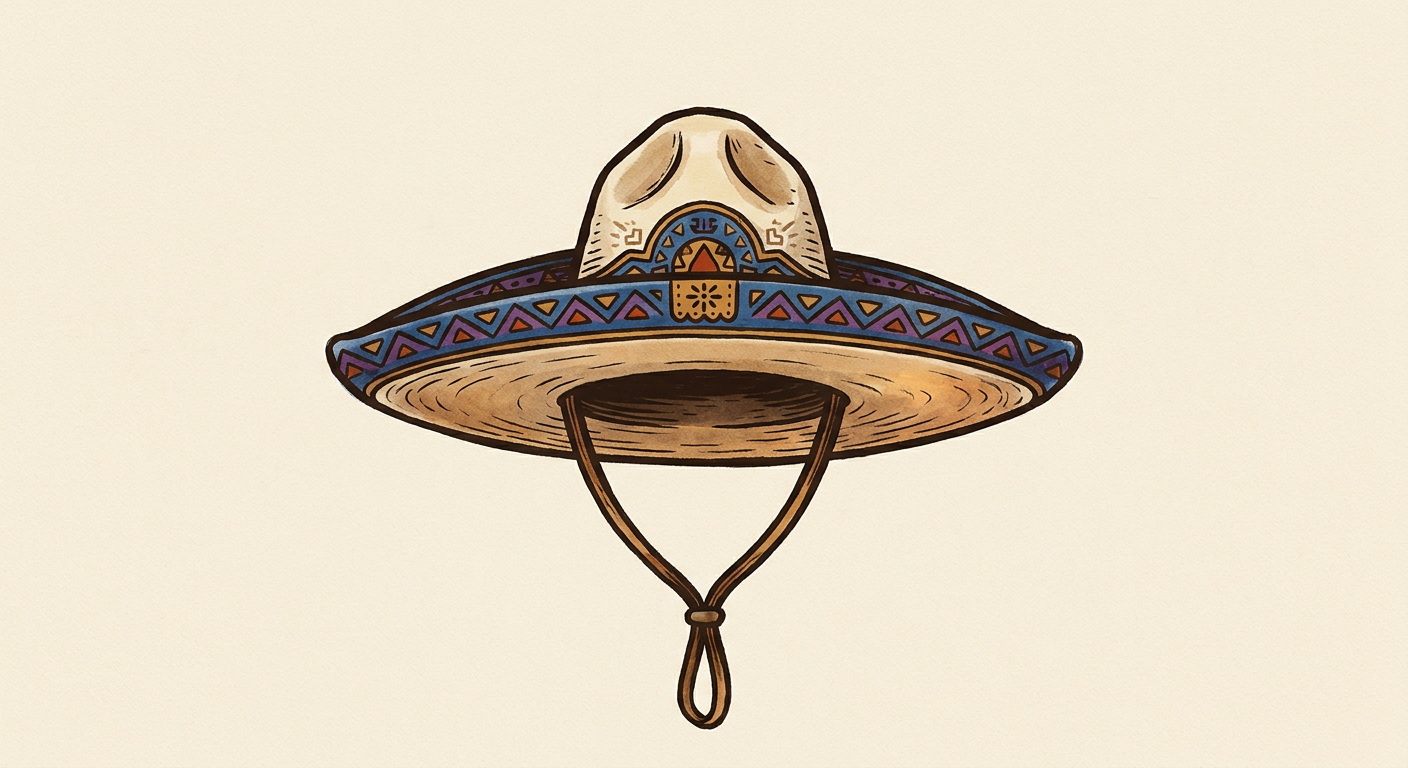
- 1Wide brim to protect the face and shoulders.
- 2Rigid, tall, and generally indented crown.
- 3Chin strap to hold it in place while riding.
- 4Hair felt in fine pieces; palm or other materials in popular variants.
- 5Embroidery and braid as markers of formal wear, occupation, and social status.
From regional garment to emblem
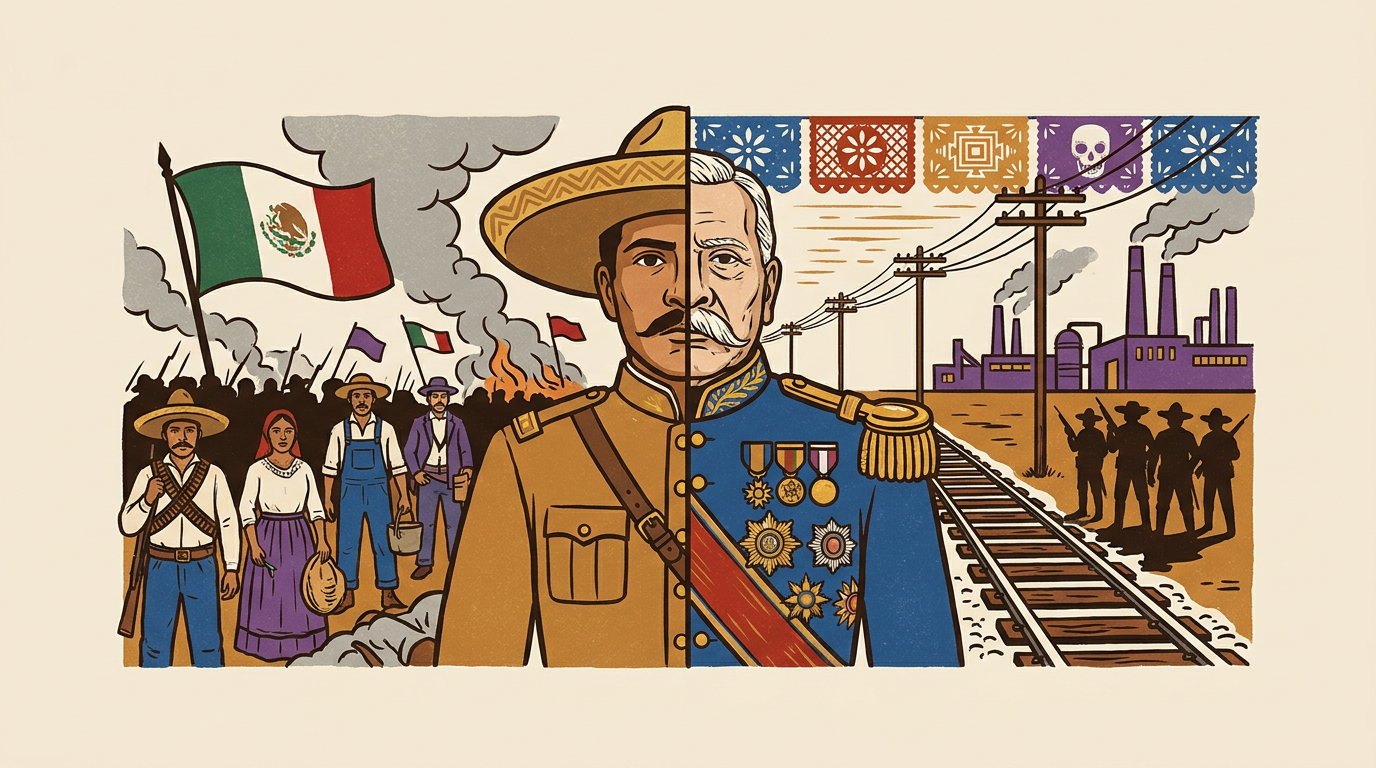
In the 19th century, especially during the Porfiriato, the figure of the charro gained public visibility. Paintings, prints, photographs, equestrian shows, and patriotic celebrations helped establish his appearance. After the Mexican Revolution, the new state sought images capable of conveying a shared identity, and the charro—brave, skilled on horseback, and strikingly poised—proved especially useful. That selection left out many other ways of being Mexican, but it produced a symbol of extraordinary visual power.
Rather than portraying all of Mexico, the charro hat came to represent an idea of Mexico.
Organized charrería also helped standardize the attire and the occasions for wearing it. In 1933, the Federación Nacional de Charros was founded, and over time, rules and associations distinguished among work, semi-formal, formal, and grand formal outfits. The hat thus ceased to be merely protection and became a codified piece: its shape, quality, and ornamentation conveyed context and hierarchy. In 2016, UNESCO inscribed Mexican charrería on the Representative List of the Intangible Cultural Heritage of Humanity.
Cinema widened the brim
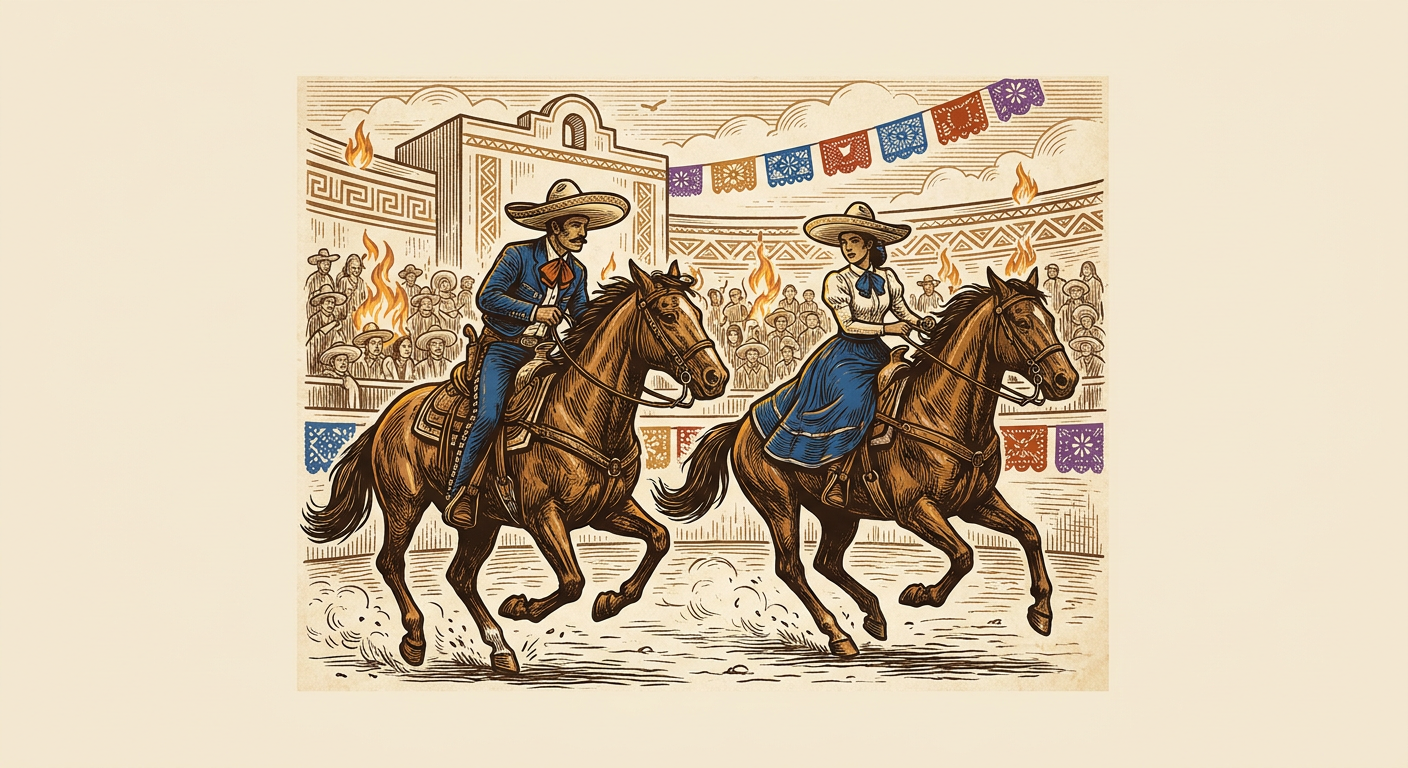
Between the 1930s and 1950s, the Golden Age of Mexican cinema exported the charro as a leading man: singer, lover, brawler when the script called for it, and almost always impeccable. Figures such as Jorge Negrete, Pedro Infante and Tito Guízar brought the silhouette to screens across the Americas and Europe. Advertising, tourism and foreign productions later simplified the image, eventually creating the gaudy oversized sombrero that today appears alongside cacti, maracas and other neighbors that do not even share the same cultural zip code. The stereotype grew out of something real, but repetition inflated it.
Looking closely at the charro hat makes it possible to separate tradition from caricature. It is a handcrafted work, a piece of equestrian gear and a social language before it is an accessory for a five-minute photo op. It also reminds us that national symbols do not appear fully formed: they are stitched together with labor, power, fashion and memory, and then they travel until the world forgets their seams. Perhaps that is why the Mexican hat seems so large: it not only provides shade, it also carries a history that rarely fits on one’s head.
- UNESCO, “Charrería, equestrian tradition in Mexico,” Representative List of the Intangible Cultural Heritage of Humanity, 2016.
- Ricardo Pérez Montfort, Images of Mexican Popular Nationalism. Essays on Popular Culture and Nationalism, CIESAS.
- James Oles, Art and Architecture in Mexico, Thames & Hudson, 2013.
- National Museum of History, Chapultepec Castle, 19th-century clothing and iconography collections.
- Mexican Charrería Federation, official competition and attire regulations.