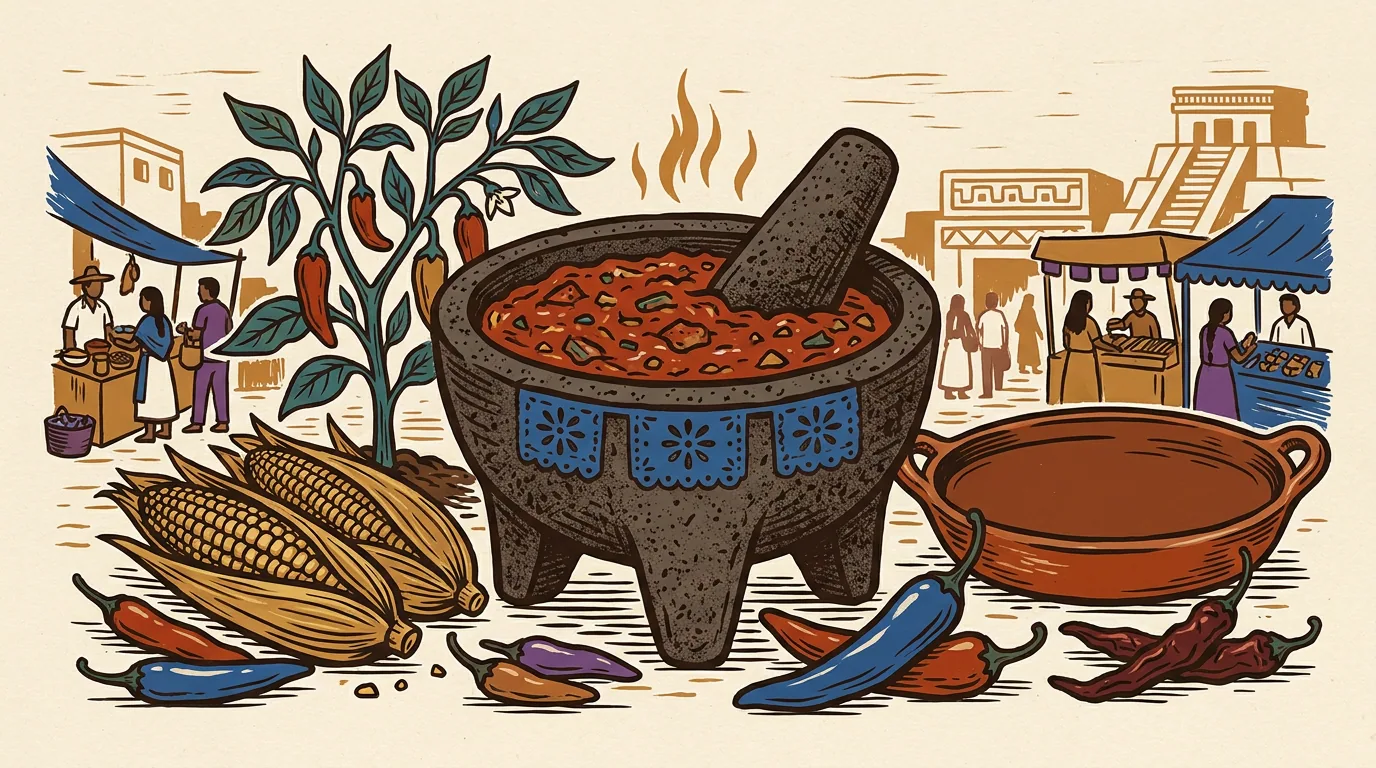
Before there was a Mexico, there was chile. Long before mole, salsa made in a molcajete, and that never-innocent question—“Is it spicy?”—different communities in Mesoamerica had learned to gather, cultivate, dry, and combine it with other foods. Its story began not as a test of courage or a folkloric decoration, but as part of a patient relationship with the landscape. Chile is ancient, American, and deeply woven into everyday life: a small fruit capable of telling the story of millennia of agriculture, trade, and cooking.
An American Plant Before Mexico
Chiles belong to the genus Capsicum, which originated in the Americas. Domestication did not happen just once or in a single place: different species were domesticated in different regions of the continent. In Mesoamerica, the decisive species was Capsicum annuum, which gave rise to many chiles known today, such as jalapeños, serranos, poblanos, and chilacas, as well as their dried versions. Archaeobotanical and genetic studies place this process in prehistoric times, although the exact date and place remain subjects of research.
For years, it was often said that chile was domesticated at a specific spot in east-central Mexico about six thousand years ago. Current evidence calls for greater caution: seeds circulated, people tended wild plants, and the processes unfolded over long periods that cannot be neatly pinned to a single point on a map. Ancient chile remains associated with human occupation have been recovered from caves in the Tehuacán Valley, Puebla, and in Oaxaca. Not all of those remains prove complete domestication on their own, but they do reveal a very long relationship between people and Capsicum.
From the Wild to the Milpa
The first chiles people ate likely bore little resemblance to the fleshy specimens that fill markets today. They were small fruits, often growing upright, that birds ate and dispersed without suffering the burning sensation that affects many mammals. Human communities selected plants for size, shape, color, flavor, yield, and degree of pungency. Generation after generation, that selection transformed a wild berry into a remarkably diverse culinary family.
Chile eventually became part of the Mesoamerican food system alongside corn, beans, squash, jitomate, and various quelites. This should not be imagined as a uniform diet: cuisines varied according to climate, crops, trade routes, and local traditions. Fresh, dried, toasted, ground, or dissolved in drinks and stews, chile could transform simple ingredients without masking them. It could also be preserved and transported, an important advantage in markets where products from cold highlands, coastal areas, and tropical regions circulated.
- 1Selection: seeds were saved from plants with desirable traits.
- 2Drying: extended the fruit’s shelf life and concentrated its aromas, sweetness, and smoky or earthy notes.
- 3Grinding: metates and molcajetes made it possible to incorporate it into salsas, pastes, and stews.
- 4Trade: markets expanded each region’s repertoire of varieties and preparations.
The heat comes mainly from capsaicinoids, compounds concentrated in the whitish inner tissue to which the seeds are attached, not primarily in the seeds themselves. Capsaicin activates heat-related receptors in the mouth; that is why the body interprets a burning signal even though there is no flame. That alarm can trigger sweating, tears, and a release of endorphins. A taste for chile is, in part, culturally learned: the palate is trained, and the table teaches moderation.
Chile, Markets, and Ritual Life
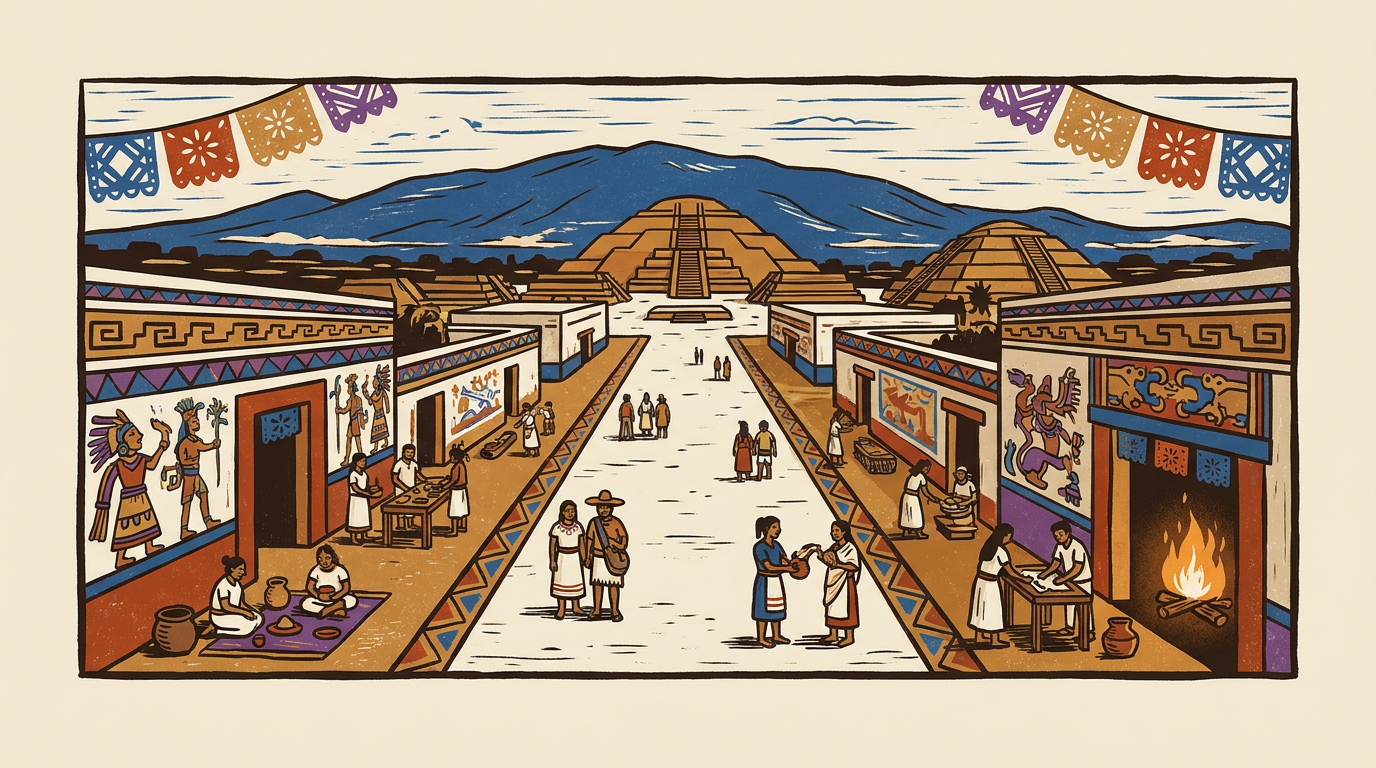
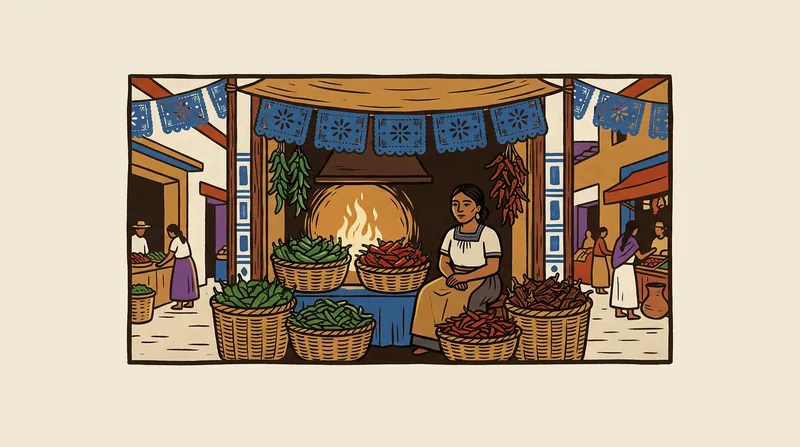
In central Mexico during the Late Postclassic period, chile was an everyday food and a valuable commodity. Sixteenth-century sources recorded its presence in markets and tribute, as well as a range of names and uses. Bernardino de Sahagún and his Nahua collaborators described vendors of salsas and dishes made with different chiles, pumpkin seeds, jitomate, and other ingredients. Those pages do not offer a national recipe—no such thing existed—but they reveal a sophisticated and exacting culinary culture.
Chile also served medicinal, ritual, and disciplinary purposes. Some colonial sources mention chile smoke as punishment, a practice whose cruelty should not be sweetened by nostalgia. In certain contexts, it was used in remedies, ritual smoke, or offerings, although its uses varied among peoples and periods. Its power lay precisely in that breadth: it could nourish, soothe, be traded, and produce an immediate physical experience.
“In chīlli, in īztatl”: “chile, salt,” a Nahua expression that referred to what was needed for a meal.
The phrase is documented in colonial lexicographic sources and sums up a domestic hierarchy: chile was not a luxury reserved for banquets, but a basic companion to food. Fasts were also observed in which abstaining from chile and salt held ritual significance. Giving up both meant temporarily distancing oneself from ordinary pleasures and habits. Few examples show so clearly how much an absence can reveal about the importance of a food.
A Fruit That Traveled the World
The word “chile” comes from the Nahuatl chīlli and survived the conquest, just as the plants, techniques, and much of Indigenous culinary knowledge did. Europeans, meanwhile, called Capsicum “pimiento” or “pepper” by association with Asian black pepper, which was expensive and highly sought after. The similarity lay in the spicy sensation, not in any botanical relationship. Christopher Columbus did not find a western route to the spices of Asia, but the misunderstanding ended up giving chile its name in several languages.
Beginning in the 16th century, the Portuguese and Spanish brought American chiles to Europe, Africa, and Asia. The plant quickly adapted to warm climates and entered the cuisines of India, China, Korea, Thailand, Hungary, and many other regions. Today, it is hard to imagine some of those culinary repertoires without heat, even though Capsicum was unknown there before the Columbian Exchange. It was one of the fastest and most successful food expansions of the first era of globalization.
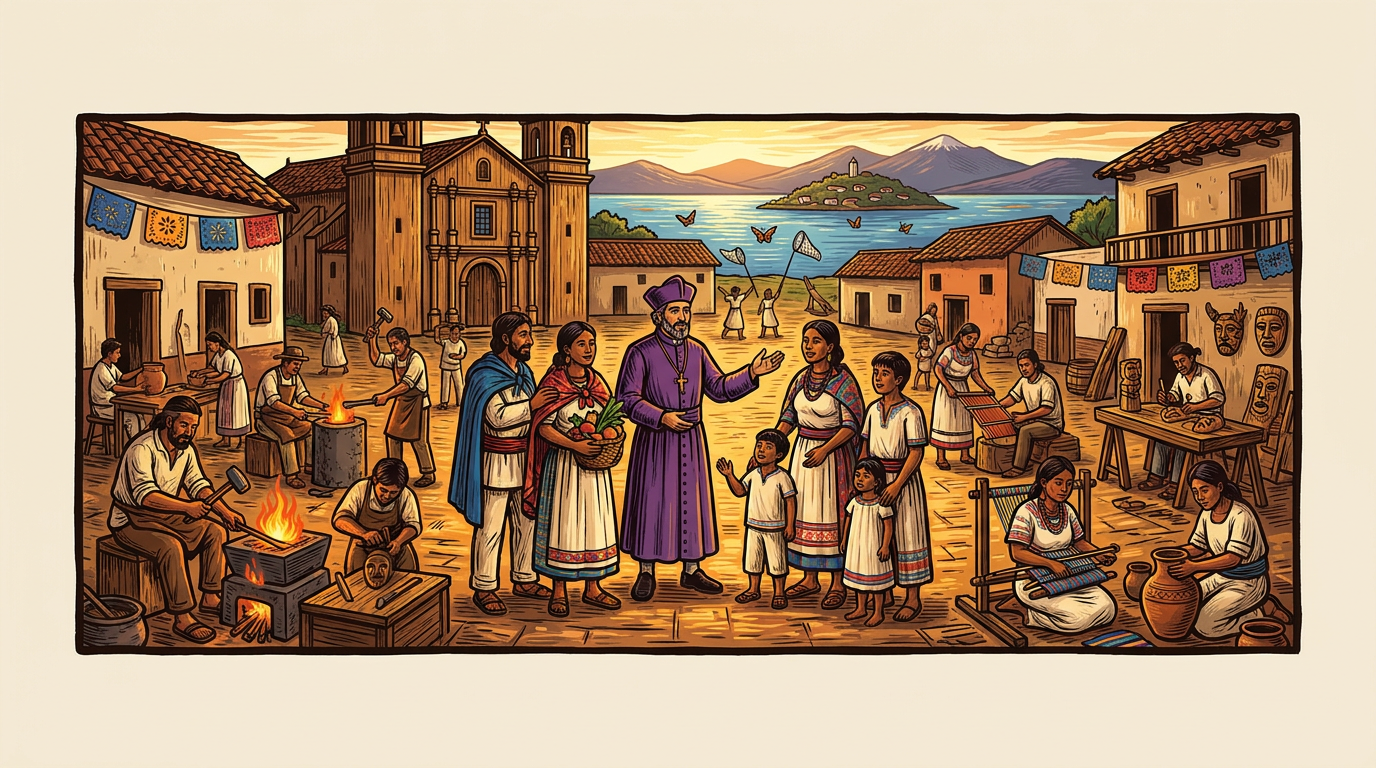
In New Spain, meanwhile, Indigenous cuisines continued, and new combinations emerged with ingredients and techniques brought from Europe, Africa, and Asia. Chile neither remained unchanged nor was it replaced: it served as a linchpin of adaptation. It was incorporated into stews made with introduced meats, mingled with Asian spices, and continued to express regional differences. Today’s Mexican repertoire comes from that long process, not from a single recipe or an essence frozen in the past.
Many Stories Under the Same Name
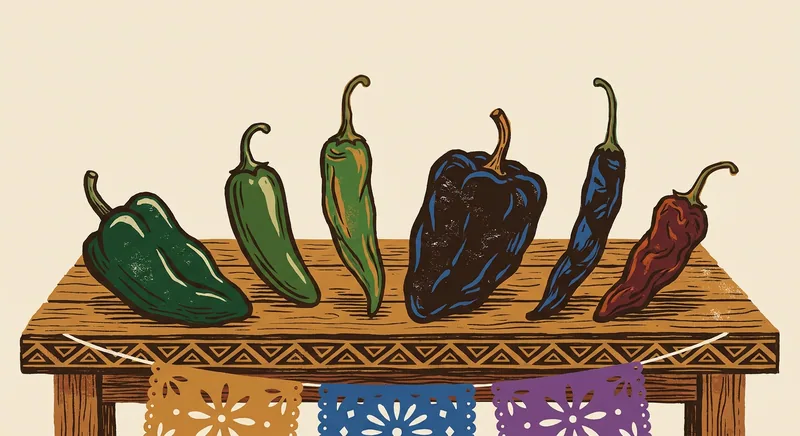
Speaking of “Mexican chile” in the singular is convenient but misleading. A fresh poblano becomes an ancho when dried; a chilaca becomes a pasilla; a smoked jalapeño becomes a chipotle. Names vary by region and do not always correspond to a perfectly defined botanical variety. In each case, seeds, soils, climate, drying methods, smoke, and the choices of those who grow and cook them all play a role.
The Scoville scale, created in 1912 by American pharmacologist Wilbur Scoville, measures pungency and today generally relies on laboratory analysis. It is useful, but it does not tell the whole story: reducing a chile to how much it hurts would be like judging a song by its volume. Chiles can be fruity, herbal, smoky, sweet, or bitter, or have aromas of cacao and nuts. In Mexican cooking, heat matters, but it rarely works alone.
The origin of the use of spicy foods in Mexico cannot be reduced to one person’s idea or a neat date. It was a process of observation, agricultural selection, exchange, and shared memory spanning thousands of years. Every salsa repeats something of that history, even as the chile, the stone, the comal, or the hand doing the seasoning changes. Perhaps that is why chile remains more than heat: it is a way of recognizing the world with the mouth and remembering that taste, too, has ancestors.
- Janet Long-Solís, Capsicum and Culture: The History of Chilli, Fondo de Cultura Económica, 1986.
- Bernardino de Sahagún, General History of the Things of New Spain (Florentine Codex), 16th century; CONACULTA edition, 2000.
- Linda Perry et al., “Starch Fossils and the Domestication and Dispersal of Chili Peppers (Capsicum spp. L.) in the Americas”, Science, vol. 315, 2007.
- Kraig H. Kraft et al., “Multiple lines of evidence for the origin of domesticated chili pepper, Capsicum annuum, in Mexico”, Proceedings of the National Academy of Sciences, vol. 111, 2014.
- National Commission for the Knowledge and Use of Biodiversity (CONABIO), Enciclovida: Capsicum annuum.