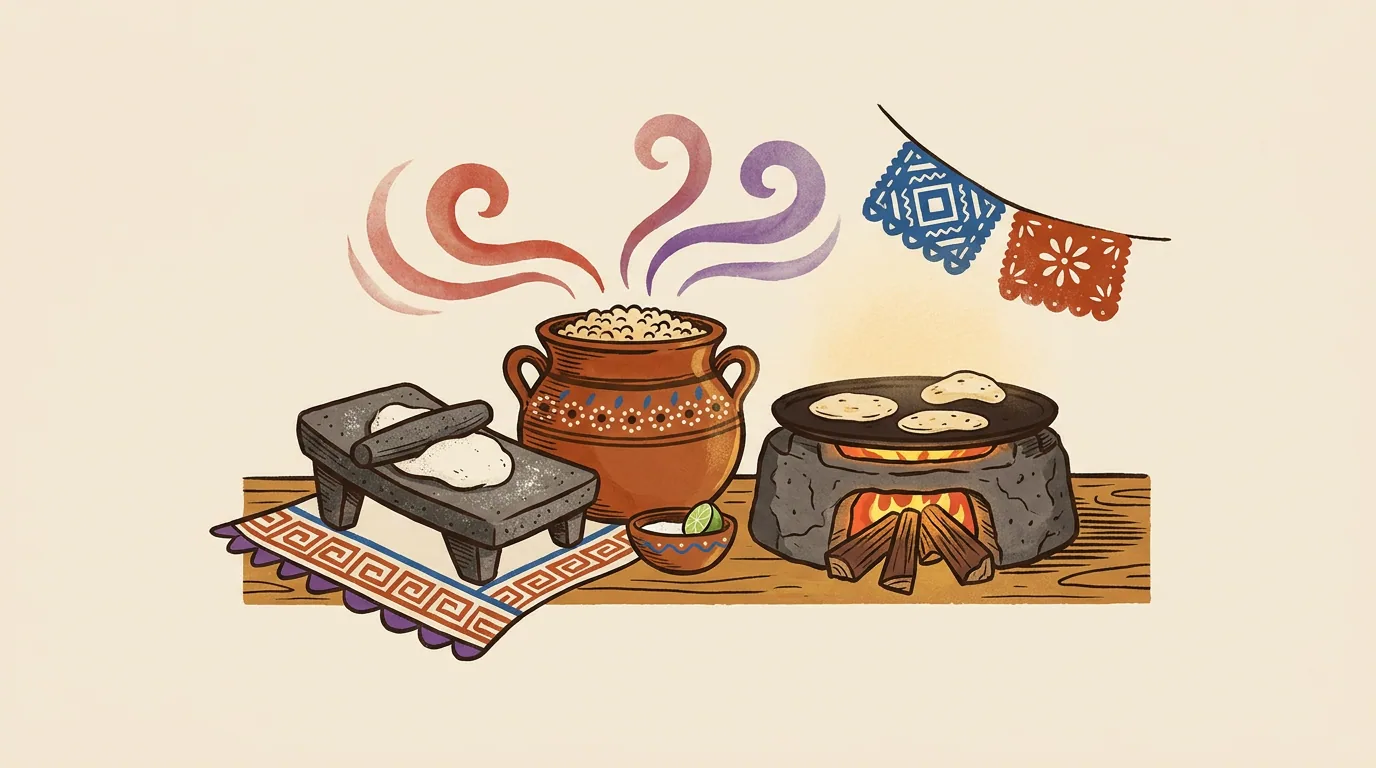
Before becoming a tortilla, corn goes through a bit of domestic alchemy. In a pot, the kernels, water and a pinch of lime come together; then come fire, resting and patience, an ingredient that is not sold by the kilo. This process is called nixtamalization, and for millennia it has sustained tables, bodies and memories across much of Mesoamerica. It is not simply cooking corn: it makes it more nutritious, more pliable for grinding and able to become masa.
A technology thousands of years old
Nixtamalization is an ancient Mesoamerican technology, developed long before the arrival of the Spanish. Archaeological evidence reveals the early use of corn and tools for processing it, although precisely dating the first nixtamal remains difficult: a pot with lime does not leave behind a birth certificate. Its endurance, however, speaks clearly. For generations, the knowledge passed from hand to hand and kitchen to kitchen, adapting to corn varieties, altitudes, fuels and local tastes.
The word «nixtamal» comes from Nahuatl: nextli, associated with ash or lime, and tamalli, masa or food made from cooked masa. Before industrially produced lime arrived in sacks, people also used plant ashes and alkaline materials available in each region. The principle is the same: cooking the kernels in an alkaline solution. Behind the term is chemistry, yes, but also a culinary intelligence built through sustained observation and practice.
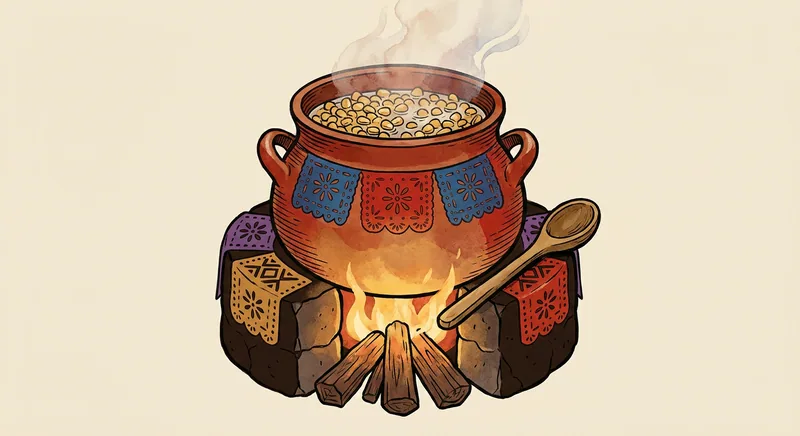
To nixtamalize is to make corn yield what it holds inside.
The pot, the lime and time
The basic process begins with clean, dry corn. Water is heated with food-grade lime —calcium hydroxide—, the kernels are added and cooked until the pericarp, the outer skin, begins to come off and the corn reaches the desired texture. There is no single formula for every case: quantities and cooking times vary according to the hardness, color and variety of the kernels, as well as the desired result. Corn for a thin tortilla is not always treated the same as corn intended for tamal, pozole or certain antojitos.
- 1Sort and clean the dry corn, removing stones, dust and damaged kernels.
- 2Dissolve food-grade lime in water; the proportion should be adjusted to the type and amount of corn.
- 3Heat the mixture, add the kernels and cook them until the skins loosen without the insides completely falling apart.
- 4Turn off the heat and let the corn rest in the cooking liquid, called nejayote, generally for several hours.
- 5Drain and rinse according to the dish and local custom; over-washing can also remove flavor and useful matter.
- 6Grind the nixtamal while it is still moist until it becomes a smooth, workable masa.
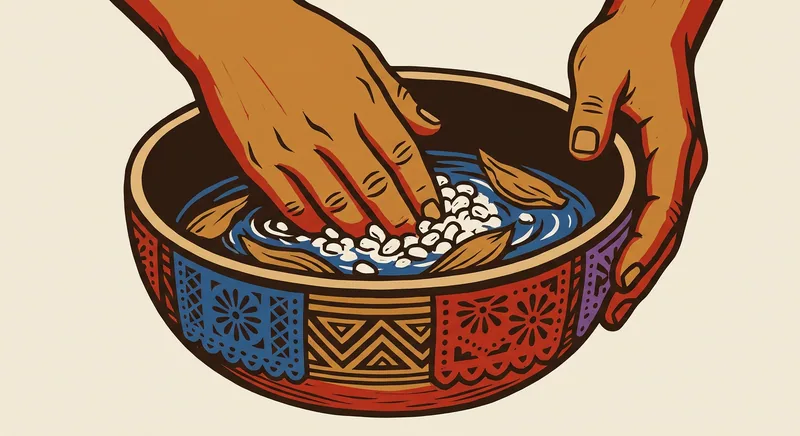
Resting is not a whimsical nap. While the kernels remain in the nejayote, the alkalinity continues to act on their outer layers, allowing them to absorb calcium and water. They are then drained and washed, although how much they are rinsed depends on the kitchen: some people seek to remove almost all of the pericarp; others retain some because it adds flavor, texture and fiber. Touch matters as much as the clock: properly treated nixtamal can be recognized between the fingers, slightly slippery on the outside and firm on the inside.
What changes inside the kernel
The lime alters the structure of the pericarp and makes it easier to remove; it also modifies components of the starch and helps form a masa that binds without the need for gluten. That is why a tortilla can be flattened, folded and embrace a stew with an admirable sense of duty. The treatment improves the bioavailability of niacin, or vitamin B3, which in unprocessed corn is found in forms the body cannot easily use. It also increases calcium content and may improve digestibility and the absorption of certain proteins, although some soluble vitamins decrease during cooking and washing.
This nutritional difference has a revealing history. When populations in Europe and other regions adopted diets heavily dependent on corn, but did not always incorporate the Mesoamerican alkaline process or a sufficiently varied diet, outbreaks of pellagra, a disease associated with niacin deficiency, emerged. The corn was not to blame; the problem was separating the crop from the culinary knowledge that accompanied it. Taking the seed and leaving the technique behind turned out to be a terrible recipe.
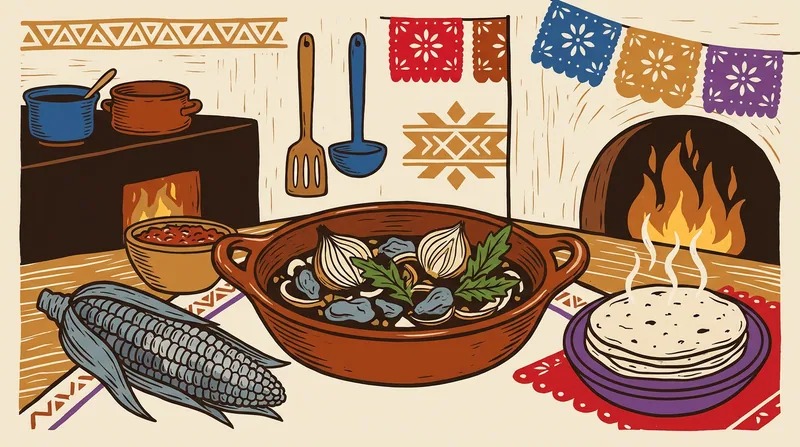
The transformation also occurs in the aroma and flavor. Nixtamalized masa has mineral, toasted and slightly sweet notes that do not emerge in the same way in corn flour that has not undergone alkaline treatment. Each combination of kernel, lime, water, cooking and grinding produces different nuances; that is why not all tortillas taste the same, even if they come out round and pose very seriously in the tortillero. The color varies as well: creamy whites, vivid yellows, blues that can change tone due to the effects of pH, and reds with an almost earthy appearance.
From metate to mill
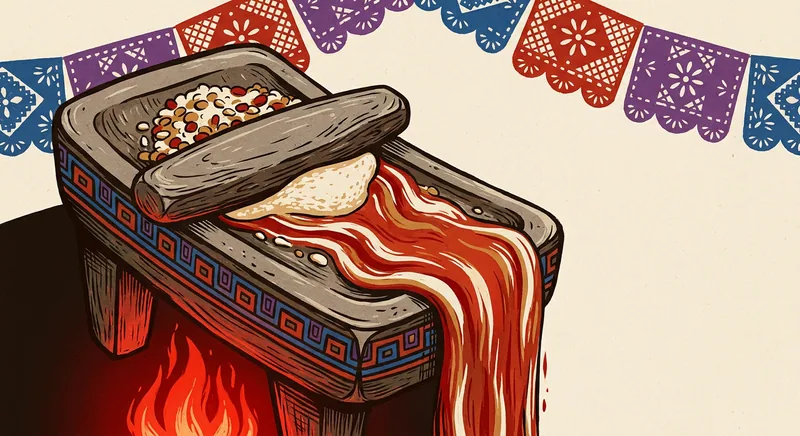
For centuries, grinding was done primarily on a metate, a daily task that demanded strength, experience and many hours bent over the stone. The mechanized mill eased much of that work and transformed the domestic and commercial organization of towns and cities. Even so, the final texture still depends on the fineness of the grind, the moisture of the kernels and the masa's intended use. Masa that is too dry cracks; masa that is too wet sticks; good masa lets itself be patted out without throwing a tantrum.
Today, home nixtamalization, neighborhood mills, tortillerías, and industrial processes for producing nixtamalized corn flour all coexist. Instant flour expanded access and shortened preparation times, but it does not make every masa identical: the type of corn, drying method, milling, and additives, if any, all play a role. In recent years, women and men cooks, producers, and conservation projects have renewed interest in native corn varieties and careful processes. The conversation should not be reduced to nostalgia: it also encompasses fair prices, biodiversity, women’s labor, urban food supply, and food quality.
Understanding nixtamal changes the way we look at a tortilla. In that everyday disk, botany, chemistry, labor, taste, and a technology perfected without a white-coat laboratory—but through countless trials before the fire—come together. Caring for the process matters as much as preserving the seeds: corn without the knowledge surrounding it is only half the story. Perhaps that is why, when a tortilla puffs up, it does not seem like a trick; it seems as though the grain is finally breathing after a journey of thousands of years.
- Katz, Solomon H.; Hediger, Mary L.; and Valleroy, Linda A. “Traditional Maize Processing Techniques in the New World.” Science, vol. 184, no. 4138, 1974.
- Bressani, Ricardo. “Chemistry, Technology, and Nutritive Value of Maize Tortillas.” Food Reviews International, vol. 6, no. 2, 1990.
- Paredes-López, Octavio; Guevara-Lara, Fidel; and Bello-Pérez, Luis Arturo. The Magical Foods of Indigenous Mesoamerican Cultures. Fondo de Cultura Económica, 2006.
- Food and Agriculture Organization of the United Nations (FAO). Maize in Human Nutrition. Rome, 1992.
- Sahagún, Bernardino de. General History of the Things of New Spain (Florentine Codex), 16th century.