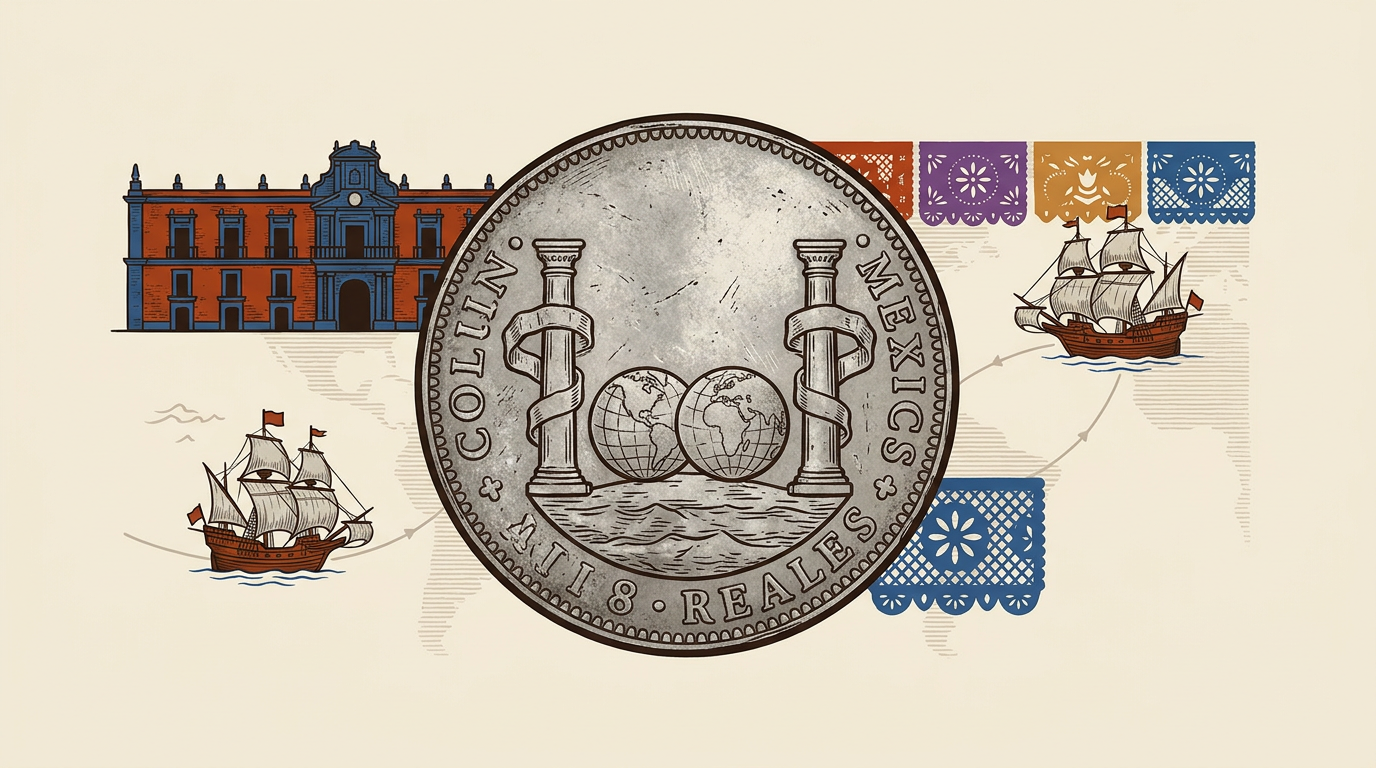
Before a card could buy coffee in Tokyo and before the dollar seemed to own the cash register, a coin minted in Mexico was already circulating across half the planet. It was the Real de a Ocho: a silver disk accepted in Seville, Manila, Canton, Boston and many ports where it made more sense to weigh it than to ask where it came from. Its prestige was born not of an advertising slogan, but of the Americas’ abundance of silver, relatively consistent fineness and trade networks capable of linking continents. If the modern world had an early global currency, it spoke with a New Spanish accent.
Eight Reales and a Long Genealogy
The name is quite literal: it was worth eight silver reales. The Spanish Crown established its monetary framework with the reform of 1497, and the Mexico City Mint, founded by royal decree in 1535, began minting coins in 1536, becoming the first mint in the Americas. The New Spanish Real de a Ocho was made with silver from mining centers such as Zacatecas, Guanajuato, Taxco and, later, San Luis Potosí. Muleteers, roads, assayers, smelters and workers were all part of that geography of mine shafts: the coin may have seemed small, but it carried a multitude on its back.
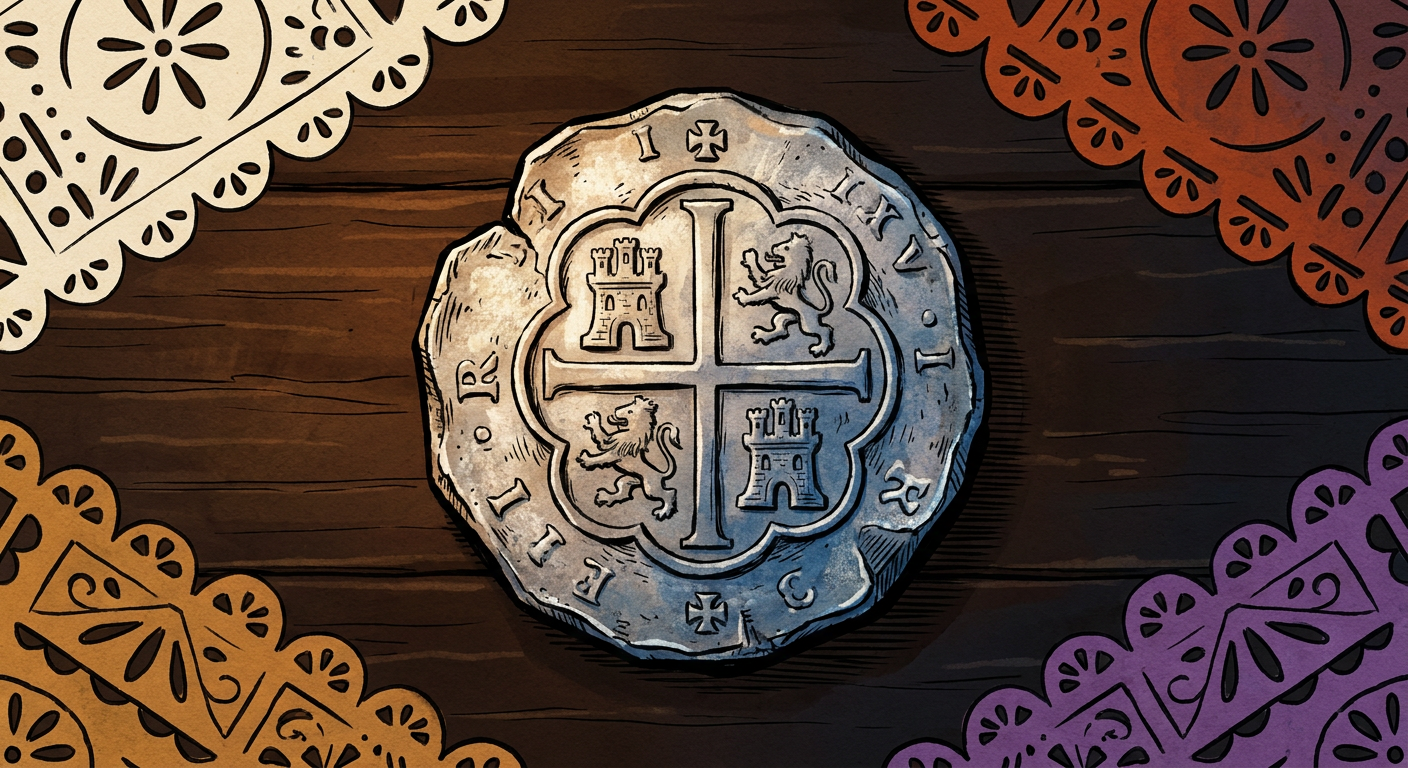
The first pieces were macuquinas: a portion of metal was cut by hand and struck between dies, so they came out irregular, with incomplete inscriptions and a character far less polished than that of modern coins. In the 18th century, technical reforms introduced round, machine-made pieces with finished edges and a more uniform design. Among them, the so-called columnario stood out, minted in Mexico beginning in 1732, with two crowned hemispheres between the Pillars of Hercules and the Latin motto «VTRAQUE VNUM»: both are one. Few coins have summed up a planetary economy with such elegance—and such imperial ambition.
From Veracruz to Manila
The Real de a Ocho could leave through Veracruz bound for Spain and the Atlantic, or cross New Spain to Acapulco to board the Manila Galleon. In the Philippines, it was used to buy silks, porcelain, spices and other Asian goods; a considerable share ended up in China, whose economy had a strong demand for silver. In this way, the Mexican coin linked American mines, European merchants, Philippine ports and Chinese markets. The first globalization did not arrive in a digital cloud: it came by ship, with seasickness, smuggling and account books.
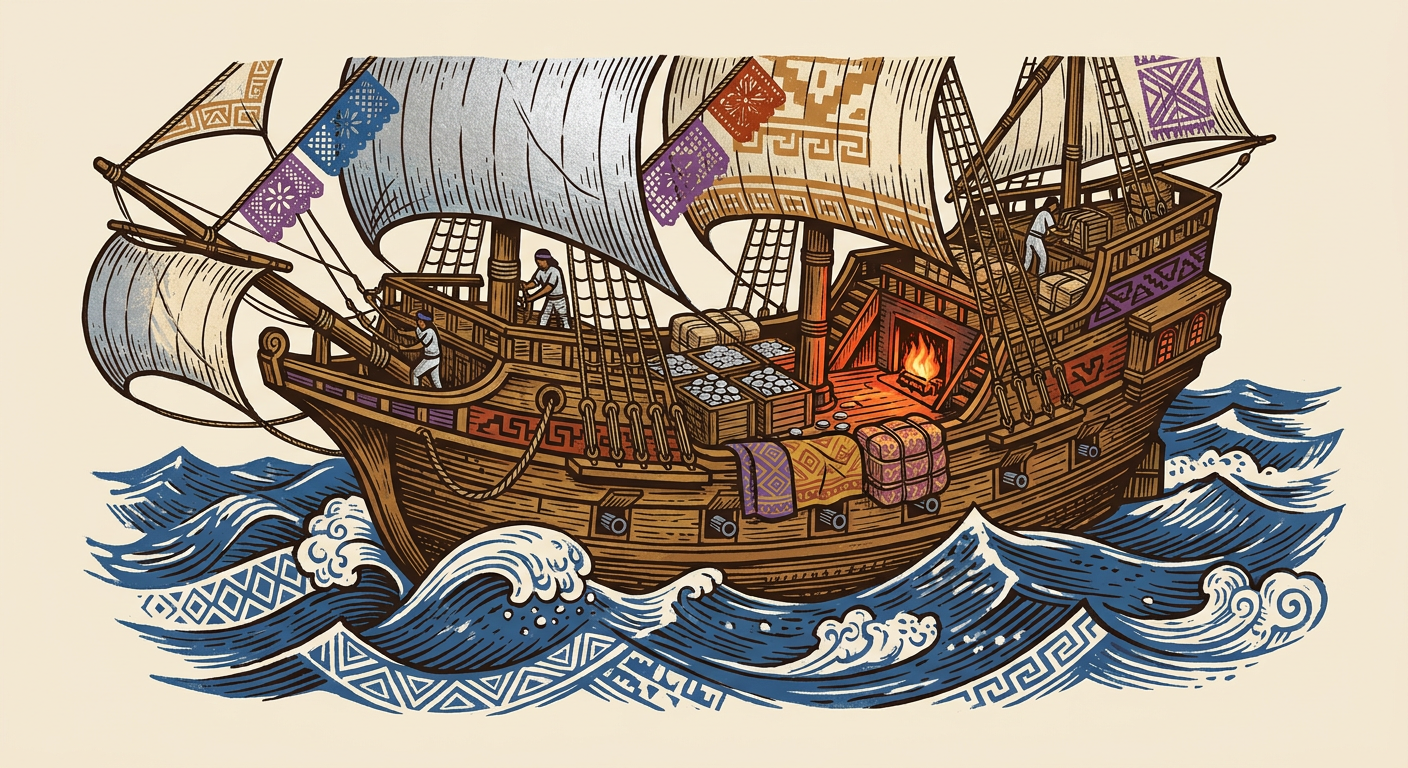
«VTRAQUE VNUM»—«Both are one»—, the motto of the columnarios beneath the two hemispheres.
A Coin That Spoke Many Languages
Its acceptance depended on one very specific quality: it contained a known and widely trusted amount of silver, although there were variations and episodes of fraud at different mints across the empire. In many markets, the pieces were weighed, assayed or given local counterstamps before continuing to circulate. Some were cut up to make fractional payments, a common practice where small change was scarce. The result was a currency that changed names and markings without becoming unrecognizable: peso, Spanish dollar, piece of eight or, simply, good silver.
- 1American silver: the material basis of its wide circulation.
- 2Recognizable mints: Mexico was one of the most productive and prestigious.
- 3Relatively stable weight and fineness: keys to building trust over long distances.
- 4Ocean routes: the Atlantic and Pacific made the coin a frequent traveler.
- 5Counterstamps and cuts: local adaptations that extended its useful life.
In the Thirteen British Colonies and later in the United States, the Spanish dollar circulated widely because of a shortage of local currency. The U.S. Coinage Act of 1792 defined the dollar with reference to the value of the Spanish milled dollar, and these coins remained legal tender in the United States until 1857. They also influenced various currencies called pesos and dollars, though it is wise to be wary of genealogies that are too tidy: monetary systems tend to look more like a tangled tree than a family portrait. Even the connection between the Pillars of Hercules and the «$» sign is a popular hypothesis, not a definitively proven fact.
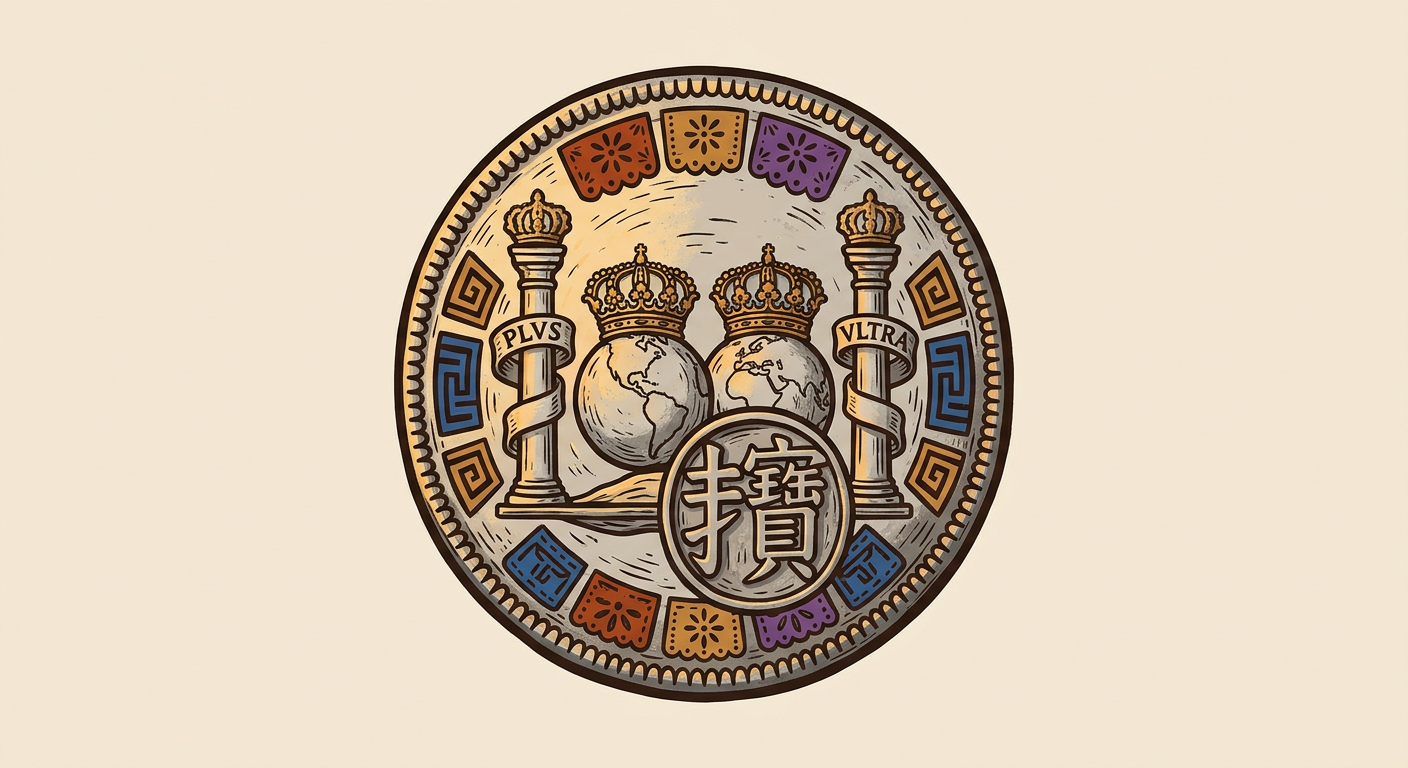
Silver never travels alone
Telling this story solely as a commercial feat would leave out its cost. Silver production depended on harsh working conditions, the use of Indigenous labor and other workers subjected to unequal relations, as well as transforming landscapes and consuming enormous quantities of wood, water and mercury. Mining wealth sustained cities, temples, private fortunes and the monarchy’s tax revenues, but its benefits and risks were distributed with a glaring lack of symmetry. The numismatic gleam, like certain mirrors, also has another side.
After Independence, Mexico continued minting silver pesos that inherited much of the old coin’s commercial prestige, especially in Asia during the 19th century. The Real de a Ocho remained as a collector’s item, a historical document and the uneasy grandfather of several modern currencies. Looking at it today helps us understand that globalization did not begin with shipping containers or stock exchanges: it was already engraved in silver, amid mines, seas and anonymous hands. Each coin holds a paradox that is hard to spend: a small object capable of measuring both the world’s trust and its inequalities.
- Carlos Marichal, “Historia mínima de la deuda externa de Latinoamérica, 1820-2010,” El Colegio de México, 2014.
- John J. McCusker, “Money and Exchange in Europe and America, 1600-1775: A Handbook,” University of North Carolina Press, 1978.
- United States Mint, “Coinage Act of 1792” and historical materials on the Spanish dollar.
- Banco de México, Museo Banco de México, collections and materials on numismatic history.
- Robert I. Nesmith, “The Coinage of the First Mint of the Americas at Mexico City, 1536-1572,” American Numismatic Society, 1955.