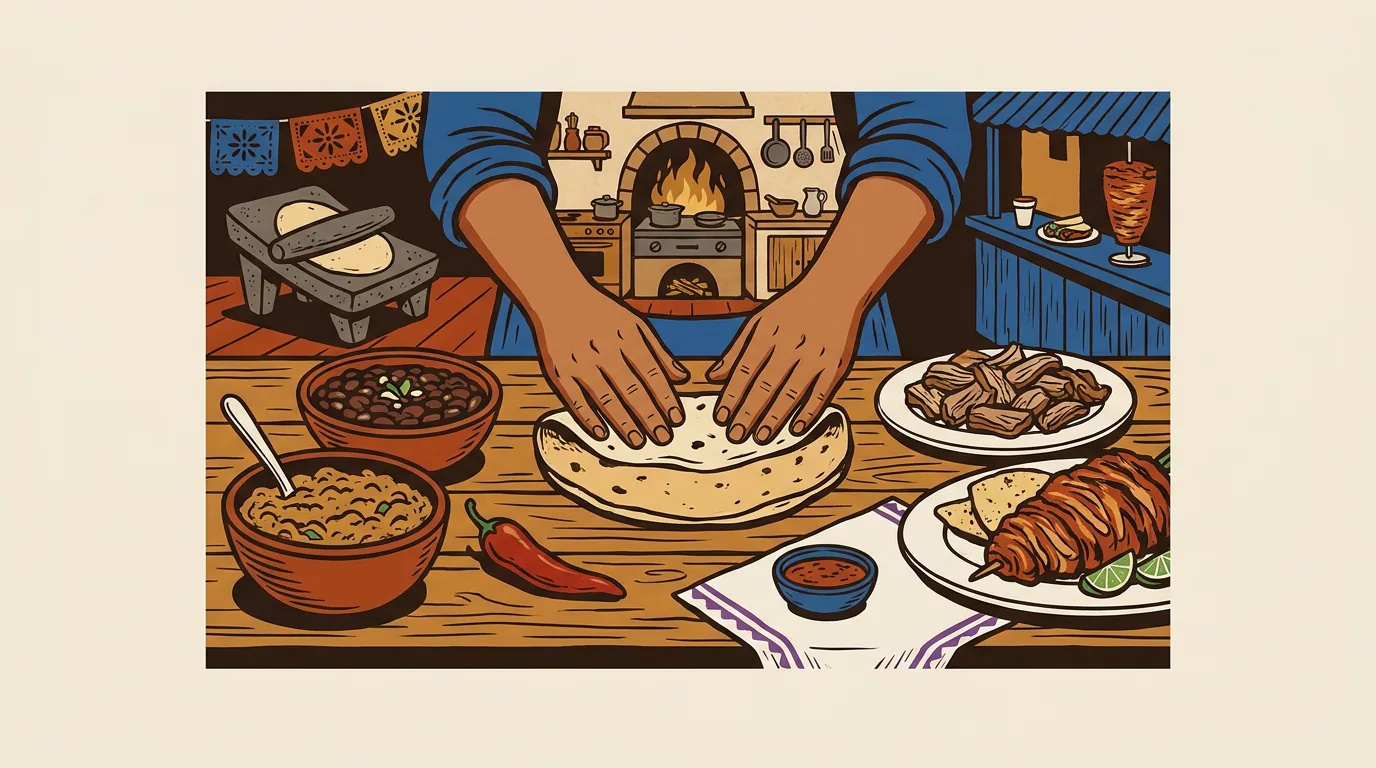
Few Mexican debates heat up as quickly as a tortilla on a comal: was the taco born before or after the arrival of the Spanish? The short answer is that its heart—the corn tortilla used to wrap food—is pre-Hispanic, but the taco we know today took shape over centuries of encounters, impositions, adaptations and cravings. It did not appear one morning in 1521 with a birth certificate and salsa on the side. Rather, it is an ancient technology that learned to carry new ingredients without losing its balance in the hand.
Before the Name, There Was the Tortilla
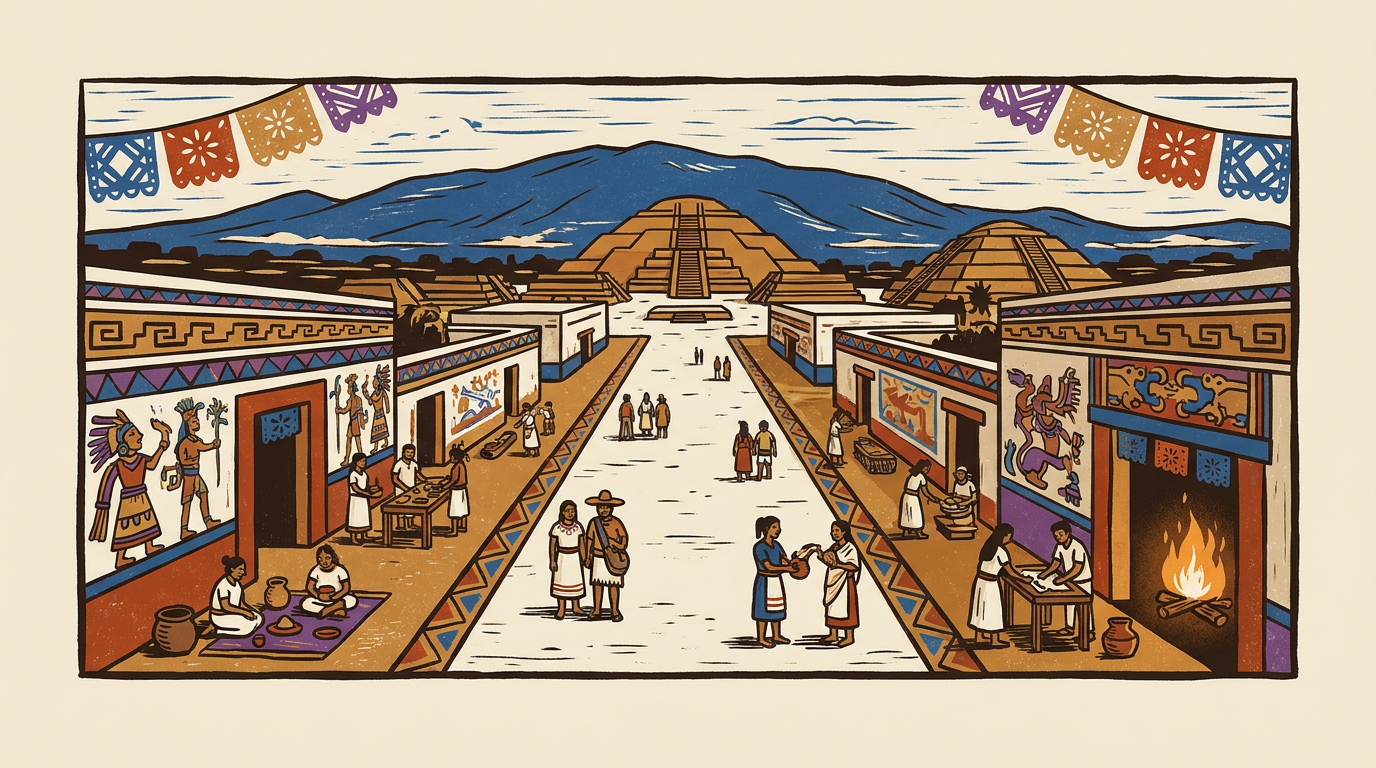
Long before there was wheat, pork or beef in these lands, Mesoamerican peoples grew corn and transformed it through nixtamalization: they cooked the kernels in water with lime, let them rest, washed them and ground them. The process makes grinding easier, improves the availability of nutrients such as niacin and produces a pliable masa. They used it to make tortillas, tamales and other essential foods. The tortilla was not a discreet side dish, but a plate, spoon, wrapper and staple food: edible tableware with a head start of several millennia.
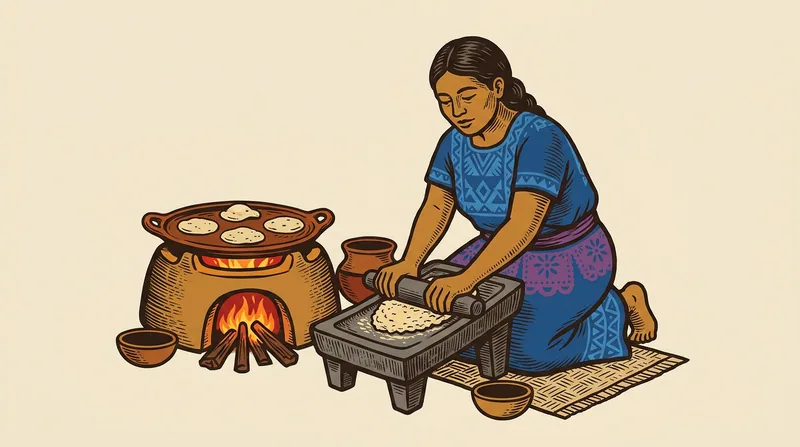
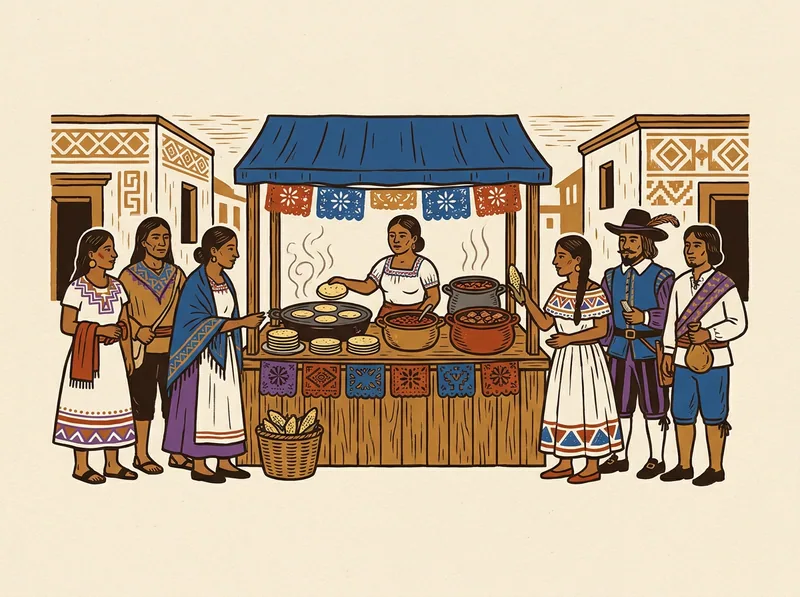
Sources from the 16th century describe tortillas served with or filled with foods that we would now recognize as belonging in a taco shop with a wide-ranging imagination. The work overseen by Fray Bernardino de Sahagún includes markets and foods with corn, beans, chiles, tomatoes, seeds, birds, fish, axolotls and insects, among many other products. That does not prove that the Mexica ordered “three turkey tacos with everything”; it does show that eating stews or morsels with tortillas was a practice that predated the conquest. The culinary form existed even if the modern word was perhaps not yet seated at the table.
The tortilla did not need to be called a taco to do the work of a taco.
It is worth avoiding a common trap: imagining “the pre-Hispanic” as a single, unchanging cuisine. Mesoamerica encompassed different societies, languages, climates and traditions, from the Maya lands to the Central Highlands and Oaxaca. Tortillas varied in size, thickness, color and type of corn; accompaniments also changed according to the setting and the season. Asking about the exact first taco is like looking for the first person to fold bread around something tasty: perhaps it happened many times and no one thought it necessary to notify historians.
The Word Arrives Late to the Party
This is where things get tangled. The word “taco” circulated in Spanish with meanings unrelated to food: a short, thick piece of wood, a plug, a piece used to make something fit or, later, a charge of gunpowder used in mining. Its etymological origin has not been established with absolute certainty, and there is no known document that makes it possible to pinpoint, beyond doubt, the day when “taco” came to mean a folded tortilla with a filling. Language rarely leaves complete receipts, especially when everyday food is involved.
One popular hypothesis links the food taco to the paper “tacos” miners placed in boreholes with gunpowder. The visual resemblance is tempting: a cylindrical wrapper with a charge at the center. However, repeating it as a proven origin would be serving smoke instead of stew; there is no conclusive documentary evidence directly connecting the two uses. It can be told as a hypothesis, not as sacred taco-shop scripture.
There is also a legend that Hernán Cortés organized the first “taquiza” in history in Coyoacán after the fall of Mexico-Tenochtitlan. Bernal Díaz del Castillo recounts a banquet with pork and wine, but he does not call it a taquiza or claim that tacos were invented there. It is reasonable to think that the meat may have been eaten with locally available tortillas; turning that possibility into a birth certificate is another matter. The episode illustrates early mestizaje, not the taco’s ground zero.
The Ancient and the Newly Arrived
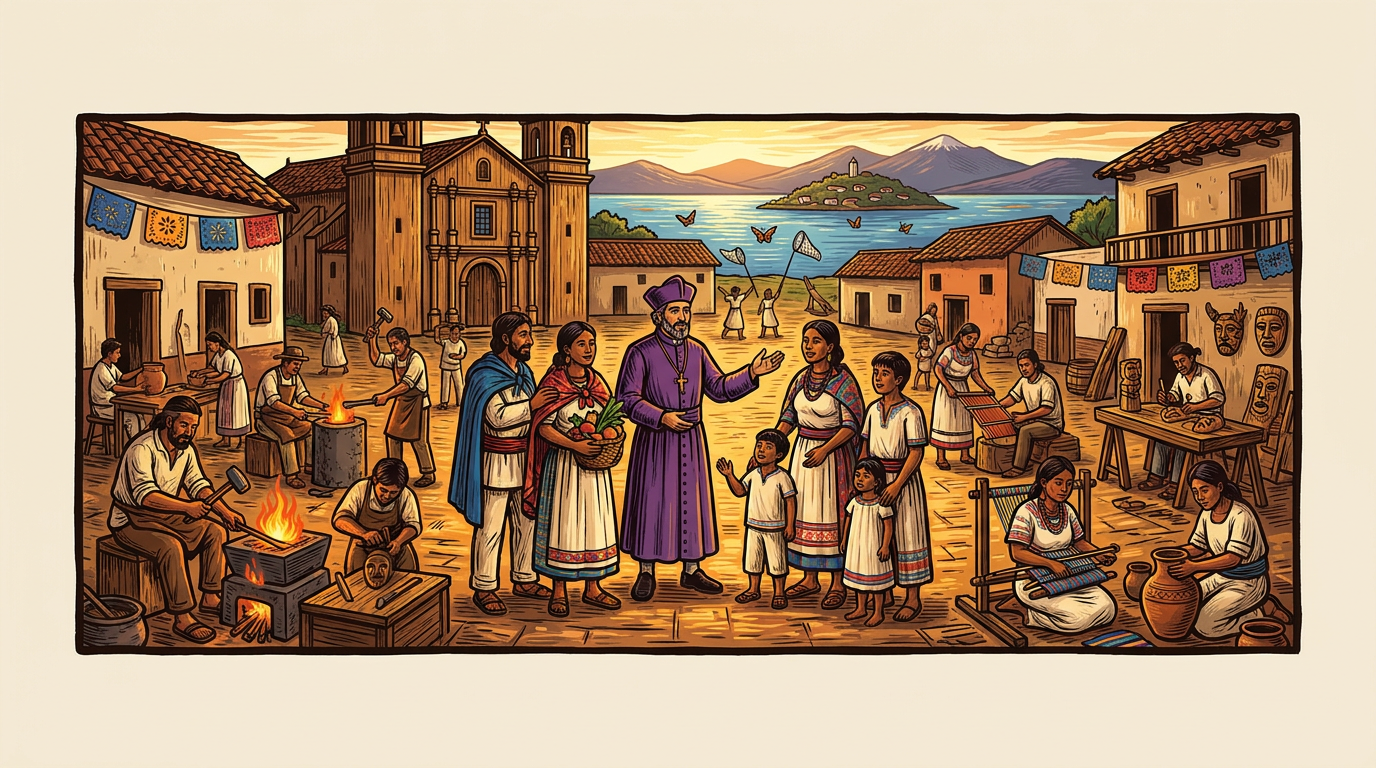
The conquest and colonization profoundly altered foodways. The Spanish introduced animals such as pigs, cattle, sheep and goats, as well as wheat, rice, sugarcane, dairy products and new fats; some Asian ingredients arrived later along the empire’s trade routes, especially via the Manila galleon. Indigenous peoples did not receive all this passively: they selected, adapted and combined products using their own techniques. The tortilla remained there, ready to wrap the new world and, along the way, make it Mexican.
- 1Pre-Hispanic foundation: nixtamalized corn, tortilla, chile, beans, squash, tomatoes and numerous herbs, mushrooms, insects, fish and local animals.
- 2European and Mediterranean contributions: pork, beef, sheep, goat, cheeses, lard, wheat, rice and various spices.
- 3Later exchanges: new varieties of citrus fruits, spices and techniques spread through Atlantic and transpacific networks.
- 4Local transformation: cooks, vendors, and communities adapted those ingredients to the comal, the tortilla, moles, adobos, and salsas.
Consider carnitas: pigs arrived with the Europeans, but eating pork inside a corn tortilla with chile and herbs belongs to a history that developed in Mexico. Something similar happened with barbacoa tacos made with lamb or goat, animals absent from pre-Hispanic Mesoamerica that were later incorporated into pit-cooking methods with Indigenous precedents. The result is not “Spanish” because of the meat or purely pre-Hispanic because of the tortilla. It is New Spanish and Mexican: a combination born under complex historical conditions, not always kind, but culinarily fertile.
Fish tacos reveal another nuanced continuity. Coastal peoples ate fish and seafood with corn products before the conquest, though that does not mean they prepared exactly the contemporary battered taco. Batter made with wheat flour and egg belongs to another period, and the versions now associated with Baja California took shape much later. A taco can preserve an age-old relationship—the sea and the tortilla—while its technique changes completely.
Neither half Indigenous nor half Spanish
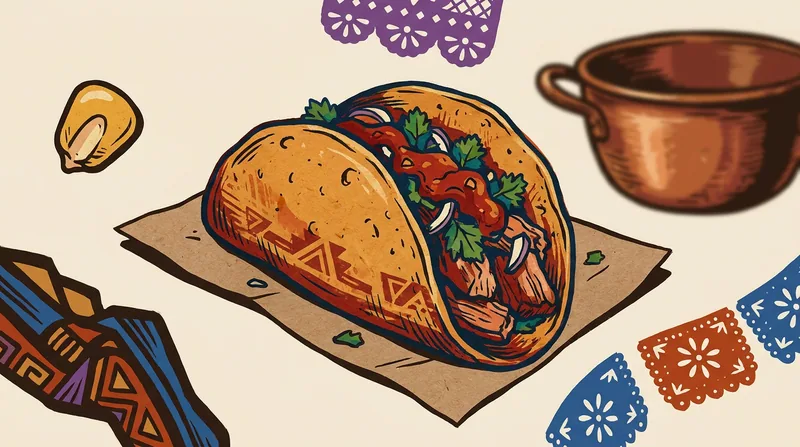
Calling the taco “mestizo” can be useful, as long as the word does not act like a blender that erases differences. Colonization involved violence, epidemics, dispossession, and hierarchies; it also produced everyday exchanges in kitchens, markets, convents, haciendas, fondas, and streets. Indigenous traditions retained an enormous capacity for organization and adaptation, while African and Afro-descendant people also participated in the agriculture, trade, and kitchens of New Spain. The history of the taco has passed through more hands than the textbook portrait usually acknowledges.
Moreover, there is no single taco. The taco de canasta relies on urban logistics and a bath of oil or adobo that keeps it moist; the taco dorado makes use of frying in fats that were introduced and later widely incorporated; the taco al pastor is related to techniques for roasting meat on a vertical spit spread by migrants from the former Ottoman Empire, especially Lebanese migrants, during the 19th and 20th centuries. The corn tortilla transformed that lineage into something unmistakably local. Prim and proper, the taco can carry several migrations without falling apart.
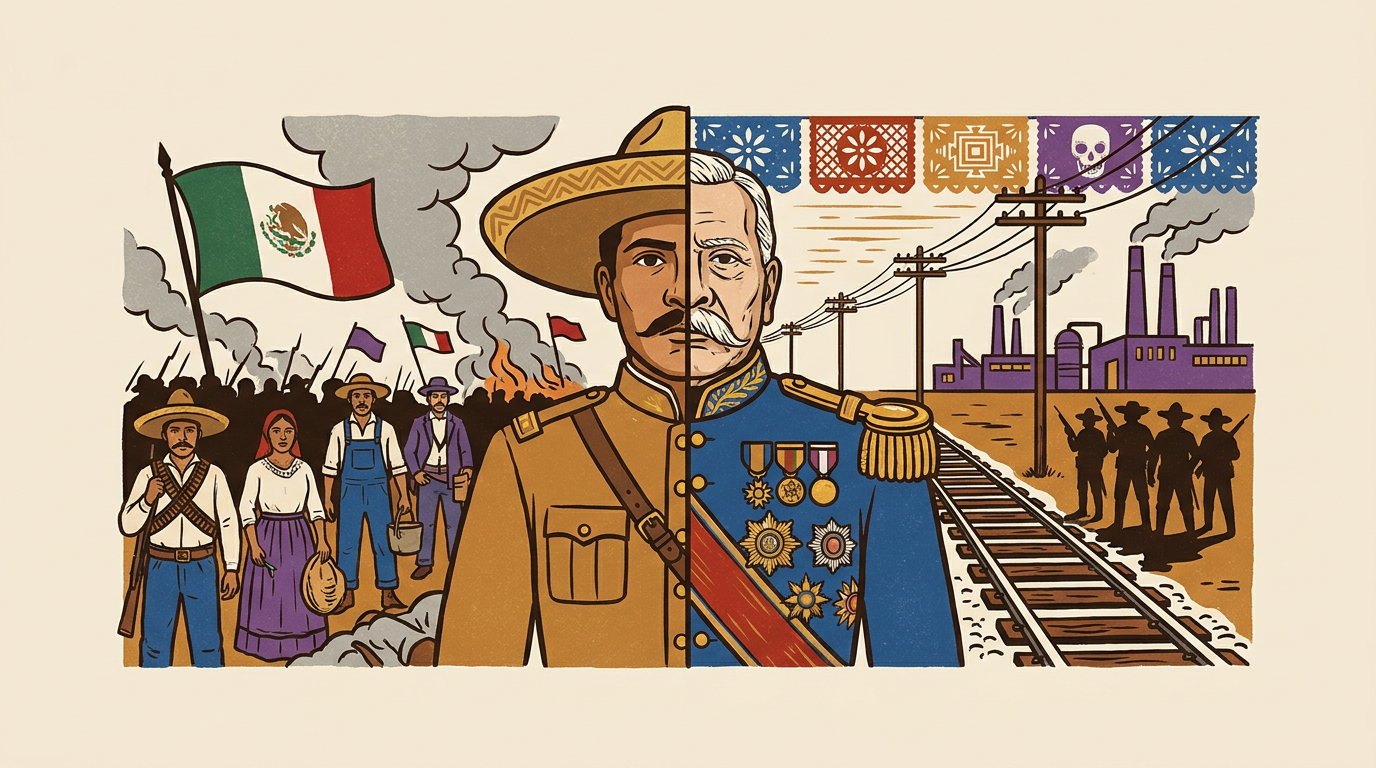
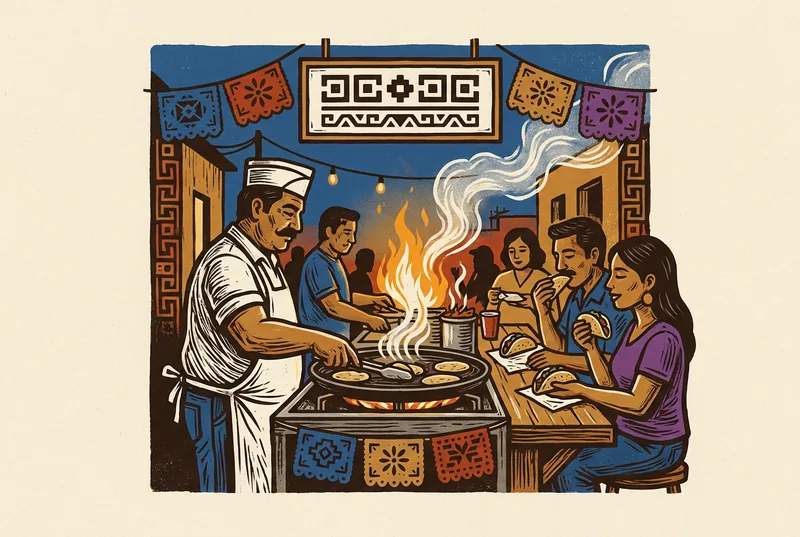
During the 19th and 20th centuries, urbanization helped establish the taco as a public and recognizable category. Street stalls, markets, factories, mines, railroads, and working-class neighborhoods favored foods that were portable, inexpensive, and quick to serve. Cookbooks and the press began to record different kinds of tacos more clearly, while each region championed its own fillings and methods. The late-arriving word ultimately brought together a family of preparations far older and more diverse than the word itself.
So, pre-Hispanic or Spanish?
If by taco we mean the gesture of taking a corn tortilla and wrapping or holding food in it, its roots are clearly pre-Hispanic. If we are talking about the name “taco,” many fillings, and the varieties that now populate the country, we enter a colonial, modern, and contemporary history. Spain contributed crucial ingredients and animals, but it did not bring the tortilla to Mesoamerica or teach people to use it as a base. The taco is not Spanish; nor is it an intact archaeological artifact that crossed five centuries without changing.
The most precise answer is that the taco is Mexican because it brings together a Mesoamerican foundation with transformations that occurred in New Spain and independent Mexico. Its identity does not depend on an impossible purity, but on the continuity of a technique: nixtamalizing, making masa, cooking tortillas, and making them the center of a meal. Meats, cheeses, fried foods, migrations, workdays, and late-night inspirations arrived atop that surface. The tortilla was not an empty vessel; it was the structure that organized each new development.
Searching for an individual inventor of the taco is probably pointless. Popular foods tend to emerge through accumulation: someone folds, another person cooks a stew, a vendor adapts, a community repeats, and a word eventually sticks. Authorship belongs less to a conquistador or an emperor than to generations of cooks, farmers, nixtamal makers, market vendors, migrants, and taqueros. Its true nobility lies in that multitude, which fortunately does not require silverware.
The taco was born before it was called a taco, and it kept being born every time Mexico put something new inside a tortilla.
So the next time someone demands a choice between “pre-Hispanic” and “Spanish,” you can answer without ruining dinner: the root is Mesoamerican; the tree grew with colonial, regional, and migrant grafts. Every taco holds that history in miniature, from the lime used for nixtamal to the filling that defines its era. It is eaten in a few bites, but it contains centuries. And perhaps that is its most Mexican feat: changing without ceasing to be a tortilla.
- Bernardino de Sahagún, General History of the Things of New Spain, Book X (editions based on the Florentine Codex).
- Bernal Díaz del Castillo, The True History of the Conquest of New Spain.
- Sophie D. Coe, America's First Cuisines, University of Texas Press, 1994.
- Jeffrey M. Pilcher, Planet Taco: A Global History of Mexican Food, Oxford University Press, 2012.
- Association of Academies of the Spanish Language, Dictionary of Americanisms, entry “taco”.