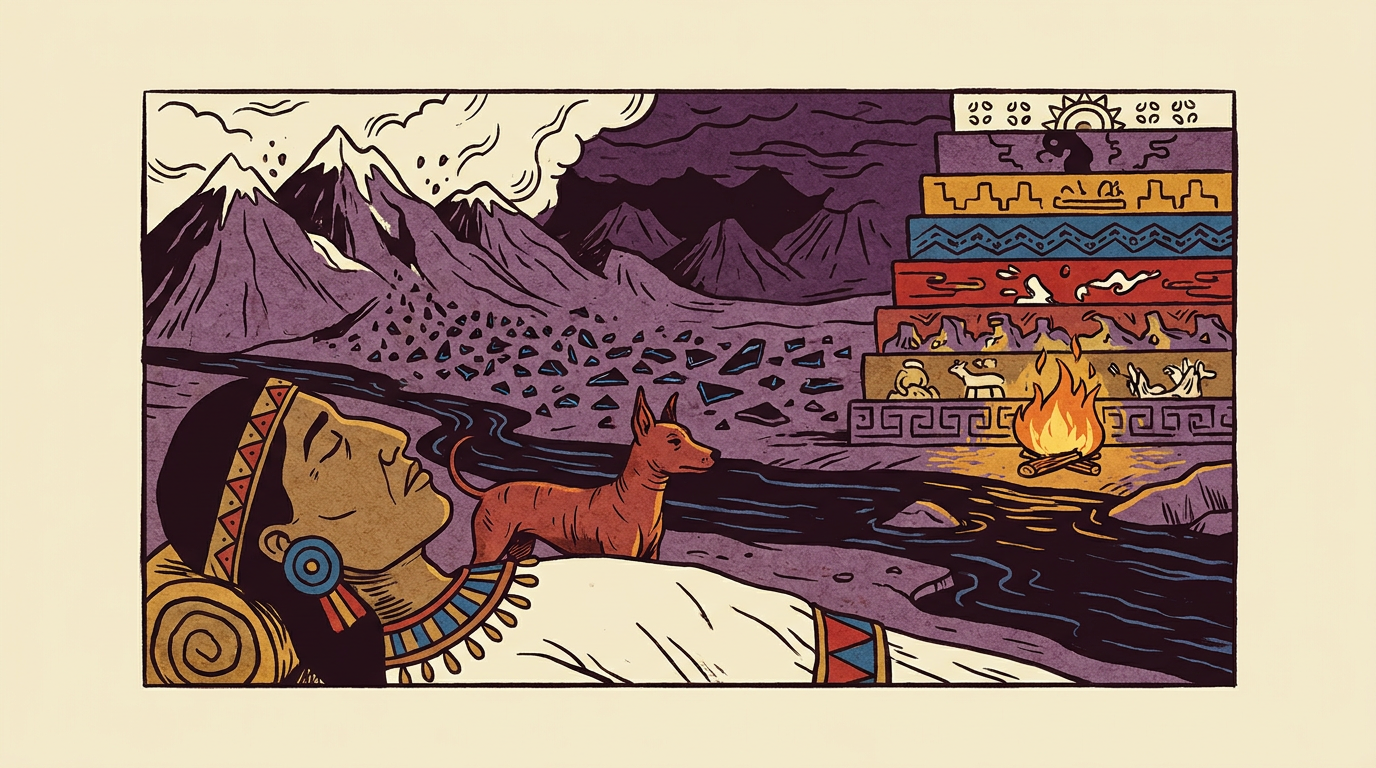
If the ancient Mexica were right, when you die, you won’t find a cloud with a harp or a basement run by demons waiting for you. Instead, a four-year journey to Mictlan awaits: a damp, cold and difficult land ruled by Mictlantecuhtli and Mictecacíhuatl. The journey is usually described as nine regions or levels, although colonial sources do not always agree on their names, order or details. And before worrying about murderous mountains or wind knives, you might want to ask yourself a down-to-earth question: will any dog be willing to help you cross?
The popular image sums it up as “nine levels of torture,” but that needs some nuance. Mictlan was not the Christian hell, and its obstacles did not punish sins: they were trials along the passage through death, part of a sacred geography where the body, identity and memory were gradually stripped away. Nor did all the dead take that route. For the Mexica, one’s destination after death depended primarily on how one died, not on whether one had kept a moral report card with good grades.
Dying was not taking an exam
Those who died in combat, through sacrifice or—according to the categories recorded in the sources—during childbirth could be linked to the sun’s journey; those who died from water-related causes went to Tlalocan, Tláloc’s fertile realm. Young children had another destination, associated in certain sources with Chichihuacuauhco, the place of the nursing tree. Those who died what was considered an ordinary death were the main ones who went to Mictlan. Mexica death, then, assigned destinations according to circumstances and cosmic forces, not through the simple accounting of heaven for the good and hell for the bad.
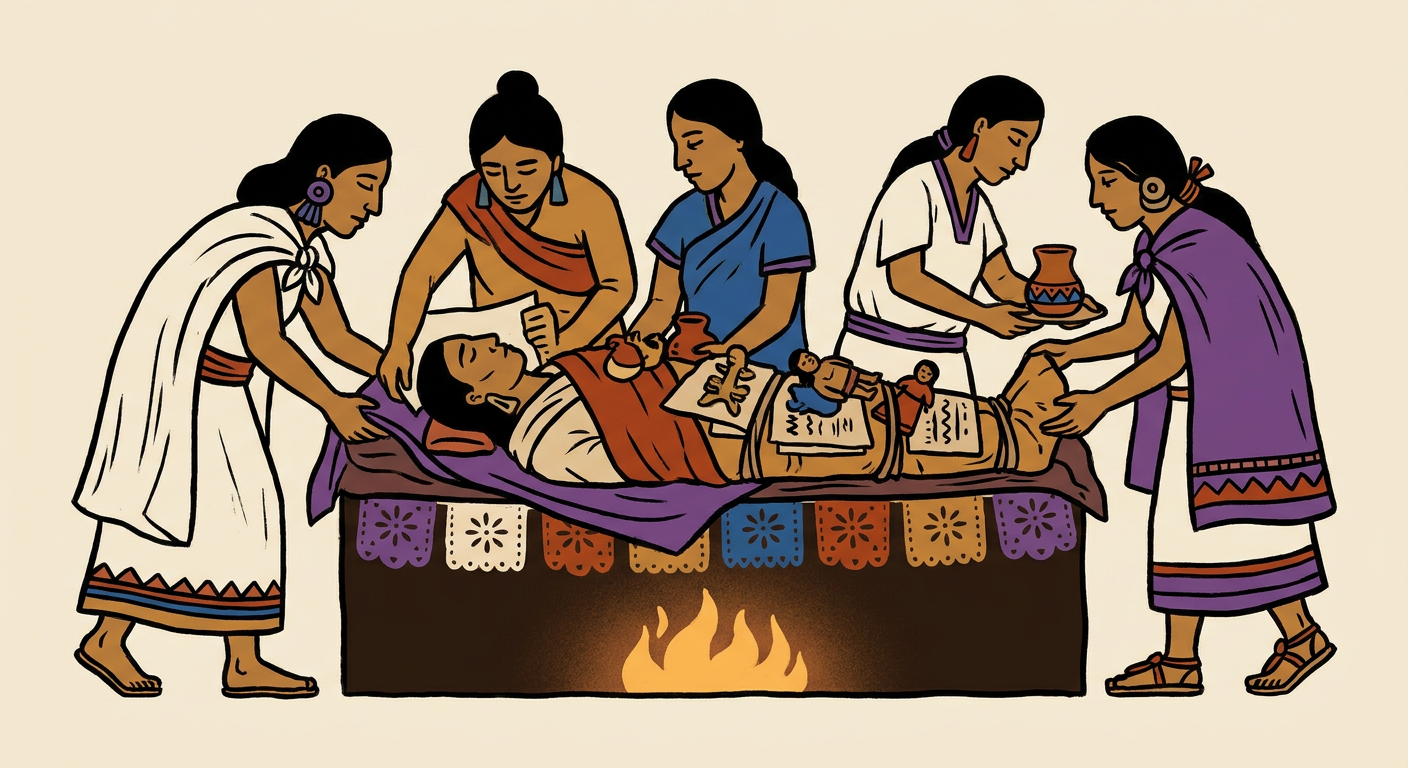
The journey began with the ritual treatment of the corpse and with useful offerings for the road. Fray Bernardino de Sahagún recorded that when a person died, they were spoken to and prepared to pass through various places; afterward, the body could be cremated along with their belongings and ritual papers. Objects and food were also placed with them, because even the most metaphysical journey benefits from provisions. Archaeology and colonial accounts reveal variations according to period, region and social status: there was no single funerary manual distributed throughout the Nahua world.
“Behold, now you go to the place of mystery, the place where all lose their name.” —Paraphrase of the Nahua funerary formulas collected by Fray Bernardino de Sahagún
The dog on the shore
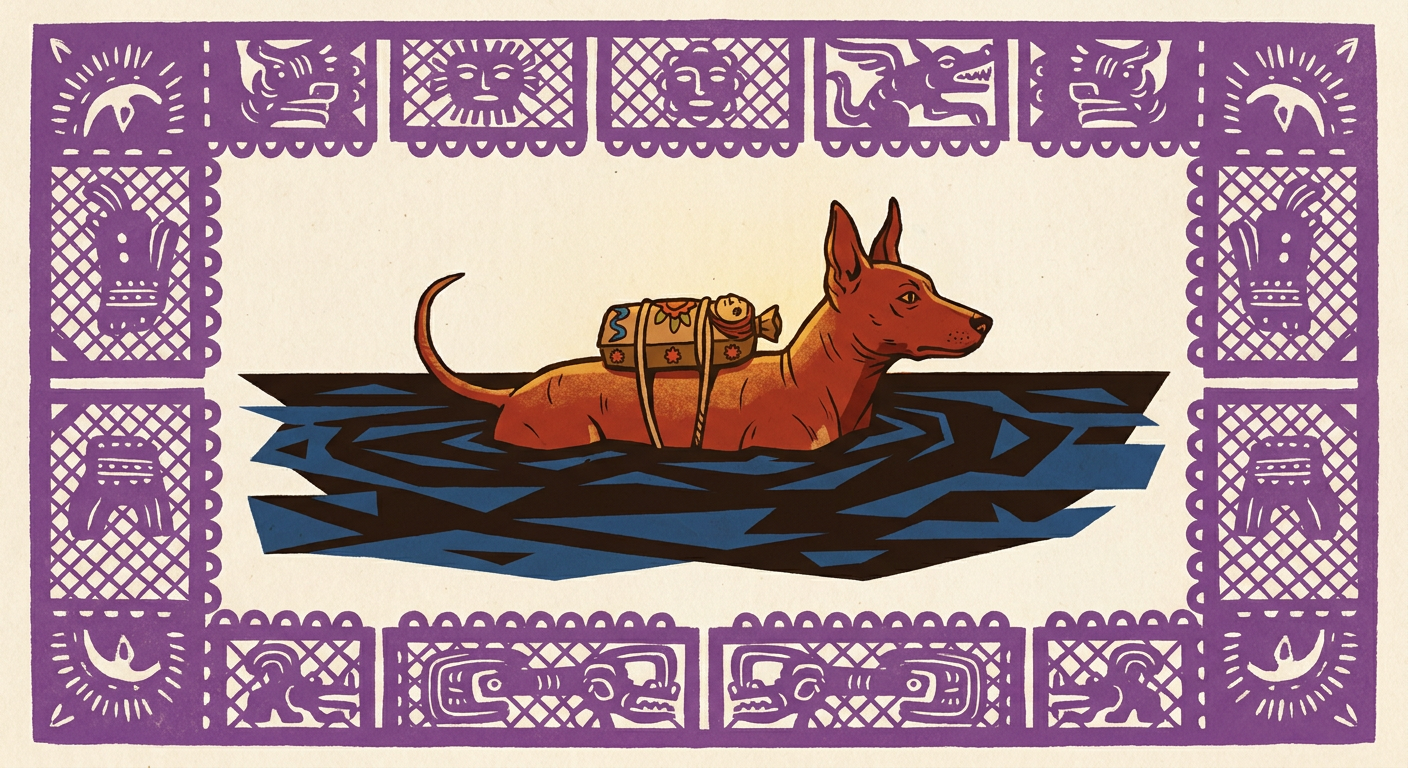
The first great trial was crossing a river, called Apanohuacalhuia or Chiconahuapan, “river of nine waters,” in different reconstructions. There, a dog appeared to help the deceased reach the opposite shore. Modern tradition usually identifies it exclusively as the xoloitzcuintle, and there are good cultural reasons to link the two, but the sources speak of dogs in general and distinguish them by color. Sahagún noted that a reddish-colored dog was sacrificed to accompany the dead person; the black dog, according to that account, said it was stained, and the white one claimed it had just been washed.
This is where the warning that has endured so powerfully comes in: anyone who mistreated dogs could be left without a guide, since the animal would recognize the ungrateful person and refuse to carry them. We do not know whether this idea worked exactly the same way in every Nahua community, but it expresses something profound: the bond created in life had consequences beyond it. The first trial did not literally destroy the soul for lack of a xolo, as contemporary horror stories claim; rather, it could leave the dead person stranded, unable to cross and without company. For a civilization of roads, markets and pilgrimages, being unable to move forward may have been a more unsettling way to become lost.
A geography that bites
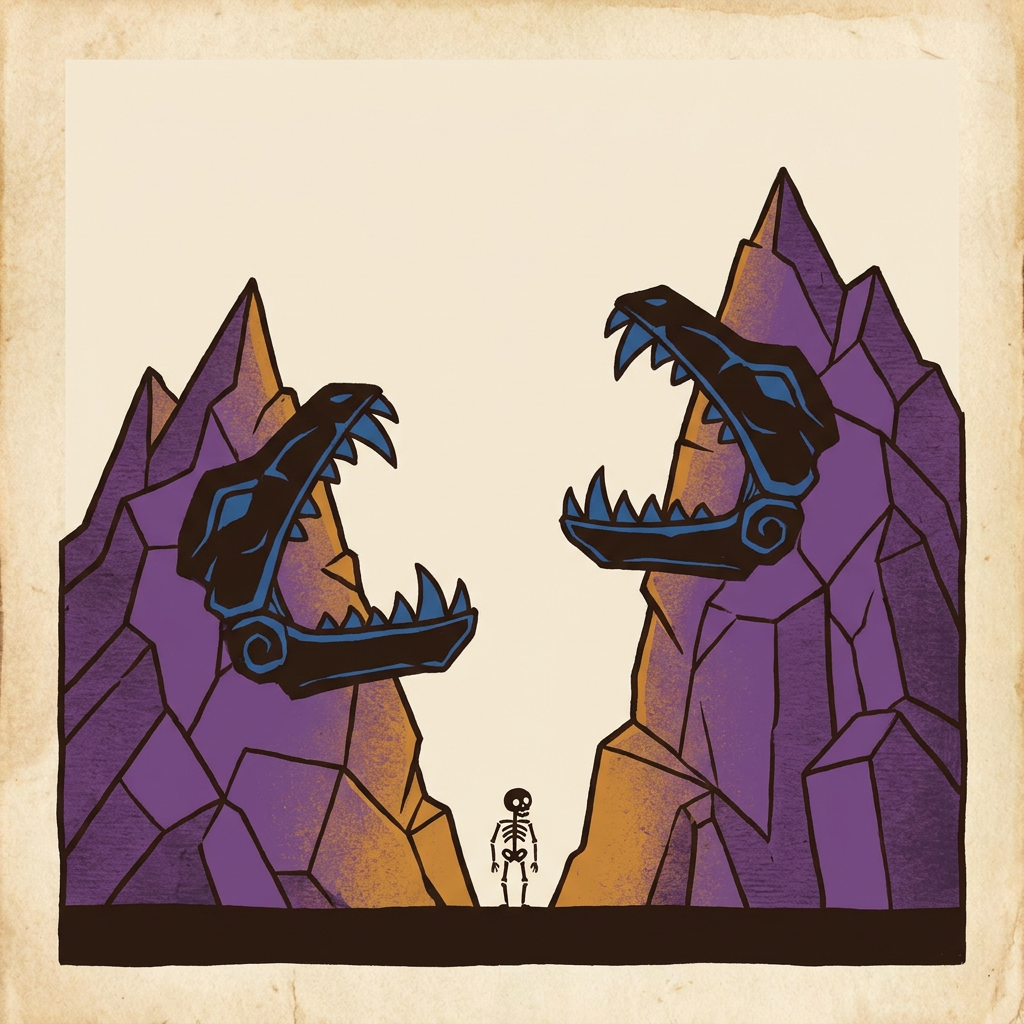
After the river came regions capable of turning any outing into a bad idea. Accounts mention two mountains that collided with each other; a hill bristling with obsidian; places of biting cold; a place where banners fluttered; another where people were shot with arrows; and spaces where wild beasts devoured the heart. The Nahuatl names vary among sources and modern reconstructions—Itztepetl, Cehuecayan, Pancuecuetlacayan, Temiminaloyan, among others—so it is wise to be wary of infographics that present a perfectly fixed route, as if the underworld had airport signage.
- 1Cross the river of outspread waters with the help of a dog.
- 2Pass between two mountains that come together and collide.
- 3Cross a mountain or path covered in obsidian blades.
- 4Endure regions of icy wind that cut like stone.
- 5Overcome stretches of flapping banners and invisible arrows.
- 6Surrender or lose parts of the bodily identity, including the heart in some versions.
- 7Appear, after four years, before Mictlantecuhtli and Mictecacíhuatl.
The list above combines elements established in colonial descriptions and comparative studies, but it should not be confused with a literal transcription of a single codex. The idea of nine regions is related to a vertical conception of the cosmos: heavens above, the earth’s surface in the middle, and the underworld below. In that landscape, the dead person grew lighter and lighter by leaving behind what bound them to the world of the living. It was not a video game with nine final bosses; it was a slow transformation.
Obsidian deserves attention because it was not a macabre prop. It was used to make blades, points, and ritual objects; when polished, it could serve as a mirror, a surface where seeing also meant entering into a relationship with invisible forces. Filling the path of the dead with obsidian edges and winds brought material experience and religious imagination together: everyone knew its gleaming beauty and its ability to open flesh. Mictlan spoke through things from everyday life, only taken to a scale where even the landscape had teeth.
The lords of silence
At the end stood Mictlantecuhtli, “lord of the place of the dead,” accompanied by Mictecacíhuatl, his female counterpart. In sculptures and codices, he appears with a fleshless body, open jaw, dark hair, and ornaments related to bones, eyes, or paper. He was not Satan in a feathered headdress: he was a necessary deity within the cosmic balance, powerful and fearsome, but not the absolute source of evil. Confusing him with the devil says more about European evangelizers than it does about Mexica religion.
One of the best-known accounts shows him facing Quetzalcóatl, who descends to Mictlan to recover the bones of earlier generations and use them to create present-day humanity. Mictlantecuhtli sets conditions, lays a trap, and causes the bones to break; Quetzalcóatl manages to carry away the fragments, which are then ground and mixed with divine blood. This is a cosmogonic myth preserved in colonial sources, not a historical chronicle. Its beauty lies in its conclusion: we are made of recovered remains, accidents, and a debt to those who existed before us.
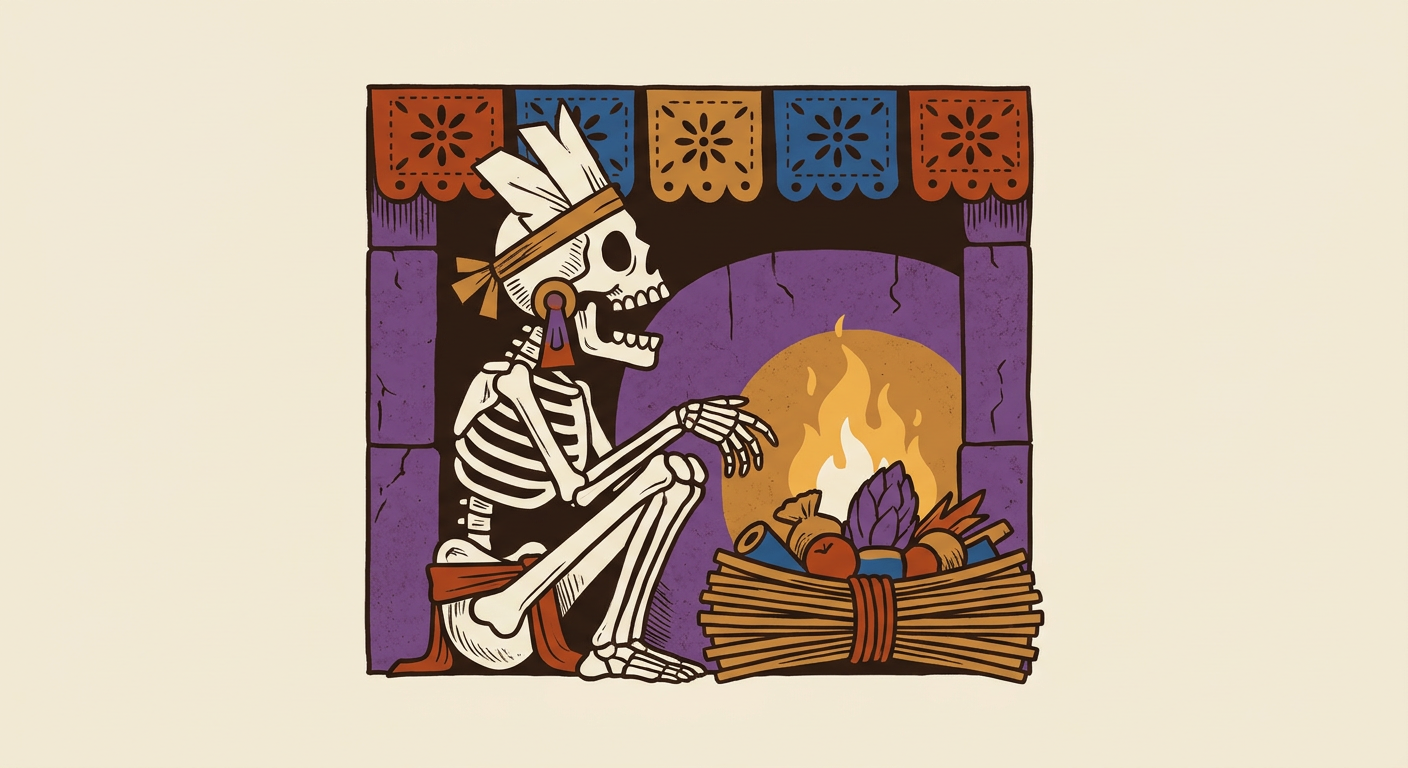
After four years, the dead person offered their belongings to the lords of Mictlan and attained final rest. Some interpretations speak of dissolution, disappearance, or rest with no return, but the sources do not offer a single definition of what remained of the person. Nahua thought recognized several animating entities linked to the heart, the head, breath, and shadow; translating them all as “soul” flattens a far more complex conception. What reached the depths was not simply a European ghost dressed as a Mexica.
In Mictlan, a life was not punished: a death completed its crossing.
Perhaps that is why the journey continues to unsettle us. It promises neither instant justice nor a comfortable eternity; it suggests that dying also requires time, help, and letting go. The dog beside the river reminds us that no one makes the entire crossing alone, and that tenderness shown to a creature may, when the time comes, become guidance. If the ancient Mexica were right, it is better not to look for a shortcut to heaven: one would do well to have treated kindly whoever knows the other shore.
- Fray Bernardino de Sahagún, General History of the Things of New Spain, Book III, appendix: “Of Those Who Went to Hell and Their Funeral Rites” (Florentine Codex).
- Alfredo López Austin, The Human Body and Ideology: Concepts of the Ancient Nahuas, National Autonomous University of Mexico.
- Eduardo Matos Moctezuma, Death on the Edge of Obsidian: The Nahuas in the Face of Death, Fondo de Cultura Económica.
- Michel Graulich, Human Sacrifice Among the Aztecs, Fayard.
- National Institute of Anthropology and History, INAH Media Library and educational content on Mictlantecuhtli, funerary practices, and the Mexica worldview.